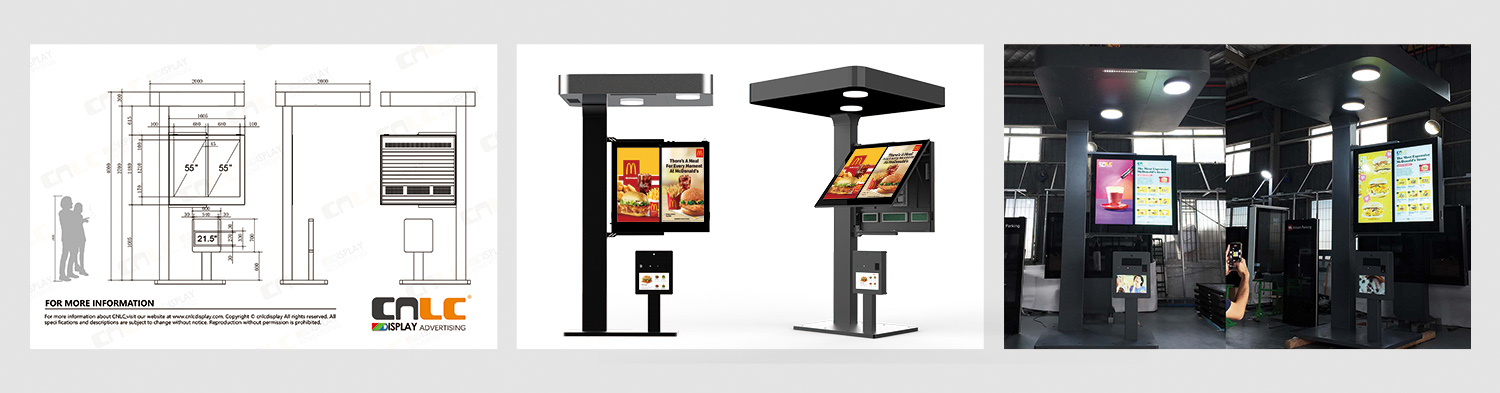
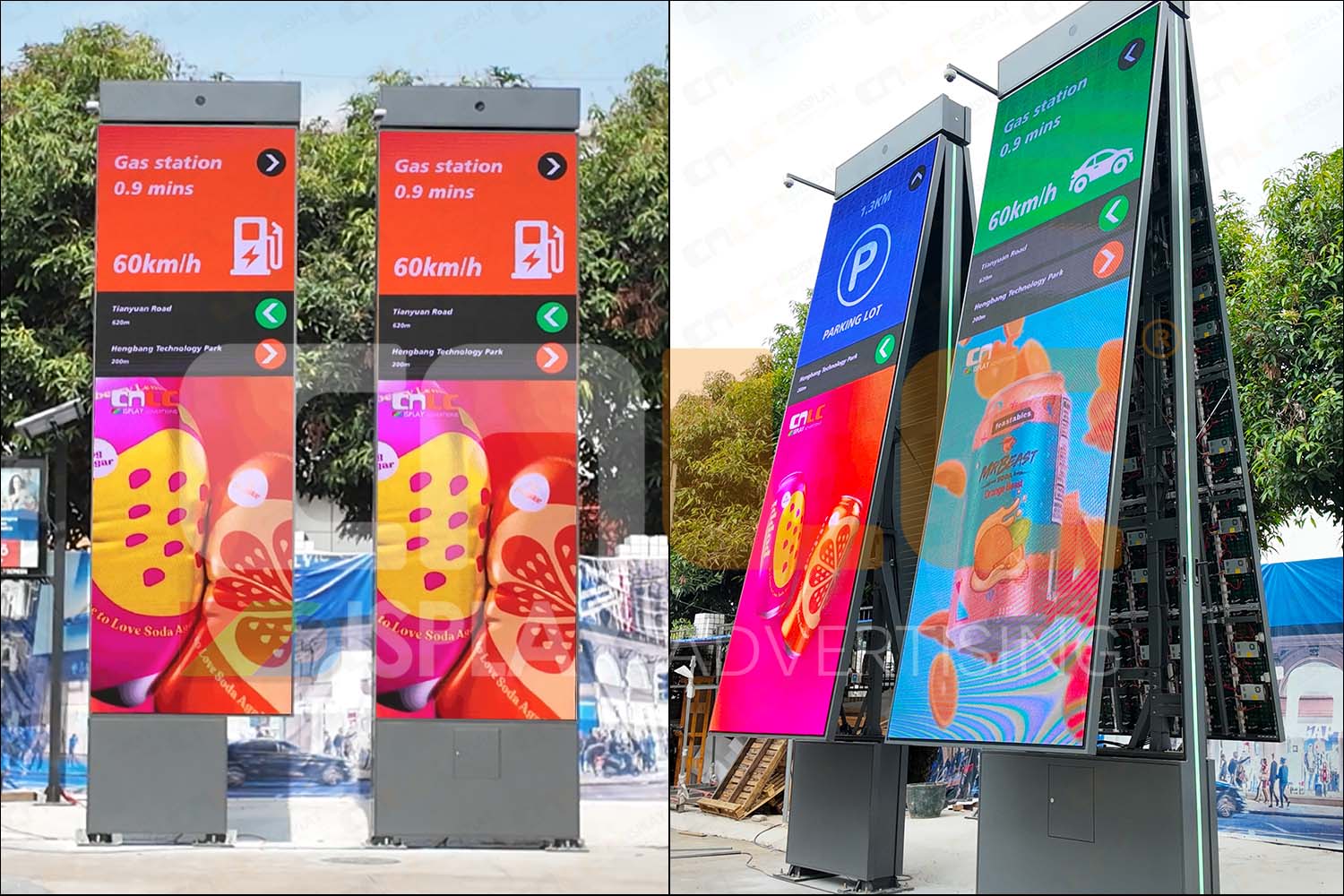
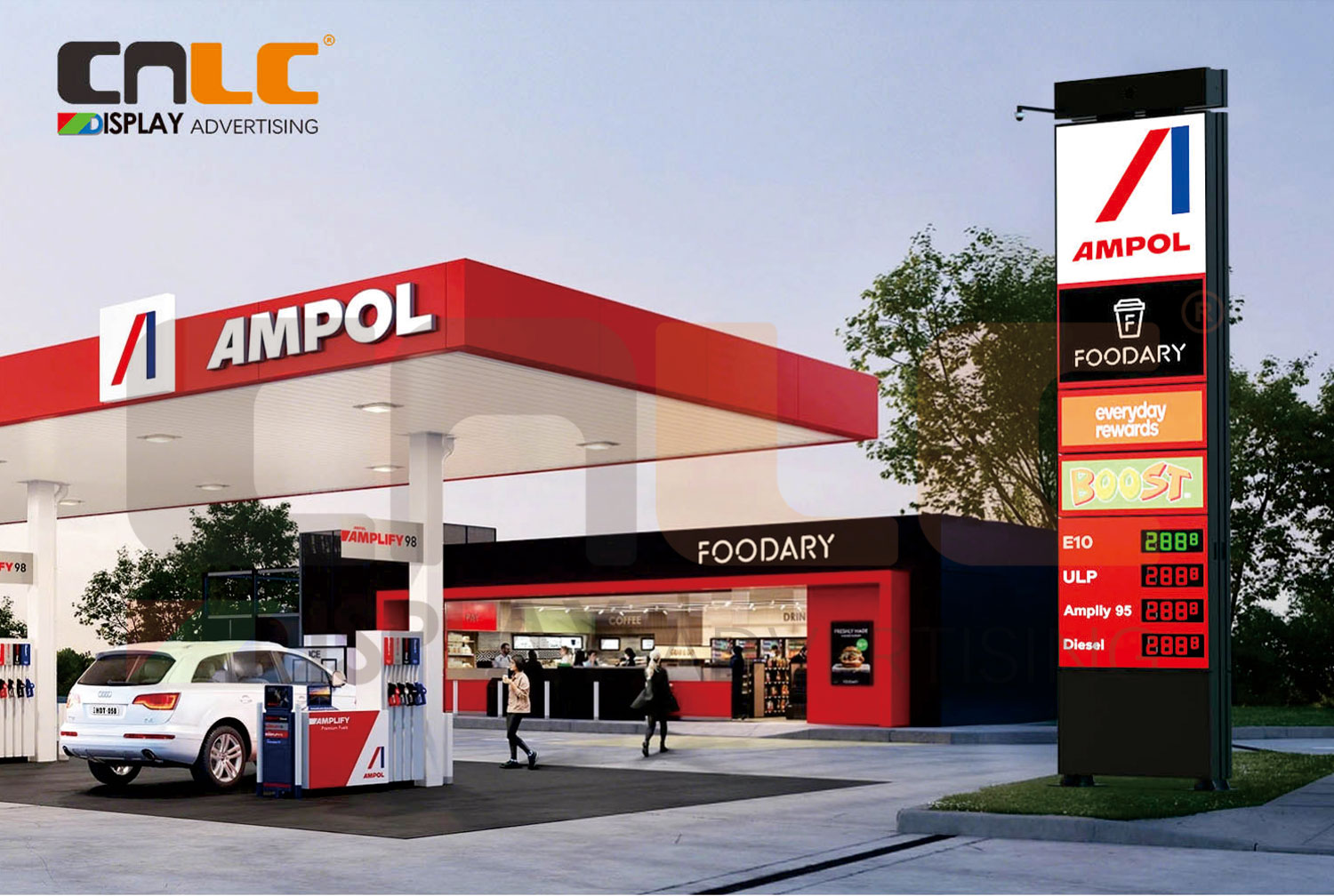
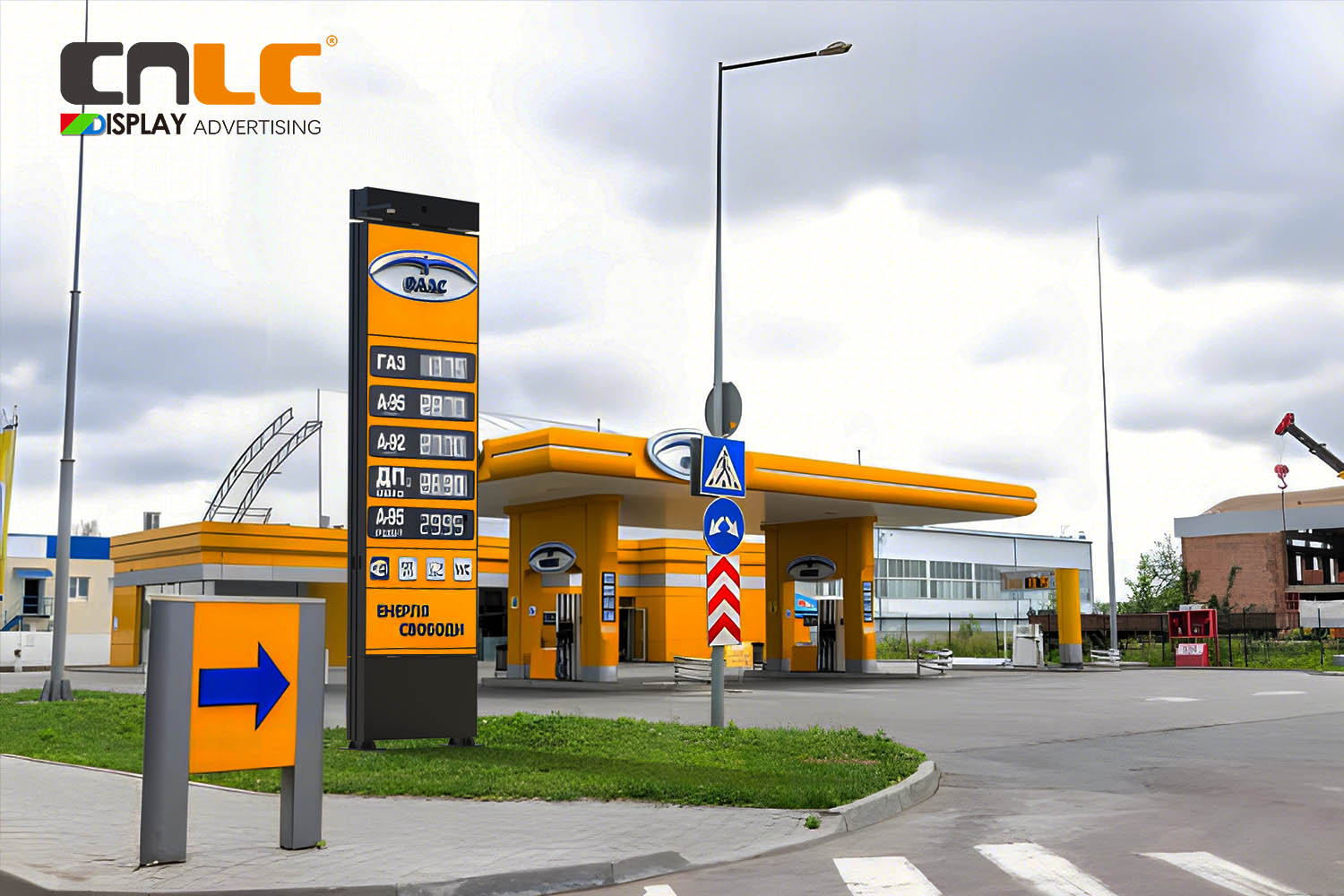
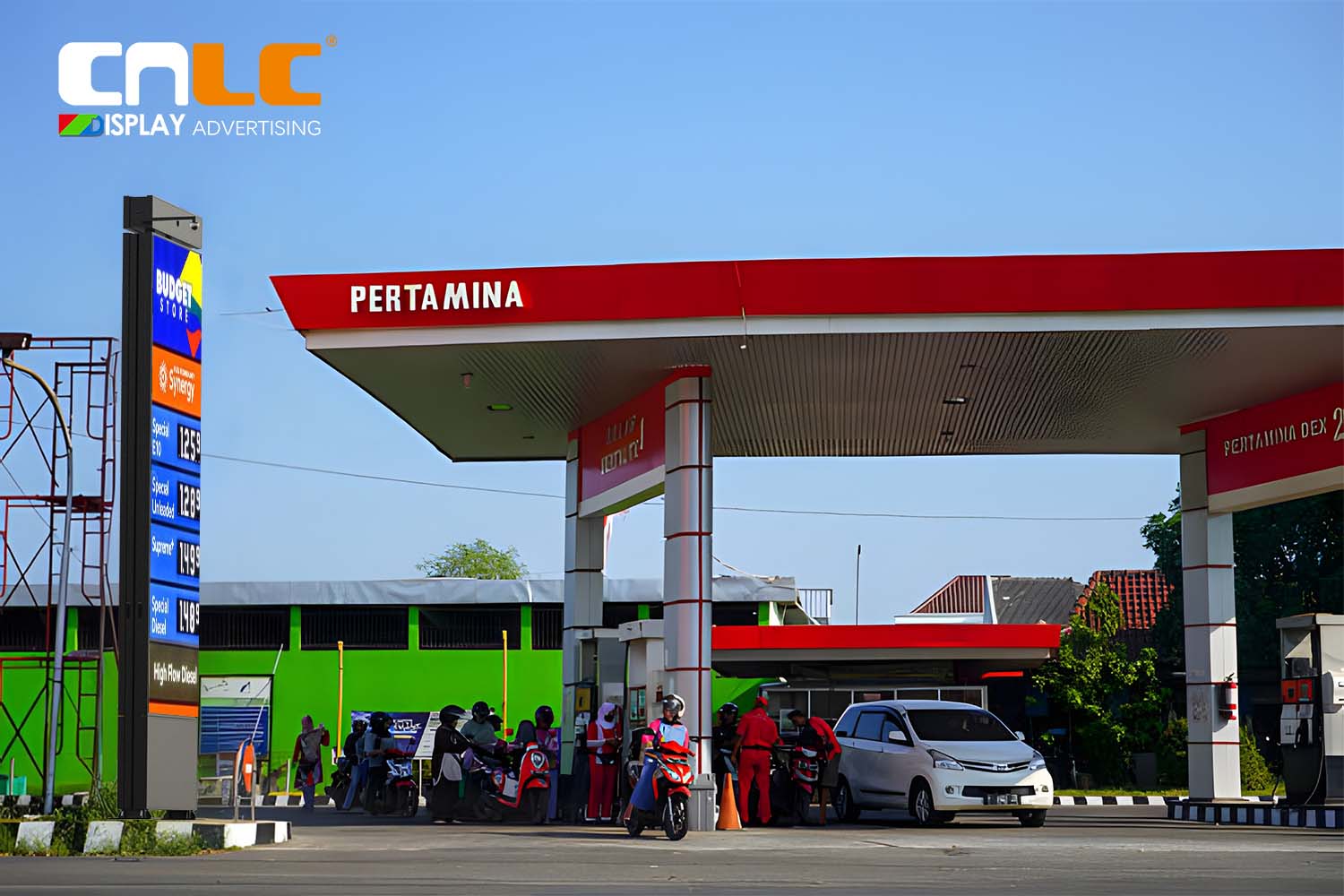
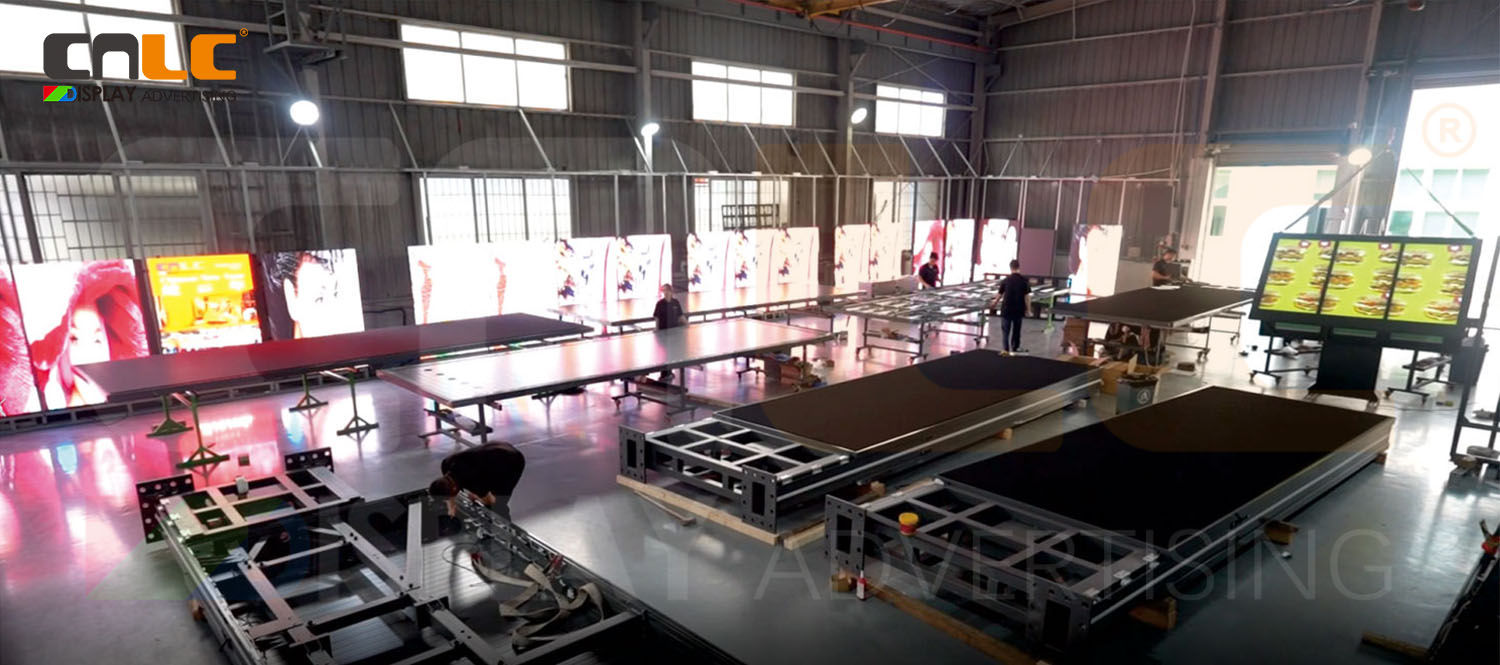
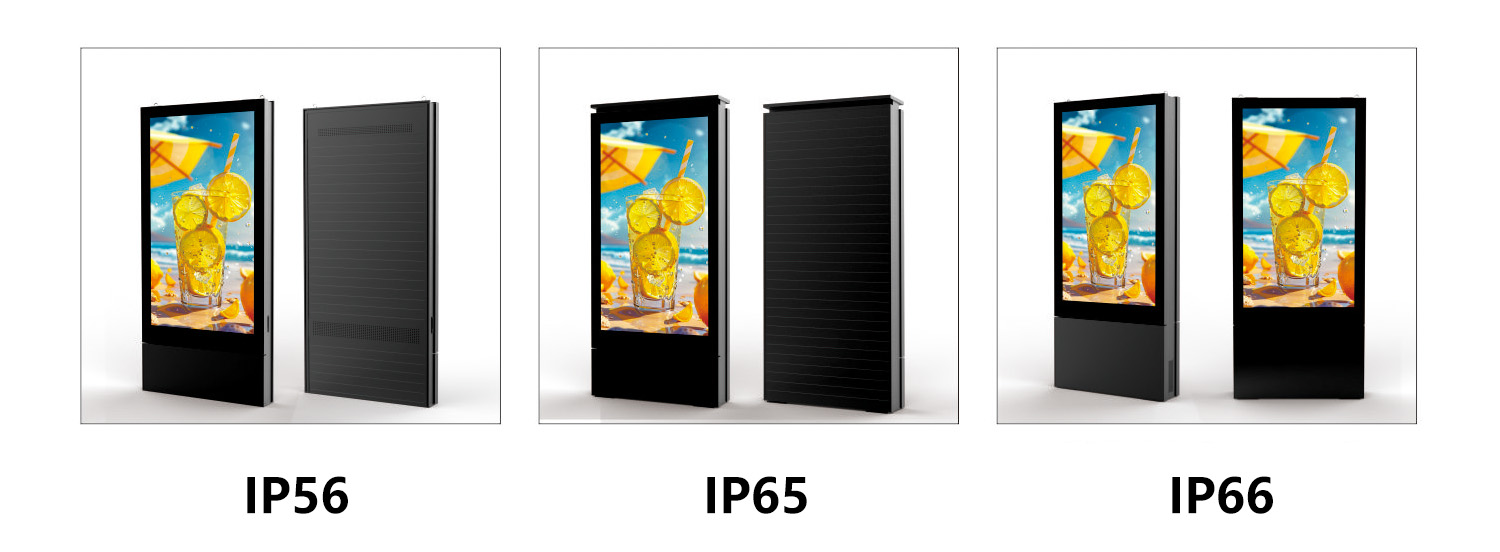
With 18 years of outdoor display manufacturing experience, CNLC leverages strong factory customization capabilities to deliver tailored Drive-Thru Digital Menu Board solutions.This gas station project deployed 30 units, combining innovative structure and integrated functionality to offer a solution that is visually appealing, practical, and highly efficient, reflecting CNLC’s expertise and flexibility as a professional factory.
Customization Highlights: Efficient and Stylish Drive-Thru Solution
This custom Drive-Thru board features dual 55-inch high-brightness LCD screens with 3500 nits, ensuring clear visibility even under direct sunlight.A 21.5-inch high-brightness operation screen, integrated with an intercom system, radar detector, speaker, and camera, delivers a complete Drive-Thru interaction experience, enhancing order and communication efficiency.The overall height is 4 meters (including the canopy), crafted from high-strength aluminum alloy for durability and elegance. The stylish canopy improves visual recognition and provides additional protection against rain and wind.
Product Features
Dual High-Brightness Screens: Two 55-inch LCD panels with 3500 nits, ensuring excellent visibility in outdoor sunlight.
Operation & Interaction System: 21.5-inch operation screen with integrated intercom, radar, camera, and audio, enabling smooth Drive-Thru interactions.
Durable Structure: Aluminum alloy construction, corrosion-resistant and stylish.
High Protection Level: IP56-rated for water and dust resistance, suitable for all outdoor environments.
Intelligent Temperature Control: Built-in temperature monitoring and control system ensures stable operation even under extreme weather conditions.
Fully Customizable Design: Screen size, structure, and appearance can all be tailored according to client requirements.
Core Advantages
Professional Intercom Integration: Supports CNLC’s own system and third-party HME solutions for efficient Drive-Thru communication.
High-Brightness Dual Screens + Operation Screen: Optimized for visual presentation and interactive experience across various scenarios.
Flexible Customization & Modular Design: Suitable for multiple industries, from gas stations and quick-service restaurants to retail and parking guidance systems.
Multi-Industry Application Value
This Drive-Thru Digital Menu Board is not limited to gas stations:
Quick Service Restaurant (QSR) Drive-Thru
Car Service & Fuel Station Kiosks
Retail & Parking Guidance Displays
Industrial & Corporate Campus Information Screens
CNLC’s custom design ensures brand-exclusive aesthetics and high-performance functionality in every industry.
Project Scale & Customer Feedback
This custom project deployed 30 units, and the client reported excellent feedback: the terminals are visually appealing, easy to operate, and highly functional. This successful large-scale deployment highlights CNLC’s strong factory customization and delivery capabilities.
Choose CNLC for Your Custom Drive-Thru Solution
Looking to create a unique Drive-Thru or gas station digital display solution? CNLC, with 18 years of manufacturing experience and strong factory customization capabilities, can tailor every detail—screen size, design, functional configuration, and interactive systems—to your project requirements. Whether for single-unit customization or large-scale deployment, we ensure fast response, high-quality delivery, and optimal project performance.
Barcelona, Spain — February 3–6, 2026 | Booth 4C400, Hall 4
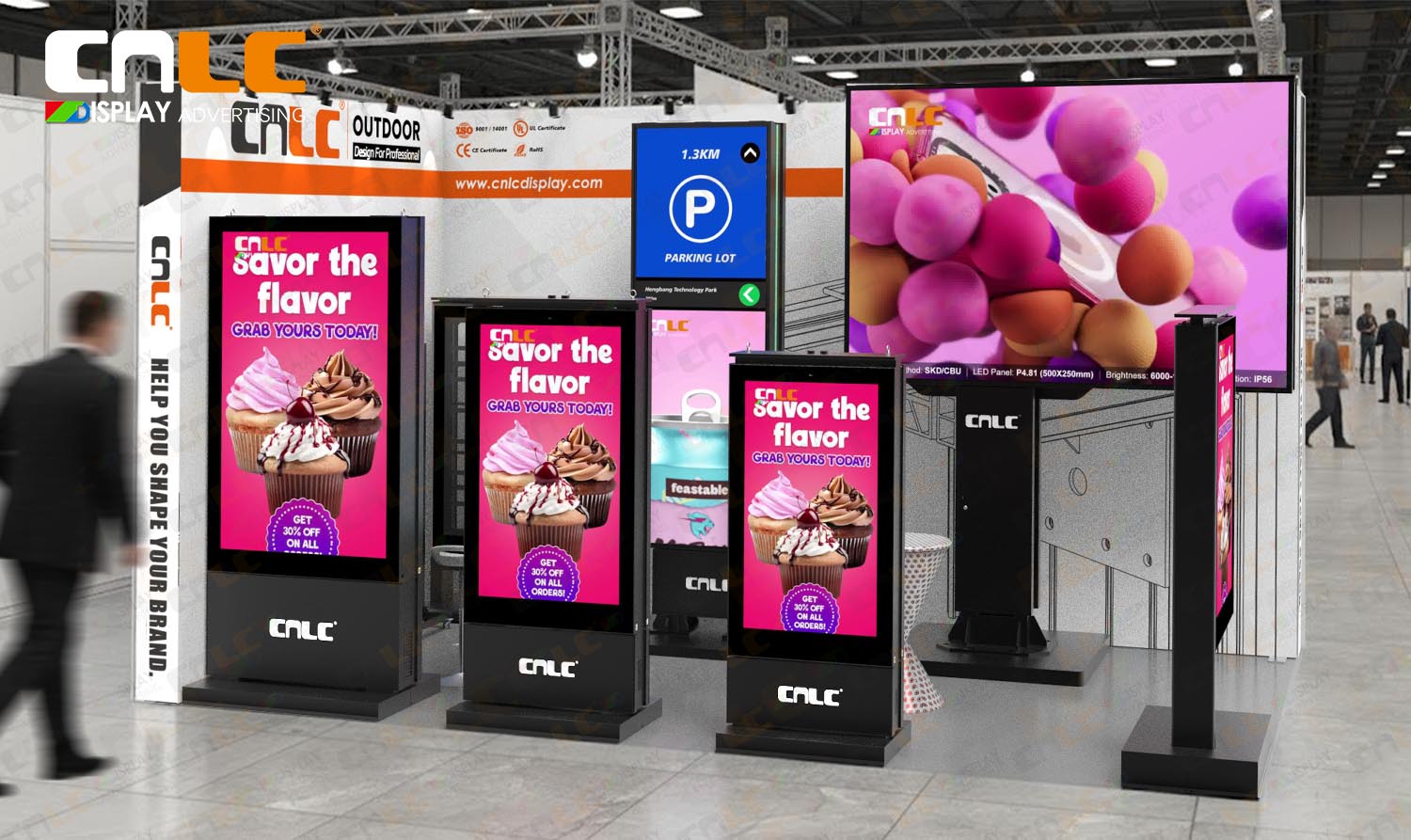
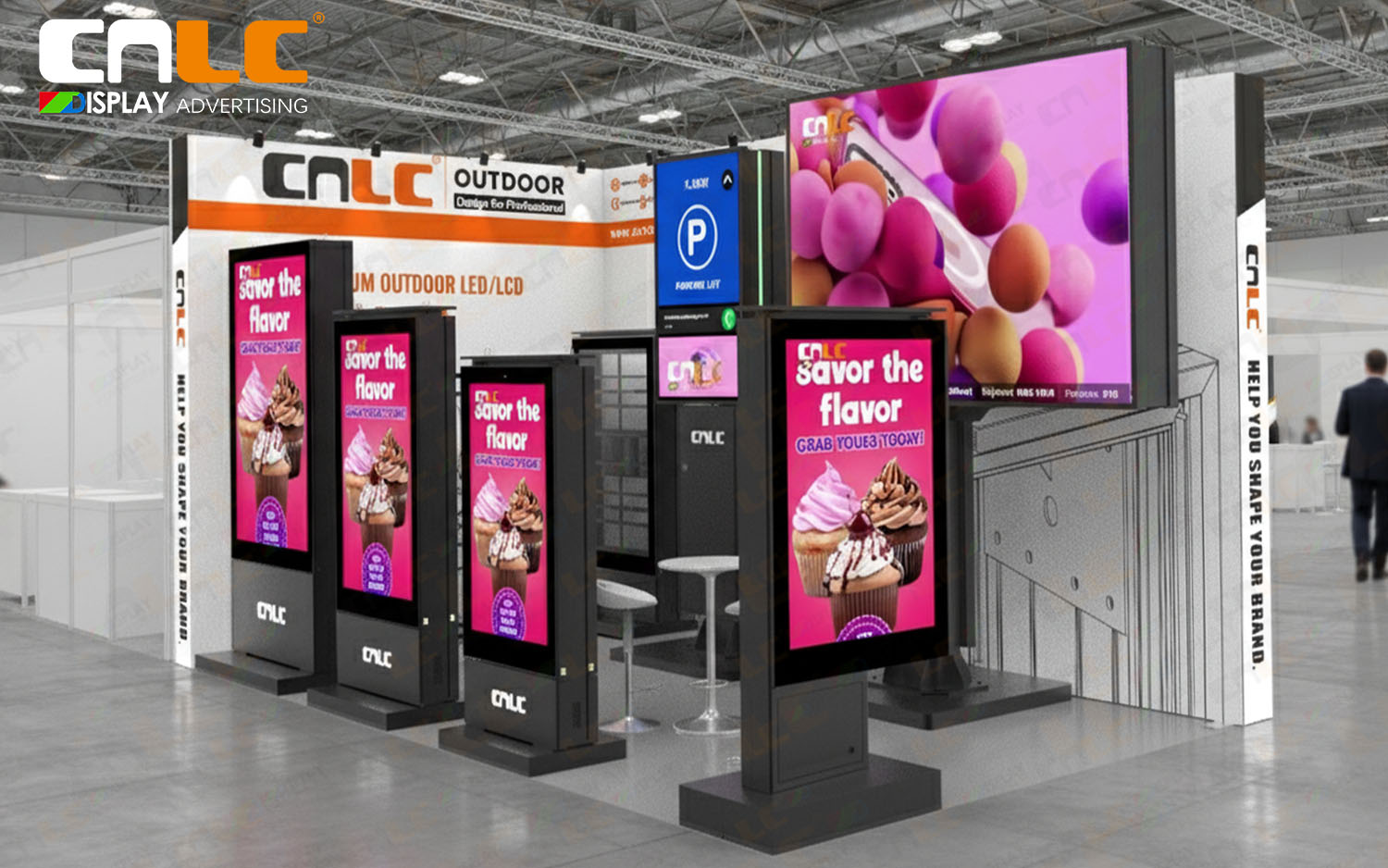
CNLC, a professional OEM/ODM manufacturer and intelligent display solutions provider with over 18 years of industry experience, is set to exhibit at Integrated Systems Europe (ISE) 2026 in Barcelona. The company will showcase a comprehensive range of outdoor digital signage solutions, featuring advanced LCD and LED technologies designed for global outdoor advertising markets.
🔹 A Full Lineup of Outdoor Digital Signage Solutions
At ISE 2026, CNLC will present a full lineup of outdoor digital signage solutions, including:
3500nits Double-sided Floor-standing Outdoor LCD Display — ideal for retail and public advertising spaces.
2000nits Double-sided COB LCD Display — featuring compact modules and outstanding contrast for semi-outdoor locations.
6500nits Double-sided LED Column Totem Display — combining elegance and performance for street and city advertising.
Two models of 6500nits Single-sided Outdoor LED Billboards — designed for impactful highway and roadside advertising.
Double-sided LED Enclosure with Light Box Design — showcasing CNLC’s precision engineering in structure, waterproofing, and heat management.
Each display embodies CNLC’s core strengths — high brightness, aluminum structure, IP56/IP65 protection, IK10 safety glass, and intelligent temperature control systems — ensuring exceptional durability and visibility in all weather conditions.
🔹 Built for Outdoor Performance
CNLC’s outdoor displays are engineered to perform flawlessly under extreme environments. With brightness levels up to 6500 nits, these screens deliver vivid, crystal-clear images even under direct sunlight. The aluminum enclosures provide superior heat dissipation and corrosion resistance, while the intelligent temperature control system maintains optimal operation for 24/7 outdoor use.
The company’s products are widely used in retail, transportation, smart city projects, and roadside advertising, offering versatile and reliable display solutions for various outdoor applications.
🔹 About CNLC
Founded in 2007 and headquartered in Guangzhou, China, CNLC specializes in high-brightness outdoor LCD and LED digital signage manufacturing. With strong OEM/ODM capabilities and a commitment to innovation, CNLC has become a trusted intelligent display solutions provider for global clients. Its products are exported toEurope, the Americas, Central Asia, the Middle East, and Australia, serving international partners with customized, high-performance digital display systems.
🔹 Visit CNLC at ISE 2026
CNLC warmly invites distributors, integrators, and industry professionals to visit its booth at Hall 4, 4C400 and experience the latest generation of outdoor digital signage displays firsthand.
ISE 2026 📅 February 3–6, 2026 📍 Fira de Barcelona, Gran Via — Hall 4, Booth 4C400 🌐 www.cnlcdisplay.com
Join CNLC in Barcelona and discover innovative outdoor LCD and LED signage solutions that redefine visibility, durability, and smart performance.
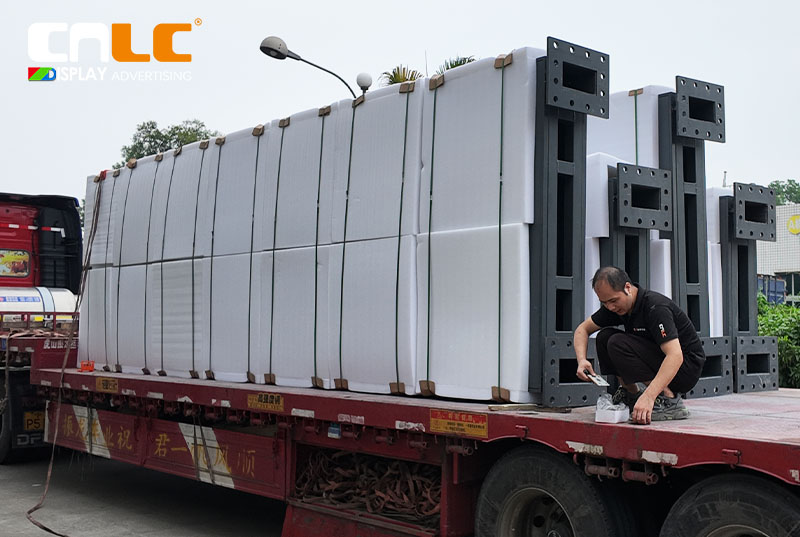
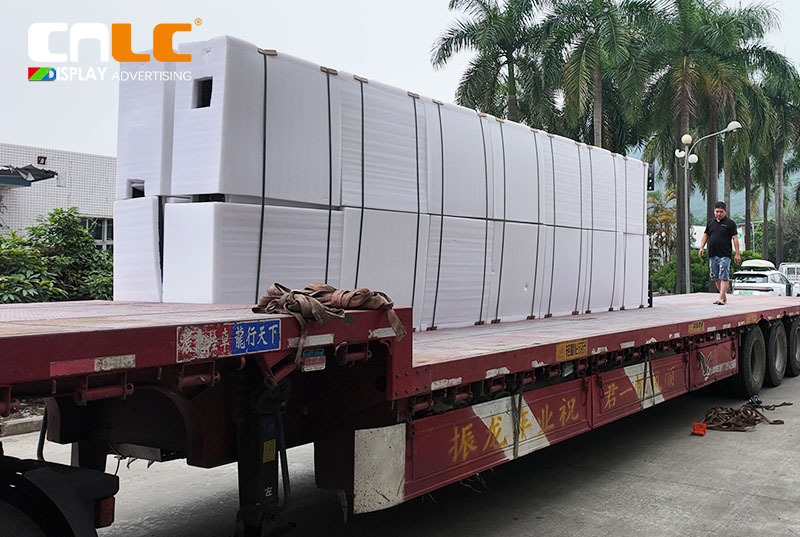
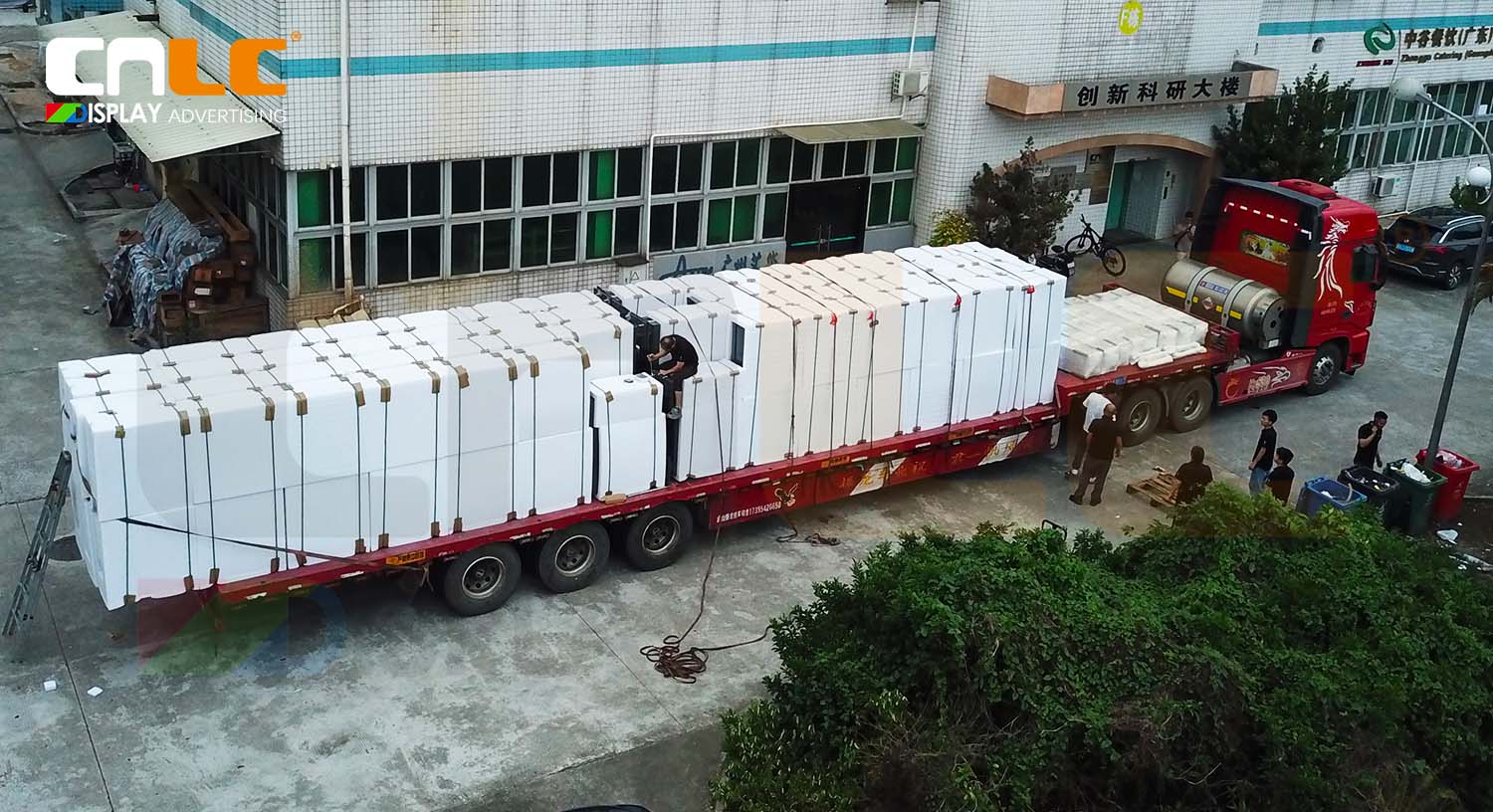
Following the successful delivery of the first phase of 10 Outdoor LED Billboards in the first half of this year, CNLC has once again shipped a new batch of 10 Outdoor LED Billboards (7.5m × 1.92m) to Central Asia.This marks another milestone in our continuous effort to support smart city street advertising projects with reliable and visually stunning display solutions.
Soon, these LED billboards will stand proudly along major city roads, becoming vibrant platforms for urban information sharing and digital outdoor advertising.As trucks rolled out from our factory, each billboard represented more than technology — it carried CNLC’s dedication to quality, innovation, and performance.
Smart Engineering for Smarter Cities
Every CNLC billboard embodies precision engineering and field-tested reliability. Equipped with P5 High Visor LED modules, each display delivers exceptional clarity and contrast, ensuring brilliant performance even under direct sunlight. With 6500nits high brightness, content remains sharp and engaging throughout the day and night.
The aluminum structure provides excellent durability and anti-corrosion protection, making it ideal for long-term outdoor use. An IP56 weatherproof rating shields the display from rain, dust, and temperature fluctuations, while the intelligent temperature control system and air duct cooling design maintain stable operation under all conditions.
Every design choice reflects CNLC’s pursuit of long-lasting performance and visual excellence in every project we deliver.
Every Shipment Tells a Story of Precision and Passion
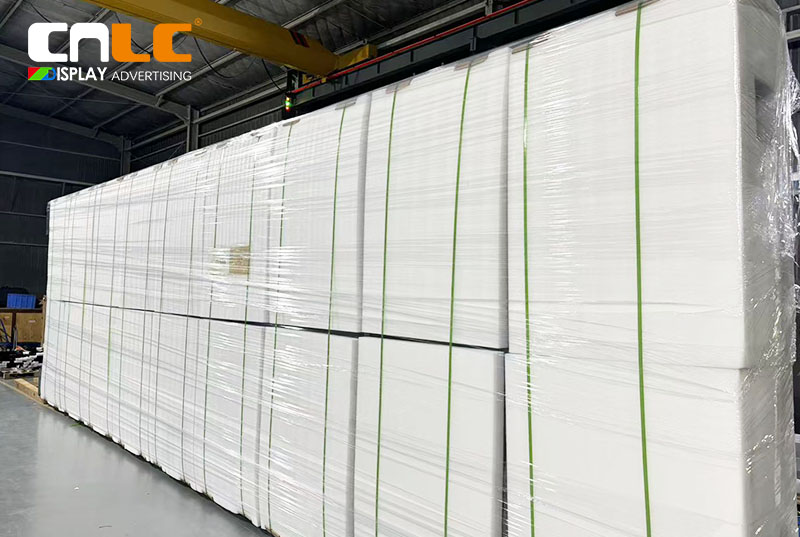
Before leaving the factory, every billboard undergoes strict quality inspections and a 72-hour aging test to ensure optimal stability and image performance.Once approved, the billboards are carefully packed with 10cm protective foam, securing every detail for long-distance transport.
Each truck’s departure marks a moment of pride — a symbol of CNLC’s craftsmanship and our ongoing mission to illuminate cities through intelligent digital displays.
Lighting Up Central Asia and Beyond
With each shipment, CNLC continues to expand its footprint across Asia and Europe, providing high-brightness LED display solutions that bring cities to life.These new installations in Central Asia are another step forward in creating smarter, brighter, and more connected urban environments.
Brighter cities. Smarter connections. CNLC — your trusted partner in outdoor display technology.
In today’s fast-paced world, gas stations are no longer just refueling stops — they’ve become strategic locations for brands to connect with consumers on the move. From promoting convenience store offers to broadcasting real-time advertisements, outdoor LED billboards are transforming how gas stations communicate and engage with their customers.
According to Statista, the global Digital Out-of-Home (DOOH) advertising market is expected to reach USD 33 billion by 2025, with fuel stations becoming one of the most rapidly expanding segments. This transformation is driven by the growing demand for dynamic, high-visibility, and remotely managed advertising solutions.
🔹 Digital Transformation in the Fuel Industry
As competition intensifies in the energy and retail sectors, gas stations are accelerating their digital transformation. Traditional posters and backlit signs are being replaced by high-definition LED displays that deliver flexibility, efficiency, and vivid visuals.
Studies show that an average customer spends 3–5 minutes at a fuel station — offering a valuable window for impactful advertising exposure. Digital LED billboards not only modernize the station’s image but also create new profit opportunities through third-party advertising.
🔹 Why Outdoor LED Billboards Are Ideal for Gas Stations
Gas stations face constant exposure to sunlight, rain, dust, and temperature fluctuations — demanding displays that remain stable and visible in all conditions.
That’s why high-brightness LED billboards have become the preferred choice. With brightness levels exceeding 5000 nits, they maintain perfect visibility even under 100,000 lux of direct sunlight — up to five times brighter than traditional LCD displays. Drivers can easily view fuel prices, promotional content, and safety messages, even from a distance or under strong daylight.
🔹 Performance Meets Durability
Modern LED billboard systems are designed for both outstanding visuals and long-term reliability.
For example, CNLC’s outdoor LED billboard for gas stations features a P5 high-visor LED module with a dual-layer shading design, effectively reducing glare while maintaining high con
trast and vivid colors.
Its precision-engineered aluminum structure provides excellent heat dissipation and corrosion resistance. With an IP56 weatherproof rating, the display ensures stable 24/7 operation under rain, dust, or extreme temperatures — ideal for outdoor environments.
🔹 Smart Control and Efficient Operation
One of the biggest advantages of digital LED signage is remote content management. Operators can instantly update fuel prices, upload new videos, or schedule campaigns across multiple locations — all from a central control system.
This not only minimizes manual maintenance but also ensures that marketing messages stay consistent, accurate, and timely, allowing gas station owners to manage their networks more efficiently.
🔹 Energy Efficiency and Sustainability
Beyond performance, energy efficiency plays a crucial role in today’s outdoor displays.CNLC adopts common cathode energy-saving LED module solutions, delivering superior brightness with significantly reduced power consumption — less than 130W/㎡ while maintaining over 6000 nits of brightness.
In addition, the system integrates intelligent brightness adjustment, automatically adapting to ambient light conditions to further lower energy usage and extend component lifespan.
For example, in our outdoor LED billboard project in Astana, the screen measures 9×6 meters and achieves 6500 nits of brightness using this energy-saving configuration.With the support of CNLC’s intelligent brightness control system, the average daily power consumption is approximately 95 kWh, ensuring both visual impact and sustainable operation.
This balance between performance and energy conservation allows CNLC displays to reduce operating costs while supporting green, eco-friendly advertising — aligning perfectly with the global trend toward sustainable digital signage.Compared with conventional LED billboards, CNLC’s common cathode system reduces energy consumption by up to 30%, while maintaining consistent brightness and long-term reliability.
🔹 Enhancing Customer Experience
Outdoor LED billboards are more than advertising tools — they elevate the customer experience. Dynamic content such as weather forecasts, safety messages, or real-time promotions keeps customers informed and entertained during refueling. This transforms a routine stop into an engaging and value-driven moment, reinforcing brand awareness and boosting in-store sales.
🔹 Conclusion
As the fuel retail industry evolves toward smarter and more connected operations, outdoor LED billboards are becoming an integral part of modern gas station design. Combining high brightness, durable aluminum housing, IP56 protection, and remote content management, they deliver reliability and impact in any environment.
With over 18 years of manufacturing experience and more than 1,000 successful global installations, CNLC continues to lead in providing high-performance, energy-efficient outdoor digital signage solutions trusted by clients worldwide.
💡 For fuel stations looking to modernize their image and maximize advertising value, CNLC’s outdoor LED billboard offers a future-ready and cost-effective solution.
In today’s outdoor advertising and smart city environments, digital displays face extreme challenges — scorching heat, heavy rain, dust, humidity, and continuous 24/7 operation. Stability, reliability, and visibility under such conditions are what truly define a professional outdoor display manufacturer.
With over 18 years of experience, CNLC stands as a trusted name in the global display industry, providing high-brightness LED and LCD outdoor display solutions that combine IP-rated protection, precision thermal management, and durable aluminum structures.
1. Proven Reliability Through 18 Years of Innovation
Since its founding in 2007, CNLC has specialized in the development of outdoor LED and LCD advertising displays, with successful installations across Europe, the Middle East, Asia, and North America.
Our engineering team focuses on one mission — ensuring every display performs flawlessly in any environment.
All CNLC outdoor products are designed, simulated, and tested to meet the highest industrial standards, including IP56/IP65/IP66 waterproofing, IK10 impact resistance, and operational stability under extreme heat.
2. IP65 Waterproof Display with IP56 & IP66 Options for All Outdoor Environments
Outdoor environments are unpredictable — from sandstorms to heavy rainfall. CNLC’s displays achieve IP56, IP65, and IP66 protection levels through:
Precision-engineered sealing structures
High-elastic silicone gaskets
Waterproof connectors and drainage systems
Anti-corrosion aluminum profiles
🔹 IP65 Definition:
The first digit “6” represents complete dust protection, while the second digit “5” ensures resistance against low-pressure water jets from any direction — a balance between accessibility and full weather resistance.
This level of protection guarantees stable operation in coastal, humid, and high-rainfall regions, making CNLC’s outdoor screens ideal for public billboards, city displays, and transportation hubs.
3. Thermal Simulation & Cooling System Excellence
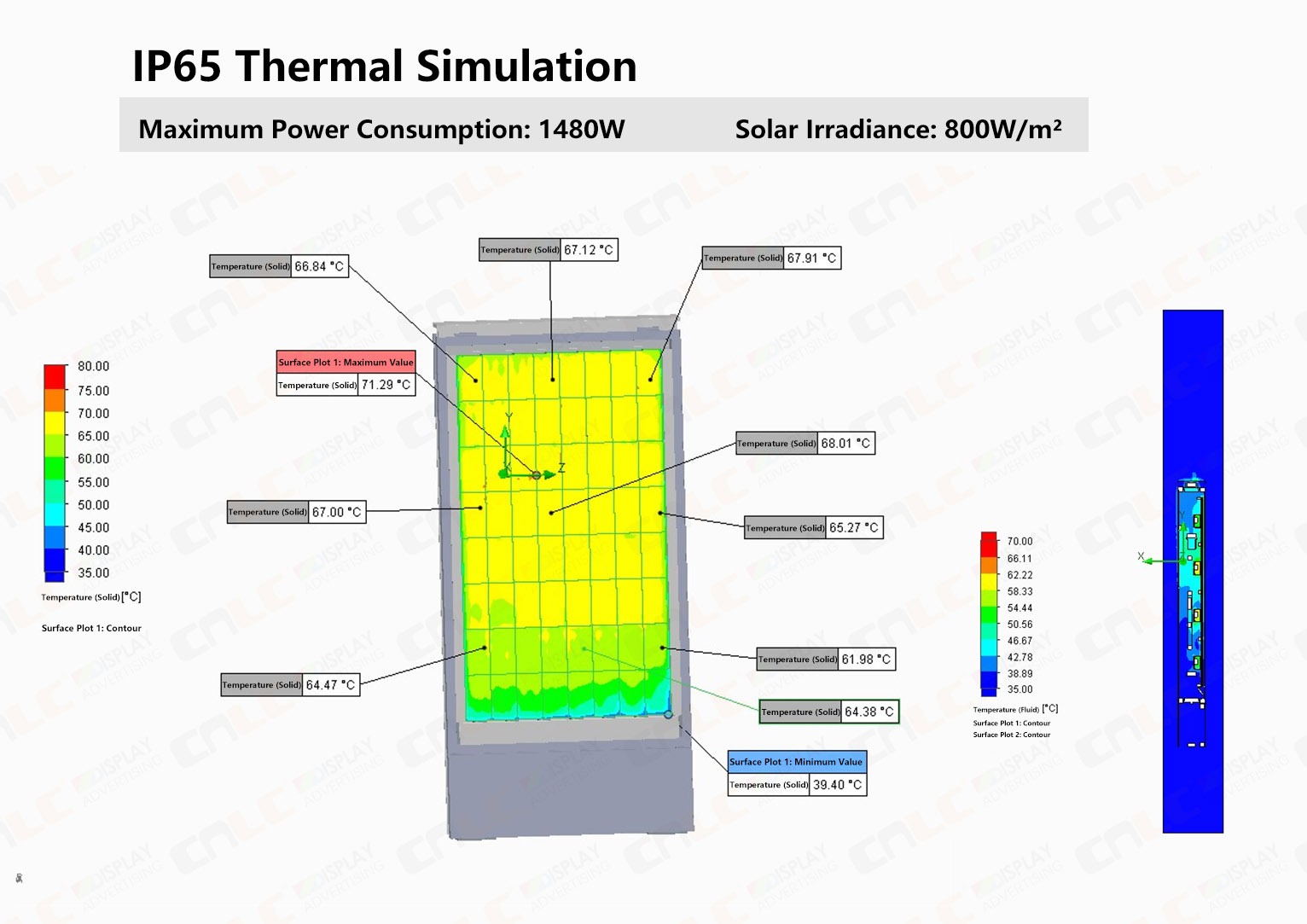
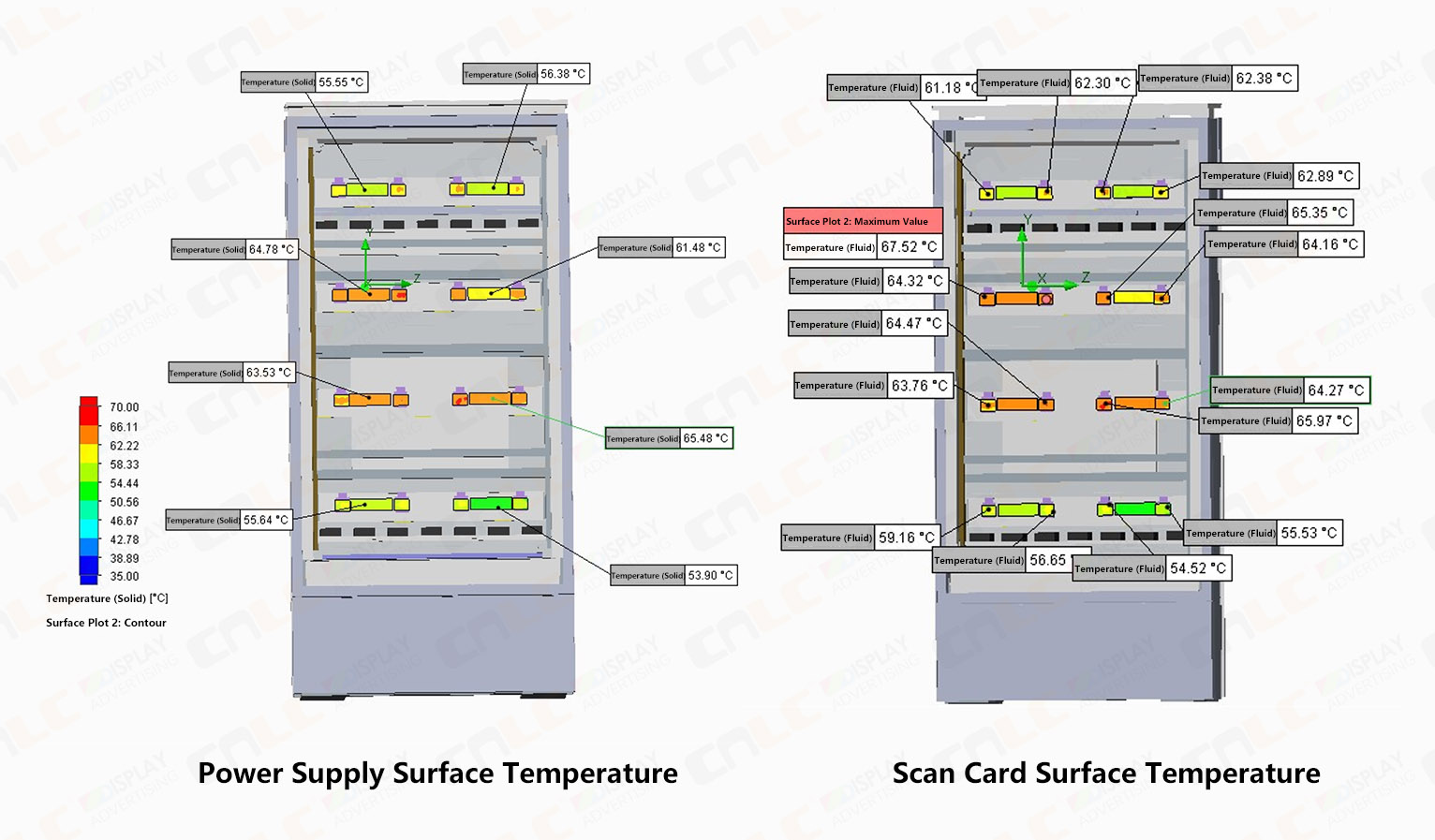
Beyond waterproofing, thermal stability is crucial for long-term display performance. CNLC validates every design through thermal simulation under harsh conditions — 1480 W full power and 800 W/m² solar irradiance, with ambient temperatures reaching 35 °C.
Simulation Parameters
Parameter
Value
Condition
Maximum Power Consumption
1480 W
Full load operation
Solar Irradiance
800 W/m²
Simulated peak sunlight
Ambient Temperature
35 °C
Outdoor standard
Internal Airflow Velocity
2.3 m/s
Simulated convection
Aluminum Thermal Conductivity
205 W/m·K
6063-T5 Aluminum Alloy
Results show a uniform temperature distribution between 39 °C and 71 °C, confirming that CNLC’s enclosure design effectively prevents overheating — even under continuous operation.
This precision is achieved through CNLC’s integrated cooling architecture:
Bottom air intake with dust filters
Upward airflow & top-mounted exhaust fans
Front-facing air ducts for direct heat extraction from the display surface
Smart temperature control system for adaptive fan speed and low noise
4. Aluminum Structure & Optical Protection
All CNLC enclosures are built using 6063-T5 aluminum alloy, featuring a thermal conductivity of 205 W/m·K and excellent corrosion resistance. This material not only ensures efficient heat transfer but also offers lightweight strength for easier installation and maintenance.
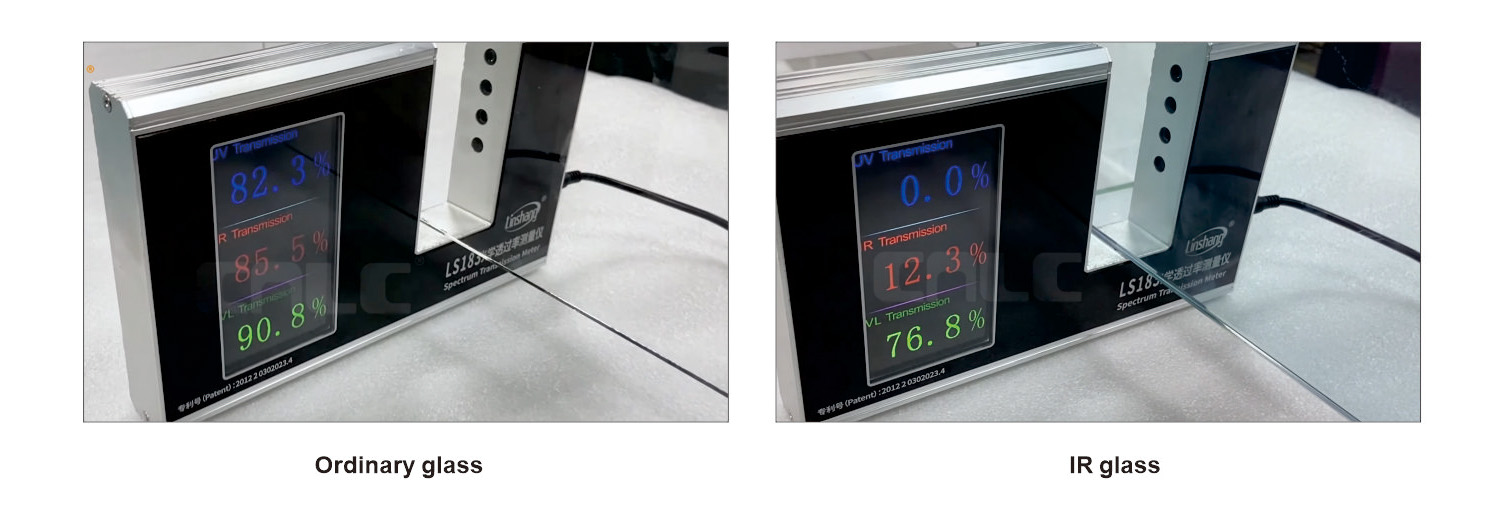
In addition, CNLC integrates 6–8 mm tempered laminated glass with optional IR filtering to block heat and UV radiation while maintaining over 75% visible light transmission — delivering vivid image clarity and durability.
5. Trusted Worldwide — Tailored for Your Needs
From gas stations to transportation hubs and urban billboards, CNLC displays are trusted by partners across Europe, Asia, and North America.
Each solution can be customized by:
IP Rating (IP56 / IP65 / IP66)
Cooling System (Air-cooled / A/C-assisted)
Screen Size & Brightness
Glass Type (Standard / IR-filtered)
Mounting & Structural Design
Our global clients choose CNLC not just for our products, but for our commitment to quality, precision, and long-term reliability.
Experience Precision. Experience CNLC.
Whether you need a high-brightness LED billboard, a smart city digital signage solution, or a fully customized outdoor display system — CNLC delivers performance you can trust.
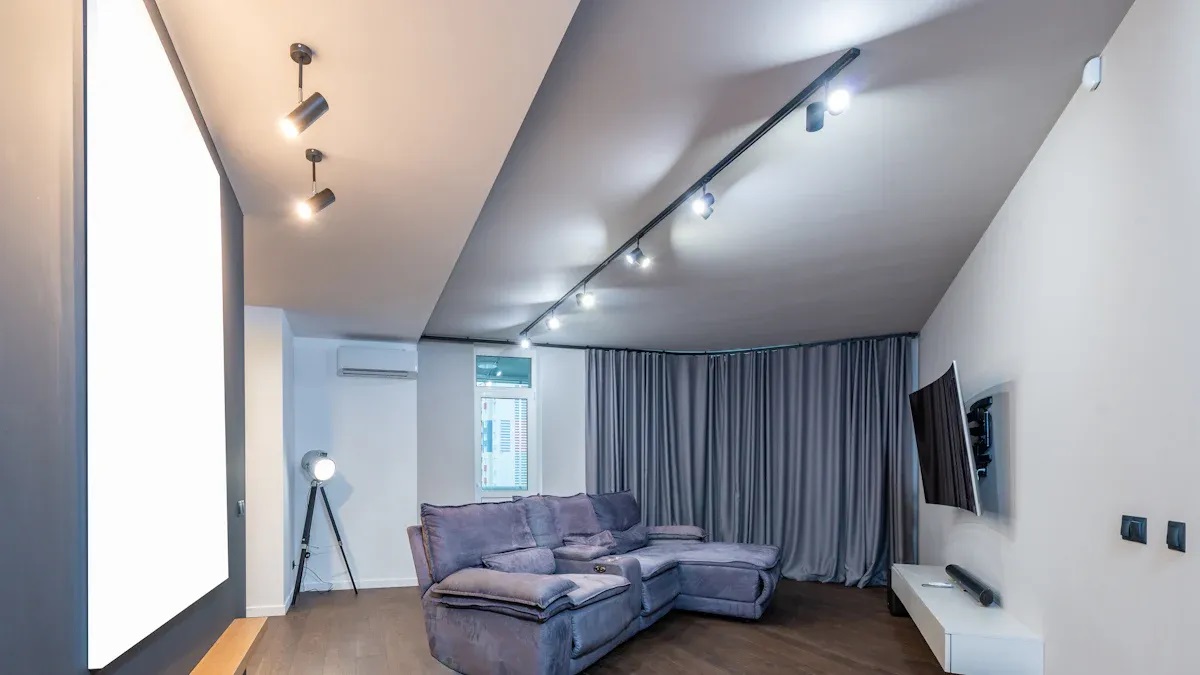
Ready to give your space a fresh, modern vibe? With led track lighting fixtures, you can create a look that fits your style and needs. Track lighting gives you flexibility and design options that work in any room. You can save a lot on your electric bill, too:
You might cut energy use by 75% to 90% each year.
LEDs turn more power into light, not heat, so you get more brightness with less waste.
Proper installation makes a huge difference. When you start installing track lighting, you control both style and function. You’ve got this!
Key Takeaways
LED track lighting can help you save a lot of money. You can save about 75% to 90% on your energy bills. This makes it a good choice for your home. - You can change and control track lighting to fit your style. Smart technology lets you make the lights look special. You can also change the lights to fit what you need. - It is important to install and set up the lights the right way. This helps you get the best light in every room. - Clean your fixtures often to keep them shining bright. Taking care of them will help them last longer. - You can mix different fixture styles to make your lights work better. Using smart controls can also make your lights look nicer and work well.
Choosing LED Track Lighting Fixtures
Modern Design Trends
You want your space to look fresh and stylish, right? Modern trends in track lighting focus on flexibility and smart features. Take a look at this table to see what’s popular now:
Trend
Description
Customization
Modular systems let you mix and match parts for a unique look and easy changes.
Energy Efficiency
Sustainable materials and tech help you save energy and boost performance.
Smart Technology Integration
Intelligent lighting adjusts to your schedule or room use, making life easier.
If you love gadgets, smart controls in your track lighting system can change the mood with just a tap. Customization lets you swap out fixtures or move them around, so your room always feels new.
Fixture Types and Finishes
Choosing the right fixtures makes a big difference. You’ll find bold, artsy designs and sculptural shapes that stand out. Many people pick wall-mounted fixtures or floating styles for a sleek look. Stainless steel and chrome finishes add a modern touch, especially in kitchen track lighting. Unique forms can turn your lighting into a statement piece.
Tip: Big, eye-catching fixtures work well in open spaces. Smaller rooms look better with simple, streamlined designs.
Room Size and Lighting Needs
Room size matters when you plan your track lighting installation. Mount track lights at a height of 7 to 8 feet in most homes. Space fixtures 4 to 6 feet apart for even light. In narrow rooms, a straight line works best. For bigger areas, cluster fixtures to highlight special spots.
Here’s a quick guide for recommended brightness:
Room Type
Recommended Lumens Range
Key Purpose
Living Room
1,500–3,000
Relaxing, entertaining
Kitchen
5,000–10,000
Cooking, food prep
Home Office
3,000–6,000
Working, reading
Bedroom
1,000–2,000
Sleeping, dressing
Bathroom
2,000–4,000
Grooming, showers
You keep your space safe and comfortable by following these tips. When you focus on choosing the right fixtures and layout, your led track lighting fixtures will shine in any room.
Track Lighting Installation
Setting up track lighting is not too hard. If you have the right tools and a plan, you can do it. Safety is important, so follow some tips. Let’s look at each step together.
Tools and Materials
Get your tools ready before you start. The right tools make the job easier and faster. Here is a list to help you:
Drill and drill bits
Screwdriver (flathead and Phillips)
Wire stripper
Measuring tape
Pencil or marker
Ladder
Fish tape (for running wires)
Safety goggles and gloves
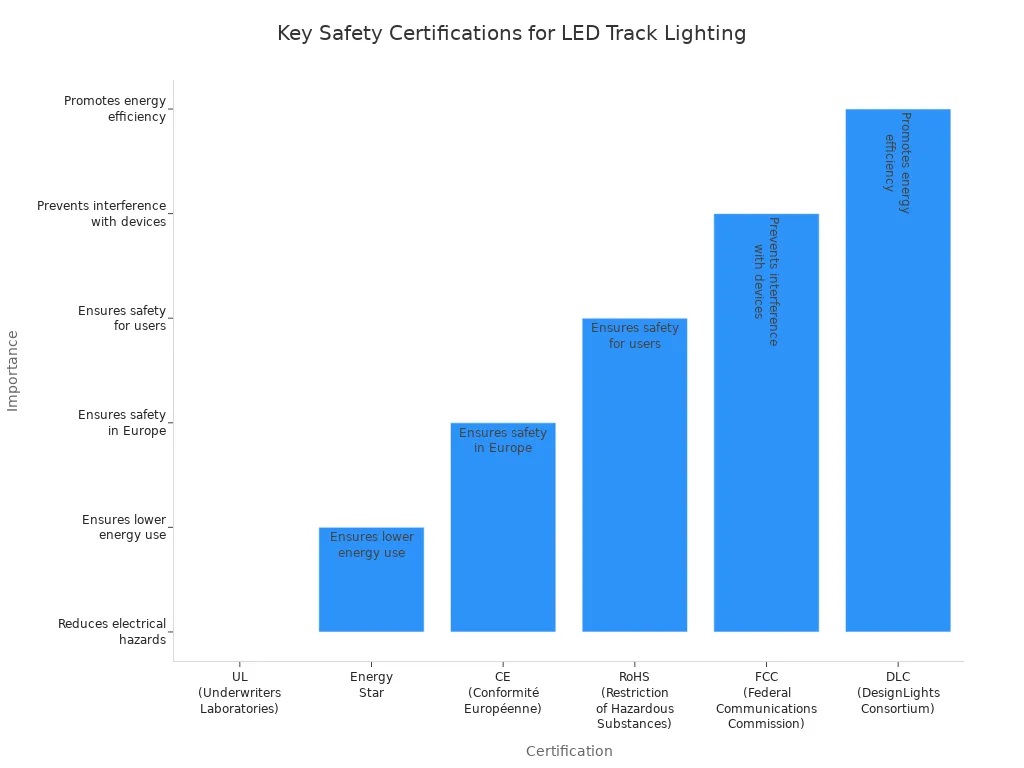
Tip: Always check if your tools and lighting have safety certifications. Certified tools help keep you safe from electrical problems. They also make sure your work meets the rules.
Here is a table that shows some important certifications:
Certification
Description
Importance
UL (Underwriters Laboratories)
Recognized safety certification for lighting products in the U.S. and Canada.
Reduces electrical hazards in installations.
Energy Star
U.S. government-backed certification for energy efficiency.
Ensures lower energy use and higher quality.
CE (Conformité Européenne)
Indicates compliance with EU safety and environmental standards.
Ensures safety and environmental protection in Europe.
RoHS (Restriction of Hazardous Substances)
Limits hazardous materials in electronic products.
Ensures safety for users and the environment.
FCC (Federal Communications Commission)
Ensures compliance with electromagnetic interference limits.
Prevents interference with other electronic devices.
DLC (DesignLights Consortium)
Focuses on high-efficiency commercial lighting products.
Promotes energy efficiency and potential utility rebates.
Planning Layout
A good plan helps your lights work well. Look at your room and think about what you want to light up. Here are some tips:
Assess Your Space: Check your room’s size and shape. See where you need more light.
Define Your Lighting Goals: Decide if you want to show off art, light a desk, or make the room feel cozy.
Choose the Right Fixtures: Use spotlights for small areas. Use floodlights for big spaces. Pendants add style.
Color Temperature and Bulb Selection: Warm white bulbs feel soft. Cool white bulbs are good for work.
Installation Tips: Put the track near things you want to highlight. Keep it at a safe height.
Think about how far the tracks should be from the wall. Here is what works best:
Place tracks 20 to 40 inches from the wall if your ceiling is normal height.
This makes it easy to point the lights where you want.
You will also stop glare on pictures or art.
Note: Measure two times before you drill holes. If you need to cut the track, use a hacksaw. Smooth the edges with a file.
Mounting and Wiring
Now you can put up your track lighting system. Follow these steps to stay safe and do a good job:
Remove Existing Fixtures: Take down old lights. Watch how the wires are connected.
Run the Electrical Cable: Drill a hole if you need to. Use fish tape to pull the cable from the switch box to the ceiling.
Mount the Tracks: Put the cable in the track. Mark where the screws go, drill holes, and attach the track to the ceiling.
Wire the Track System: Connect the ceiling wires to the track. Match the colors and make sure the wires are tight.
Attach and Aim Track Heads: Snap the lights into the track. Test the lights and point them where you want.
Safety Precautions: Always turn off the power at the breaker before you start. Wear safety goggles and gloves. Make sure you can reach the driver for future checks.
When you wire, follow the National Electrical Code (NEC). This code tells you how to wire, ground, and protect your system. Article 410 is about track lighting systems. Always ground metal parts to stop shocks. Use the right protection to keep your system safe.
Now you know all the steps for a safe and nice installation. With a good plan and the right tools, your led track lighting fixtures will make your room look great.
Customizing LED Track Lighting Fixtures
Adjusting Direction and Beam Angle
You have a lot of control with led track lighting fixtures. You can point the lights exactly where you want. This is great if you like to change your room or move your furniture. Adjusting the direction and beam angle lets you highlight a painting, a reading nook, or even your kitchen counter. When you focus the beam on a piece of art, you create a dramatic effect. The light seems to come from the artwork itself, making it pop. This is called artwork spotlight lighting, and it works well in living rooms, hallways, or galleries.
A smaller beam angle gives you a strong, focused light. Use this to show off a special feature or make a bold statement. A wider beam angle spreads the light out. This makes the room feel softer and more relaxed. For example, a 25-degree beam angle is perfect for highlighting a sculpture, while a 120-degree angle works better for general lighting in a big space. Always check that your angle-adjusting accessories fit your fixtures and match your room’s style. You can change the mood of a room just by turning or tilting the lights.
Tip: Try different angles and see how the light changes. You might find a new favorite look!
Mixing Fixture Styles
You do not have to stick with just one style on your track lighting system. Mixing different fixture styles gives you more options and makes your space interesting. You can use spotlights for tasks, pendants for style, and wall sconces for a cozy feel. This kind of customization lets you layer your lighting. You get both bright light for working and a soft glow for relaxing.
Interior designers often suggest these combinations for modern spaces:
Pendants, wall sconces, and accent lighting
Bright colors that match your room’s color scheme
Accent lighting to highlight cool features or artwork
Unique wall sconces and warm lights for a cozy mood
When you mix styles, you can create a look that is all your own. You can even use kitchen track lighting with bold pendants and sleek spotlights to make your kitchen stand out.
Smart Controls and Dimmers
Smart controls make your lighting easy to use and fun to play with. You can control your lights with a remote, your phone, or even your voice. Many led fixtures now come with smart features. You can dim the lights, change the color temperature, or set a schedule. This helps you save energy and makes your home more comfortable.
Here is a quick look at some smart features you might find:
Feature
Description
Light beam
Zoomable from 15° to 38°
Control system
Smart remote-controlled system
Dimmability
Dimmable LED Track Light
Color Temperature (CCT)
Changeable from 2700K to 6000K
Lighting head
360° rotatable
Vertical adjustment
90° adjustable
Smart controls let you set the mood for any time of day. You can dim the lights for movie night or brighten them for homework. Dimmers also help you use less electricity, which means lower bills. You can even track your energy use and make better choices. Setting up scenes or schedules adds convenience and makes your lighting work for you.
Note: Smart dimmers and controls are easy to add during installation. Always follow safety tips and check that your system is compatible.
Color Temperature and Brightness
Color temperature and brightness change how a room feels. Warm light (2700K to 3000K) makes a space feel cozy and inviting. Cool light (above 4000K) helps you stay alert and focused. You can pick the right color temperature for each room:
Space
Recommended Color Temperature (K)
Living Room
2700K - 3000K
Kitchen
2700K - 4000K
Office
3000K - 5000K
You can also adjust the brightness to match what you are doing. Use bright, ambient lighting for cleaning or working. Switch to softer light for relaxing or watching TV. Layering your light—using ambient, task, and accent lighting—gives you the most control. For example:
Ambient lighting sets the mood and fills the room with light.
Task lighting helps you see better for cooking or reading.
Accent lighting draws attention to special features or decorations.
With the right setup, your track lighting can do it all. You get style, comfort, and flexibility in every room.
Maintenance and Troubleshooting
Cleaning and Care
Keeping your LED track lighting clean helps it shine bright and last longer. Dust and dirt can block the light and make your room look dull. You should clean your fixtures regularly, just like you would with any other lights. Dirty lenses or covers can lower the amount of light you get, so a quick cleaning makes a big difference.
Here’s a simple way to keep your lights in top shape:
Gather a microfiber towel. This soft cloth will not scratch your fixtures.
Turn off the power and let the lights cool down before you start.
Use a sturdy ladder. Ask someone to help if you need extra support.
Mix a mild cleaner with warm water. Only use this on parts you can remove. Keep water away from wires and electrical parts.
After cleaning, check that all screws and parts are tight and secure.
Tip: Make cleaning your track lighting a regular task. You will keep your space bright and safe!
Common Issues
Sometimes, you might notice your lights flicker, look dim, or stop working. Most problems have easy fixes. Here are some common issues and what you can do:
Clean the track and fixtures often. Dust can cause connection problems.
Do not overload the track. Stay within the wattage limit to avoid trouble.
Make sure there is space around the lights. Good airflow stops them from getting too hot.
Replace dim bulbs right away. This keeps the driver from working too hard.
If a light will not turn on, check the power source and clean the contacts.
Flickering lights? Make sure your bulbs work with your dimmer switch. Some LEDs need special dimmers.
If you hear buzzing or see dim light, you might need a new driver or bulb.
If you cannot fix the problem, call a professional for help.
Note: Always use bulbs and dimmers that match your system. This helps your track lighting work its best.
You can transform any room with LED track lighting. Here’s a quick recap of the main steps:
Plan your layout and measure your space.
Install the track securely on the ceiling.
Connect the wiring as the instructions show.
Add and adjust your lights for the perfect look.
Modern LED track lighting gives you style, energy savings, and smart control. You can customize your setup to fit your needs. Check out some top reasons to start your project:
Motivation
Description
Versatility
Adjust and direct light where you want it.
Aesthetically Pleasing
Modern design boosts your room’s style.
Energy Efficiency
Save money with LED bulbs.
Adaptable
Change your lighting as your space changes.
Task Lighting
Focus light for work or hobbies.
Ready to brighten your home? Start your LED track lighting project today and enjoy a space that feels both modern and personal! ✨
Lighting design changes how you feel at home. Magnetic Track light systems are now very popular. They help make rooms flexible and stylish. Designers use dynamic lighting to make people feel better and work better. Modern interiors need lights that fit your needs and style. Look at the newest market growth:
Region
Market Size (2024)
CAGR (%)
Asia Pacific
USD 1.15 billion
14.2
North America
USD 900 million
N/A
Europe
USD 750 million
N/A
These trends let you make your space your own. They also help the room feel nicer and look smooth.
2025 Magnetic Track Light Trends
Minimalist Design
In 2025, minimalist design is very popular. Magnetic Track light systems now look simple and fancy. Designers pick thin tracks so they are hard to see. This style works well in new homes and offices. You can move the lights to fit what you want. Many brands, like Lightinova, have slim systems such as CLIXX SLIM. These work great in living rooms, kitchens, and hallways. They use low voltage and are easy to put in with magnetic modules. Minimalist designs make your space feel open and peaceful.
Tip: Minimalist lighting helps your room look bigger and less messy.
Ultra-Thin Profiles
Ultra-thin profiles are changing lighting styles. New tech lets tracks be as thin as 5mm. This is much thinner than old 25mm tracks. Now, ceilings look smooth without big fixtures. Ultra-thin Magnetic Track light systems are good for small apartments or stores. You can put these in fast, in about 90 minutes. These lights use LED bulbs that save energy and money.
Ultra-thin tracks hide in your ceiling.
You can make cool layouts in any room.
LED lights keep your space modern and green.
High Color Rendering
High color rendering helps show real colors at home or work. Recessed magnetic track lighting systems with this feature make things look bright and true. You will see the real colors of your furniture, art, and clothes. This is great for clothing stores and art galleries. Products look better and more interesting under these lights.
Benefit
Description
Accurate Color Reproduction
Shows the real colors of things, making spaces look lively and nice.
Ideal for Commercial Spaces
Great for stores and galleries where color is important.
Enhances Product Appeal
Makes products stand out and look their best.
Customization & Flexibility
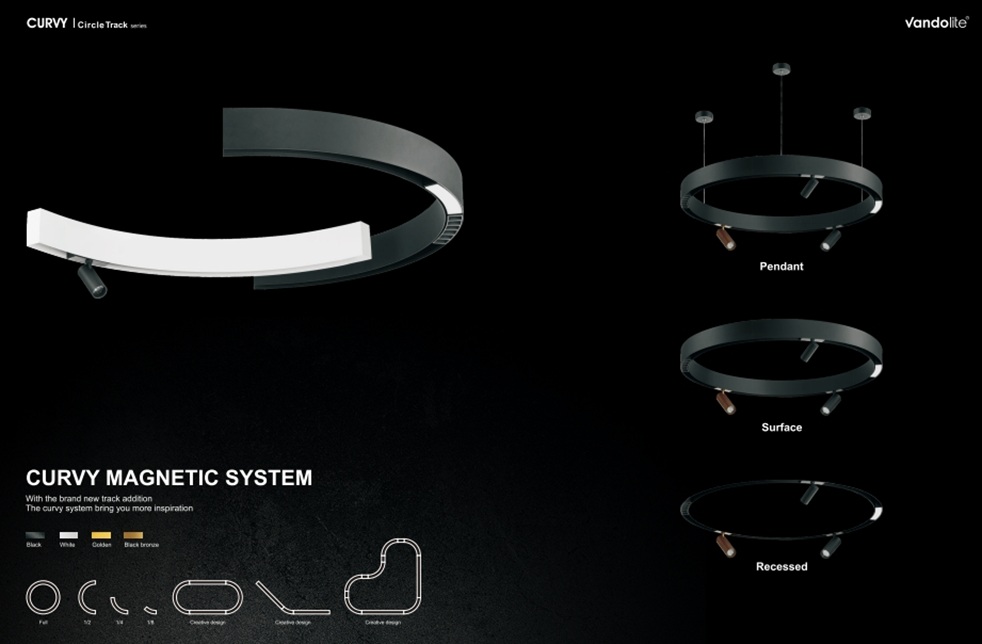
You can change Magnetic Track light systems in many ways. Pick from different track sizes, colors, and lengths. Choose black, white, bronze, champagne, or gold to match your style. Tracks come in 1 or 2 meters, and you can cut them shorter. Put them on the surface, inside the ceiling, or hang them down. You can add, move, or take away light modules easily. Change the beam angle, color temperature, or dimming type to fit your needs. This makes it easy to update your lights when your space changes.
Move fixtures without extra work.
Change lighting for new furniture or layouts.
Good for homes, offices, and stores.
Smart Control Options
Smart control options make Magnetic Track light systems even better. You can use your phone, a remote, or your voice to control the lights. Many systems use Bluetooth or Wi-Fi for easy setup. Set scenes for reading, relaxing, or working. Smart controls help you save energy and money. You can set lights to turn on or off at certain times. Some systems work with your smart home devices for more ease.
Feature
Description
Control Methods
Use your phone, remote, or voice to change the lights.
Connectivity
Connect with Bluetooth or Wi-Fi for easy setup.
Scene Setting
Make custom lighting scenes for different activities.
Magnetic Track light trends in 2025 focus on style, flexibility, and smart features. You can make a space that looks good and works for you.
Why Choose Magnetic Track Light
Seamless Aesthetics
You want your room to look neat and new. Magnetic Track light systems help you do this. These lights fit into your ceiling or wall. You see the light, not big fixtures. The design matches many styles, like Scandinavian or industrial. The lights do not stand out. Your space looks planned and part of your home.
Magnetic track lights keep your room tidy.
The fixtures do not take attention from your art or furniture.
You can link tracks from ceilings to walls for a smooth look.
Tip: Pick magnetic track lights if you want your room to feel open and neat.
The table below shows why people like magnetic track lighting more than old lights:
Advantage
Description
Easy Installation
You can attach them fast with magnets.
Flexible Adjustability
You can move fixtures along the track easily.
Sleek Aesthetics
They make your room look modern and clean.
Versatile Applications
Good for rooms that need changing lights.
Convenient Maintenance
It is easy to change bulbs or adjust them.
Versatile Applications
You can use modern magnetic track lights in many places. They work well in homes, offices, and stores. You can change the lights when you need to. This makes them smart for spaces that change over time.
Here are some places where you might see magnetic track lights:
Type of Space
Description
High-end residential homes
These homes often use modern lighting.
Contemporary offices
Offices use flexible lights for different jobs.
Design studios
Studios need lights they can change for work.
Upscale commercial interiors
These places want modern looks and good use.
Luxury apartments
These homes want hidden hardware and modern lights.
Design showrooms
Showrooms need flexible and custom layouts.
You can move or add fixtures without tools. This lets you make new lighting for different things you do. You can also change your lights when you move your furniture. Magnetic Track light systems let you set up your space how you want.
Practical Benefits
Safety Features
You want your lighting to be safe for everyone at home or work. Magnetic track lighting systems help you avoid many common risks. These systems do not need tools for installation, so you lower the chance of electrical fires or other hazards. You can adjust the lights without touching wires or using sharp tools. The fixtures stay locked in place with strong magnets. This means you do not have to worry about lights falling or moving by accident, even in busy spaces.
No tools needed for setup, so you avoid electrical risks.
Fixtures stay secure, which helps prevent accidents.
You can safely adjust lights as often as you need.
Tip: Magnetic track lights are a smart choice for families with kids or for busy offices.
Easy Installation
You can install magnetic track lights much faster than traditional lighting. The process is simple and does not require special skills. You just snap the tracks and fixtures into place. If you want to move a light, you can do it without any tools. Traditional lighting often needs extra effort and time to adjust fixtures after installation. Magnetic track lights let you change your setup quickly. This makes them perfect if you like to update your space often.
Feature
Magnetic Track Lights
Traditional Lights
Tool-Free Adjustment
Yes
No
Installation Time
Short
Long
User-Friendly
Yes
No
Energy Efficiency
You can save a lot of energy with magnetic track lighting. Most systems use LED bulbs, which use much less power than old-style lights. You might save up to 90% on your energy bills compared to traditional lighting. LEDs also last longer, so you do not have to replace bulbs as often. This helps you save money and helps the environment at the same time.
LED bulbs use less electricity.
Lower energy bills for your home or business.
Fewer bulb changes mean less waste.
Note: Choosing energy-efficient lighting is good for your wallet and the planet.
Impact on Interiors
Personalized Spaces
You can shape your home to match your style with Magnetic Track light systems. These lights do more than brighten a room. You can use them to highlight art, show off special furniture, or draw attention to unique walls. Many people now use track lighting as a design feature, not just a tool. You can move the lights or change their direction whenever you want. This lets you try new looks without much effort.
You might want a cozy reading corner one day and a bright workspace the next. Magnetic Track light systems let you make these changes quickly. You do not need to call an expert. You can swap out fixtures or adjust the layout as your taste changes. This flexibility helps you create a space that feels truly yours.
Tip: Try different lighting setups to see how they change the mood in your room.
Sustainable Design
You help the planet when you choose modern lighting. Many new systems use LED technology. LEDs use less energy and last longer than old bulbs. You save money and reduce waste at the same time. Magnetic Track light systems also use smart controls. You can set timers or use sensors to turn off lights when you do not need them.
Here is how these systems support green living:
Feature
Description
LED Technology
Uses less power and lasts longer than regular bulbs.
Flexibility
Lets you light only the areas you need, saving energy.
Reduced Replacement
Easy to update, so you do not throw away old fixtures as often.
Smart Integration
Works with smart home systems for better energy use.
Recyclable Materials
Some tracks and fixtures use materials you can recycle.
You make your home more eco-friendly by picking lighting that uses less energy and creates less waste. Smart lighting also helps you use only what you need, which is good for both your wallet and the environment.
Selecting Magnetic Track Light
Key Considerations
When you choose a magnetic track lighting system, you want to make sure it fits your space and needs. Start by thinking about the track length and layout. Measure your room and decide how much of the area you want to light. A longer track can cover more space, while a shorter one works well for small rooms.
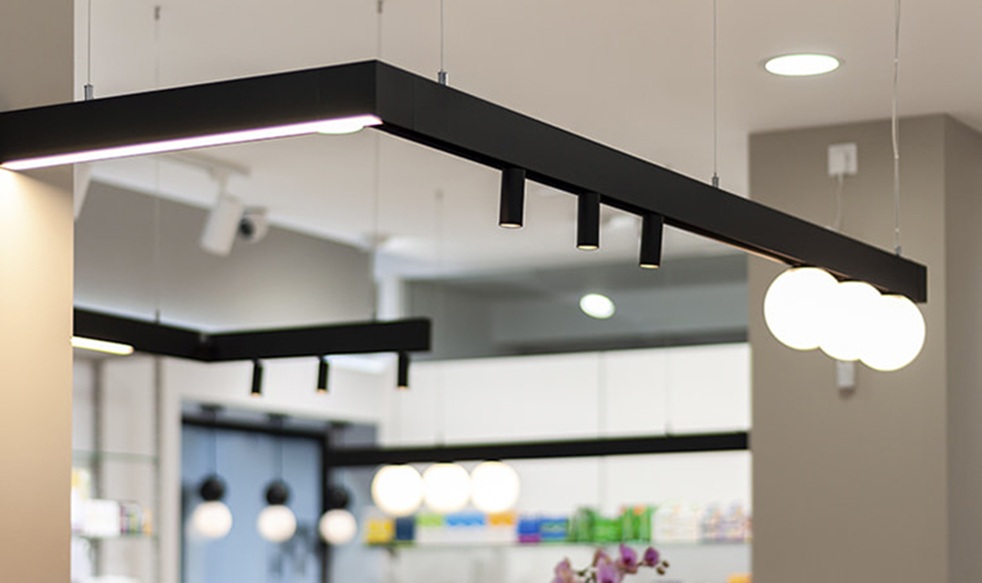
Next, look at the types of fixtures you need. Some fixtures give general light, while others focus on certain spots. You can pick spotlights for art, linear lights for even coverage, or pendant lights for a stylish touch. Each type helps you create the right mood in your room.
Control options matter, too. Many systems let you dim the lights or change the color temperature. Some even connect to smart home devices. These features make it easy to set the perfect scene for reading, relaxing, or working.
Track length and layout: Match the track to your room size and lighting needs.
Fixture types: Choose spotlights, linear, or pendant lights for different effects.
Control options: Look for dimming, color changes, and smart home features.
Tip: Think about how you use each room before picking your lighting setup.
Integration Tips
You can get the best results by following a few simple tips when you install magnetic track lights. First, pick the right track type. Most people use 48 V tracks because they work well and are safe.
Pay attention to the beam angle. Movable lights let you point the light where you want, but you should avoid glare or unwanted reflections. Choose a color temperature that matches your style. Warm light feels cozy, while cool light feels bright and fresh.
Keep about 5 inches between each light for even coverage. If your room has high ceilings, make sure the lights are strong enough to reach the floor. Reflector panels can help spread the light and make your space look brighter.
Use 48 V tracks for most projects.
Adjust beam angles to avoid glare.
Pick warm or cool color temperatures for the right mood.
Space lights about 5 inches apart.
Check room height for proper light coverage.
Add reflector panels for better light spread.
Choose energy-saving bulbs to lower costs.
Decide if you want recessed, surface, or hanging tracks.
Note: Careful planning helps your magnetic track lights look great and work well in any room.
Magnetic track lighting lets you change your room’s look and use. You get a modern style, can move lights, and save energy. Many people pick these lights because they are easy to adjust. They also look cool and new.
Put tracks to shine on art or make a cozy spot.
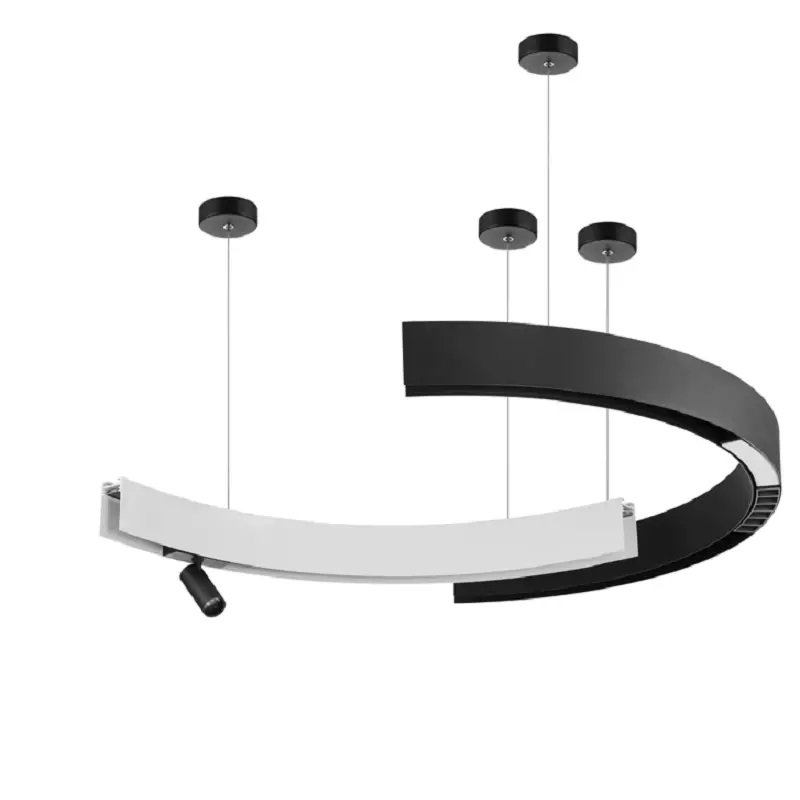
Use curvy tracks in halls or over beds for something special.
Some workers might need to learn more to install them right.
Pick magnetic track lighting if you want a space that feels new and easy to change. Try new things and let your lights change as you do.
You can put in a dimmable magnetic led track light by following some easy steps and using the right tools. This new light uses magnets to attach lights to a track. You can move and change the lights easily. Before you begin, plan your setup and think about safety.
Tip: Always look for dangers like bad wiring or too much power in circuits. Use the right gear and work carefully to stay safe.
Safety Incident
Description
Electrical Shocks
You can get shocked by live wires. Use the right tools and follow safety rules.
Falling from a Ladder
Working high up can make you fall. Use safety gear and be careful.
Fire Hazards
Sparks and fires can happen. Use safe fixtures and make good connections.
Magnetic Track Light Basics
What Is a Magnetic Track Light
You might wonder what makes a modern recessed magnetic track light different from other lights. This system uses a special track with magnets inside. You can attach light fixtures to the track and move them around without tools. The track rail is usually made from aluminum and has copper strips for power. The lamp body has a magnetic adapter, so you can snap it into place and slide it wherever you want. The power supply changes regular electricity into low voltage, which makes the system safer.
Here are the main parts you’ll find in a Magnetic Track Light system:
Magnetic Track Rails: These come in different sizes and styles for your space.
Power Supply: This converts your home’s electricity to a safe level for the lights.
Connect Track Rail Accessories: You use these to join tracks and create your layout.
Magnetic LED Lamps: Pick from many types to get the look and brightness you want.
Tip: You can install these tracks on the ceiling or wall. You can even hang them as pendants for a cool effect.
Key Benefits
When you choose a Magnetic Track Light, you get more than just good lighting. You get flexibility, style, and savings. You can move the lights to highlight artwork, brighten a reading nook, or change the mood in your room. You don’t need tools to adjust the lights, so you can change your setup anytime.
Here’s a quick look at why people love Magnetic Track Lights:
Benefit
Description
Flexibility
Move lights along the track to fit your needs.
Energy Efficiency
Use less energy and save up to 30% compared to old halogen lights.
Modern Aesthetics
Enjoy a sleek, clean look with hidden wires and a minimalist design.
Easy Installation
Snap lights into place without complicated wiring or tools.
Versatility
Use in homes, offices, or shops for different lighting effects.
Smart Integration
Connect with smart home systems for remote control and scheduling.
You also get a safer system because Magnetic Track Lights use low voltage. This means less risk of shocks. The design fits almost any style, so your space looks modern and tidy. You can add or remove lights as your needs change, and you won’t need an electrician every time.
Tools and Materials
Before you begin, gather all your tools and materials. This helps you work faster and make fewer mistakes. Let’s see what you need for a safe and simple job.
Essential Tools
You do not need special tools, just some basics. These tools will help you finish the job easily. Here is a list to help you get ready:
Screwdriver (for turning screws)
Electric drill and drill bits (for making holes)
Measuring tape or ruler (to measure where things go)
Pencil (to mark spots)
Level (to keep the track straight)
Wire stripper (to remove wire covers)
Electrical tester (to check if wires have power)
Screws and anchors (to hold the track in place)
Wire nuts (to connect wires safely)
Magnetic track light kit (with tracks, connectors, and lights)
Tip: Always check your measurements before you drill. Even a small mistake can change how your lights look.
Required Materials
You want your Magnetic Track Light to last and look nice. Good materials help your system work better. Here is a table with the most used materials:
Material
Description
FR4 circuit boards
These do not rust and carry electricity well.
6063 aviation-grade aluminum
This aluminum is strong and keeps your track safe.
You also need power cables, insulation tape, and thin magnetic lamps for your track.
Safety Gear
Safety is very important when working with electricity. Wear the right gear to protect yourself:
Insulated gloves (to stop shocks)
Flame-resistant clothing (for more safety)
Hard hat (if you work above your head)
Safety glasses (to protect your eyes)
Protective footwear (to keep your feet safe)
Note: Never forget your safety gear. Even a fast job can be dangerous if you are not careful.
Planning the Installation
Confirm Design Pattern
You want your Magnetic Track Light to look great and work well. Start by picking a design pattern that fits your room. Think about how you use the space and where you need the most light. Some people like a straight line of lights for a clean look. Others choose shapes like L-shape or U-shape to light up corners or large areas. You can even try a snake shape for a fun, wavy effect.
Here’s a quick table to help you decide:
Design Pattern
Description
Linear
A straight line of lights along the track.
L-shape
Good for corners and corridors.
Oval
Soft, rounded lighting effect.
Round
Creates a focal point in the room.
Square
Fits modern spaces and offices.
Snake shaped
Wavy design for a dynamic look.
You can also use a grid or modular pattern for bigger rooms. If you want to highlight a sofa or a dining table, try a U-shape or I shape. Take a moment to sketch your plan on paper. This helps you see how the lights will look before you start.
Choose Track Rail and Lights
Now, pick the right track rail and lights for your setup. Not all rails work with every light fixture. You need to match the track type with the right heads. For example, H tracks only fit H-style heads. J tracks need J-style heads. L tracks go with L-style heads. Some adapters let you mix and match, but it’s better to stick with the same style for best results.
Track Type
Compatibility with Fixtures
Notes
H
H-style heads
Only compatible with H-style tracks
J
J-style heads
Only compatible with J-style tracks
L
L-style heads
Only compatible with L-style tracks
-
Mixed compatibility
Adapters may work, but not ideal
Pick lights that match your style and brightness needs. You can choose spotlights for art or wide lights for general use. Make sure your lights and rails work together before you buy them.
Mark and Prepare Area
Get ready to install by marking your area. Use a measuring tape to find the right spots for your track. Draw lines with a pencil where you want the rails to go. Check that your lines are straight with a level. If you want a shape like L or U, measure each side carefully. Double-check your marks before you drill any holes.
Tip: Take your time with measuring and marking. A small mistake can make your lights look uneven or out of place.
Clear the area of furniture and dust. Make sure you have enough space to work safely. If you plan well, your Magnetic Track Light will look neat and work perfectly.
Installing the Magnetic Track Light
Power Off and Safety
Before you start, turn off the power at the breaker. You want to make sure no electricity flows to the area where you will work. Use an electrical tester to double-check that the wires are not live. Put on your insulated gloves and safety glasses. If you work above your head, wear a hard hat. Safety comes first, so never skip these steps.
Tip: Always check the power twice. If you feel unsure, ask someone to help you confirm.
Attach Power Adapter
Find the spot where you want to connect the power adapter. Most Magnetic Track Light systems use a low-voltage adapter, like 12V or 24V. Some LED spotlights for living room connect straight to 110V or 220V, but many need a transformer. Look at your product’s label to see what you need.
Here’s a quick table to help you match your power supply:
Voltage Type
Voltage Specification
Current Requirement
Example Product
Low-Voltage
12V/24V
Needs separate transformer
Combo Track Lights (12V) for a 10㎡ bedroom, 60W transformer
High-Voltage
110V/220V
No transformer needed
Uranus Track Light (220V) for a 30㎡ retail store
Connect the adapter to the main power wires. Use wire nuts to keep the wires safe and tight. Wrap insulation tape around the connections. Make sure the adapter sits close to the track rail for easy wiring.
Mount Track Rail
Now, you need to mount the track rail to the ceiling. The way you do this depends on your ceiling type. Here’s a table to help you pick the best method:
Installation Method
Description
Suitable Ceiling Types
Embedded Magnetic Rail
Fits inside the ceiling for a flush look
Drywall, plaster ceilings
Surface Mounted Magnetic Rail
Attaches right on top of the ceiling
Concrete, wood ceilings
Hoisted Magnetic Rail
Hangs down for adjustable height
High ceilings, industrial spaces
Most people use surface mounting because it’s simple and works for many homes. If you want a modern look, try recessed mounting. For tall rooms, hoisted rails look great.
Follow these steps to mount your track:
Measure and mark the spot for the rail using a tape and pencil.
Use a level to make sure your marks are straight.
Drill pilot holes at each mark.
Hold the rail in place and screw it into the ceiling. Make sure it sits flat and does not wobble.
Check that the rail feels secure before you move on.
Note: If your ceiling is soft, use anchors to keep the screws tight.
Connect Tracks with Adapter
If you use more than one track rail, you need to connect them with adapters. Push the copper rails forward so they touch the adapter well. Sometimes, tracks slide too far down and lose contact. If you see this, push them back up and try again. Make sure each phase of the rail connects with the end feed. If the lights do not work, re-seat the connection.
Common mistakes to avoid:
Tracks sliding too far down, causing poor contact.
Not connecting the rail phase with the end feed.
Forgetting to push copper rails forward.
Take your time with this step. Good connections mean your lights will work every time.
Connect Power Supply
After you connect the tracks, hook up the power supply. If you use a low-voltage system, connect the transformer to the adapter. For high-voltage systems, connect the wires straight to the rail. Use wire nuts and insulation tape for safety. Double-check all connections before you turn the power back on.
Alert: Never touch bare wires. Always use tools with insulated handles.
Install Magnetic Lights
You’re almost done! Now, snap the magnetic lights onto the track. Hold each light fixture close to the rail. The magnets will grab the track and hold the light in place. Slide the lights to the spots you want. Make sure each light sits straight and feels secure.
Follow these steps for perfect alignment:
Gather your lights and check that they match your track.
Place each light against the rail. Let the magnets pull it into place.
Slide the lights to your chosen spots.
Turn the power on and test each light.
If a light does not work, check the connection and try again.
Tip: Test the lights before you finish cleaning up. If you see flickering or no light, check the adapter and rail connections.
Your Magnetic Track Light system is now ready. You can move the lights anytime to change your room’s look. Enjoy your new lighting!
Testing and Troubleshooting
Power On and Test
You finished installing your magnetic track lights. Now, it’s time to see if everything works. First, stand back and double-check that all wires are covered and the track feels secure. Put on your safety gear one more time. Go to your breaker box and turn the power back on.
Walk back to your lights. Flip the wall switch or use your remote if you have one. Watch for each light to turn on. If you see all the lights glow, you did a great job! If some lights stay off or flicker, don’t worry. You can fix most problems with a few quick checks.
Here’s a simple checklist to help you test your lights:
Look for any lights that do not turn on.
Check for flickering or dim lights.
Listen for buzzing or crackling sounds.
Make sure all lights sit straight on the track.
Tip: If you see a problem, turn off the power before you touch anything.
Fix Common Issues
Sometimes, things don’t go as planned. You might run into a few common problems. Most of these have easy fixes. Take a look at the table below to see what you might face and how to solve it:
Issue
Solution
Compatibility issues
Make sure all your parts match. Use the same brand or check the specs.
Circuit overloading
Add up the wattage of your lights. Stay under the limit for your circuit.
Use of low-quality materials
Pick strong, high-quality tracks. Cheap ones can bend or break.
Improper installation
Check that your rails are straight and tight. Reinstall if needed.
Lack of maintenance
Look at your tracks often. Tighten loose parts and clean dust away.
If you find a light that won’t turn on, try moving it to another spot on the track. Sometimes, the magnets don’t make good contact. If you hear buzzing, check your wiring and connections. Always use good materials and follow the steps. You’ll have bright, safe lights that last a long time.
Note: Regular checks help you catch small problems before they get big. Keep your lights clean and tight for the best results.
Maintenance Tips
Cleaning
You want your magnetic track lights to stay bright and clean. Cleaning them is simple if you follow these steps. Always turn off the power before you start. This keeps you safe. Take off the light fixtures gently. Use a big soft brush to dust off dirt. Get a damp washcloth or a cleaning wipe. Wipe the fixture in one direction only. Do not use too much water. Water can cause problems with electricity. Let everything dry all the way before you put the lights back.
Turn off the power first.
Take off the fixtures and sockets slowly.
Use a soft brush to dust off dirt.
Wipe with a damp cloth or cleaning wipe in one direction.
Do not soak the fixture.
Let it dry fully before turning the power back on.
Tip: Clean your lights often. This helps them look new and last longer.
Routine Checks
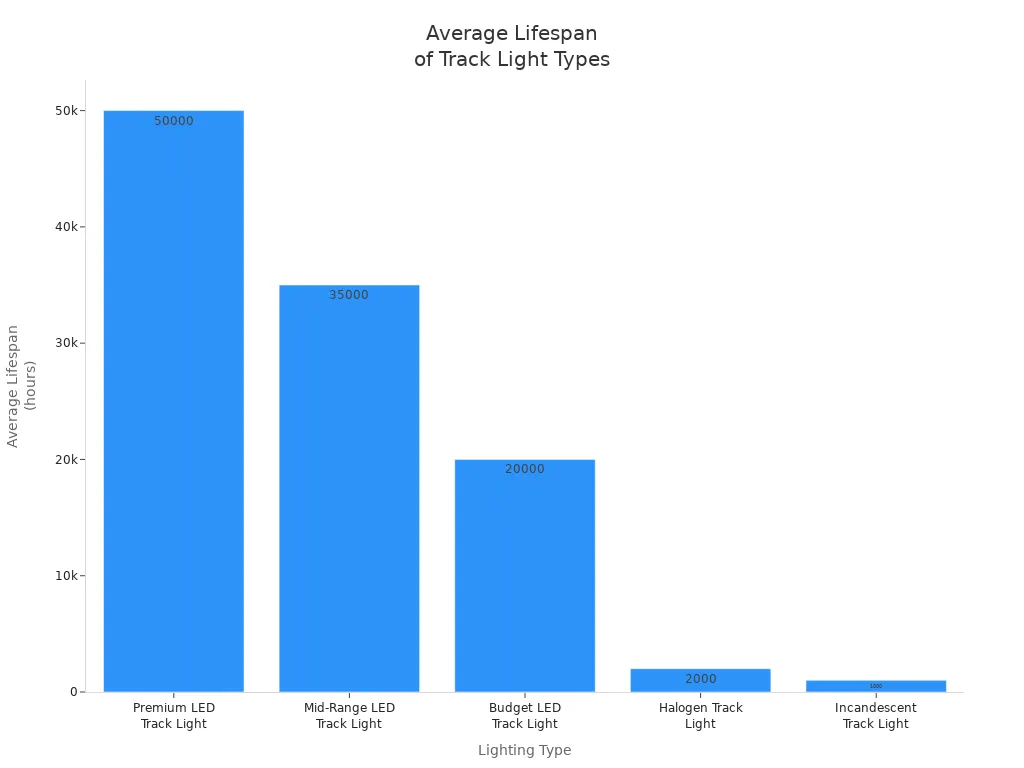
Check your magnetic track lights every few months. Look for loose parts, dust, or flickering bulbs. Tighten any screws that are loose. Make sure the magnets hold the lights tight. If you see damage, change the broken part right away. LED magnetic track lights last much longer than old bulbs. Look at this chart to see how long each type lasts:
Lighting Type
Average Lifespan (L70)
Hours Used/Day
Years of Use
Replacement Frequency (20-Year Period)
Premium LED Track Light
50,000 hours
6
22.8
0–1
Halogen Track Light
2,000 hours
6
0.9
22
Incandescent Track Light
1,000 hours
6
0.45
44
LED track lights can last over 25,000 hours. You will not need to change them often. This means less work for you!
Upgrading Fixtures
You may want to upgrade your magnetic track lights for better looks or features. New fixtures have cool things like smart controls and lights you can change. Some even stop flickering. Here are some new features you can get:
Feature
Description
Robust Construction
Strong aluminum helps keep lights cool.
Stable Magnetic Connection
Easy to move and stays in place.
Reliable Power Delivery
Gives steady low-voltage power.
Exceptional Color Rendering
Colors look bright and real.
Precise Beam Control
You can change the angle of the light.
Flicker-Free Operation
No flicker, so your eyes feel good.
Tunable White & Dimming
Change the color and brightness easily.
Smart Control Compatibility
Works with smart home systems.
Variety of Fixture Types
Choose from spotlights, linear lights, and more.
Thermal Management
Good cooling helps lights last longer.
Compliance & Safety
Meets safety rules from around the world.
Note: Upgrading your lights can make your room look new and save energy. You can change old lights for new ones in just a few minutes!
You did it! You installed your magnetic track lights and made your space shine. Remember these safety tips:
Wear gloves and safety glasses.
Keep flammable items away from the lights.
Check all wires and connections for tightness.
Inspect for loose fixtures or damaged parts.
Use the right voltage for your system.
Keep your lights clean and check them often. Want more style? Try adding glass-head lamps or smart-controlled lights. Here are some ideas:
Lighting Idea
Description
Glass-head track lamps
Add sparkle and personality to any room.
Bluetooth/Wi-Fi controlled lights
Change brightness and color with your phone.
Metal shades with vintage finishes
Give your space a bold, creative look.
Share your results with friends or try new lighting ideas to make your home even brighter!
Have you ever found your home feeling either too dim or uncomfortably harsh because of the wrong lights? Many people struggle to find the right magnetic led circular light that truly fits their space. When you select lighting, you want to avoid issues like:
Insufficient brightness for task lighting in your home
Glare that makes it hard to relax or work
Shadows that disrupt the atmosphere
Color temperature that does not match your desired mood
Lights that do not work with your current electrical setup
Every home has unique lighting needs. You should consider your space, your lighting solutions, and even your budget. The right choice balances your budget considerations with the look and function you want.
Key Takeaways
Assess your space before choosing lighting. Measure room size, shape, and ceiling height to ensure proper illumination.
Select the right diameter for your light fixture. Match the size to your room to avoid dark spots or overwhelming the space.
Consider the purpose of each room when choosing lighting. Different areas require specific types of lighting for comfort and functionality.
Check energy ratings and opt for LED lights. They are more efficient, saving you money on electricity bills over time.
Look for adjustable features in your lighting. This flexibility allows you to customize brightness and direction to suit your needs.
Assessing Your Space
Before you select a magnetic led circular light, you need to understand your space. Every home has unique characteristics that influence your lighting solutions. By evaluating the size, shape, ceiling height, and purpose of each room, you can make informed decisions that fit both your needs and your budget.
Room Size & Shape
Start by measuring the size of your room. A small bedroom requires a different approach than a large living area. The right shape and appropriate size of your fixture ensure even illumination. If you have a rectangular or irregularly shaped room, you may need more than one light to avoid dark corners. For square rooms, a single fixture often provides balanced coverage.
Tip: Sketch your room’s layout and mark potential light positions. This helps you visualize how the lights will distribute across the space.
Ceiling Height & Type
Ceiling height plays a major role in how well your lights perform. Low ceilings benefit from flush-mounted fixtures, while high ceilings allow for pendant or suspended options. The type of ceiling—flat, sloped, or vaulted—also affects installation. Magnetic mounting systems work best on flat, metallic surfaces. If your ceiling is textured or non-metallic, you may need an adapter or additional support.
For ceilings under 8 feet, choose low-profile fixtures to maximize headroom.
For ceilings above 10 feet, select a fixture with higher output to ensure adequate lighting.
Lighting Purpose
Define the primary function of each room. Your lighting needs will change based on whether you want to create ambiance, highlight artwork, or provide task lighting. The table below outlines best practices for different spaces in your home:
Room Type
Lighting Needs
Entry Ways
Use ceiling fixtures for ambient light; avoid potlights; consider accent lighting for artwork.
Stairs and Hallways
Install fixtures every 4-6 feet; use varied light sources for safety and aesthetics.
Utility Rooms
Require plenty of ambient and task lighting; consider moisture-proof fixtures for even light.
Bathrooms
Bright, even lighting is essential; use recessed lighting and ensure strong light above mirrors.
Kitchens
Need ambient light supplemented by task lighting; use undercabinet lights and consider dimmers.
When you match the lighting to the room’s purpose, you create a comfortable and functional environment. For example, kitchens need both ambient and task lighting, while bathrooms require bright, even light for grooming. Entryways benefit from accent lighting that welcomes guests and highlights decor.
Note: Assess your current lighting and identify any gaps. This step helps you choose the right magnetic led circular light and ensures your home feels inviting and practical.
Diameter Selection
Selecting the right diameter for your magnetic LED circular light ensures your space receives balanced illumination. You should always match the fixture’s size to the room’s dimensions and intended use. If you choose a light that is too small, you risk creating dark spots and uneven lighting. Oversized lights can overwhelm a room and waste energy.
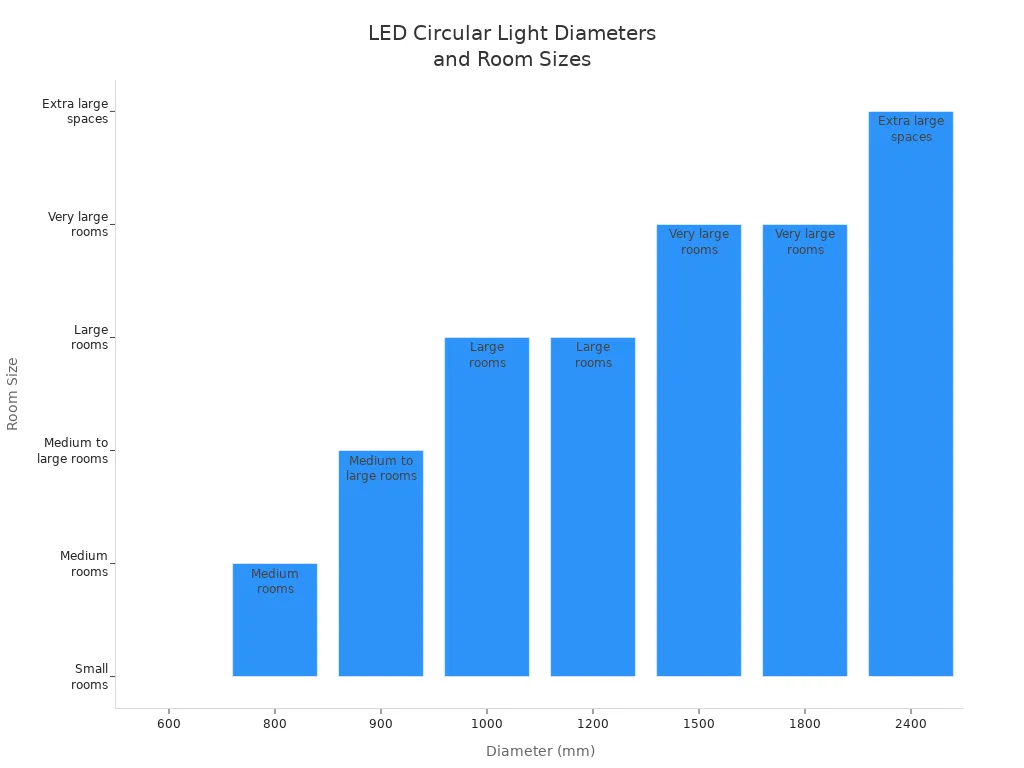
Manufacturers offer a range of standard diameters to suit different spaces. The table below helps you identify the appropriate size for your room:
Diameter (mm)
Corresponding Room Size
600
Small rooms
800
Medium rooms
900
Medium to large rooms
1000
Large rooms
1200
Large rooms
1500
Very large rooms
1800
Very large rooms
2400
Extra large spaces
Tip: For bedrooms or compact offices, a 600mm or 800mm fixture often provides the right balance. Living rooms or open-plan areas usually benefit from 1000mm or larger diameters.
You can also visualize the relationship between standard diameters and room sizes in the chart below:
When you select the appropriate size, you create a comfortable environment and avoid unnecessary energy costs. Always consider your budget and the function of the room before making a final decision.
Placement for Coverage
Proper placement of your magnetic LED circular light maximizes coverage and enhances the overall lighting effect. You should position the fixture at the center of the ceiling for most rooms. This approach distributes light evenly and reduces shadows. For rooms with an irregular shape or larger areas, you may need multiple fixtures to achieve uniform illumination.
Follow these steps to optimize placement:
Identify the Room’s Focal Point: Place the light above the main activity area, such as a dining table or seating zone.
Measure Distances: Ensure the fixture is not too close to walls or corners. Leave at least 2-3 feet of space from the edge of the light to the nearest wall.
Consider Ceiling Height: For higher ceilings, you may need to lower the fixture or use a pendant-style mount to maintain effective lighting.
Use Multiple Lights for Large Spaces: In extra-large rooms, install several fixtures in a grid or pattern to avoid dark zones.
Note: If your home features open-concept layouts, combine different lighting solutions to layer light and create depth. This approach works well for kitchens, living rooms, and multipurpose areas.
You should always test the placement with temporary fixtures or by using a flashlight to simulate the effect. This step helps you visualize how the light will interact with furniture and architectural features. By carefully considering both diameter and placement, you ensure your magnetic LED circular light delivers the best results for your home.
Brightness & Color Temp for Magnetic LED Circular Lights
When you choose a magnetic led circular light, you need to consider both lumens and wattage. Lumens measure the brightness of your lights, while wattage tells you how much energy the fixture uses. For a comfortable and functional home, you should match the lumen output to the room’s purpose and size. The table below shows recommended lumens per square foot for common spaces:
Room
Recommended Lumens per Square Foot
Living rooms
5-20
Bedrooms
5-15
Kitchens
30-50
If you want to brighten a kitchen, you need more lumens than in a bedroom. Always check the product’s lumen rating before you buy.
LED lights offer high brightness with low energy use. You save on your budget because LEDs consume less wattage than traditional bulbs. Here are some key points to remember:
LED track lights use less energy, which lowers your electricity bills.
LEDs convert most energy into light, not heat, so you get more brightness.
Incandescent and halogen bulbs waste energy as heat, making them less efficient.
Tip: Choose LEDs for your home to maximize brightness and minimize energy costs.
Color Temperature Range
Color temperature affects the mood and function of your lighting. You measure color temperature in Kelvin (K). Lower numbers create a warm, cozy glow, while higher numbers give a crisp, cool effect. The table below helps you select the right range for your space:
CCT (Color temperature)
Type of Lighting
2200K-2700K
Warm lights for ambient brightness
3000K-3500K
Soft white light
4000K-4500K
Brighter white, ideal for kitchens and commercial spaces
5000K and more
Bright bluish lights, mainly for commercial locations
For your home, you want to match the color temperature to each room’s needs:
Living room: 2700K-3000K for a welcoming feel.
Kitchen: 2700K-4000K for bright, functional lighting.
Bathroom: 3000K-4000K for relaxed, clear light.
Bedroom: 2700K-3000K for a calm atmosphere.
Workspace or garage: 3000K-5000K for bright, focused light.
Note: Always consider your room’s shape and lighting purpose when you select color temperature. The right choice creates comfort and supports your daily activities.
Installation & Compatibility
You need to choose the right mounting option for your magnetic led circular light to ensure safe and effective installation. The type of track you select depends on your ceiling structure and the design of your home. The table below outlines the most common magnetic mounting options, their installation requirements, and best use cases:
Track Type
Installation Requirements
Best Use Cases
Recessed magnetic track
Requires grooves and pre-embedding in suspended ceilings.
New homes with suspended ceilings.
Trimless magnetic rail
Fixed directly on ceiling plasterboard after installation.
Rooms with finished ceilings.
Surface / Pendant track
Bolted onto surfaces or suspended via wires or rods.
Supermarkets, offices, high ceilings.
If you have a new home with a suspended ceiling, a recessed magnetic track offers a seamless look. For finished ceilings, a trimless magnetic rail attaches directly to the plasterboard. Surface or pendant tracks work well in spaces without false ceilings, such as offices or supermarkets. Always match the mounting option to your ceiling type and lighting needs.
Tip: Before installation, check if your ceiling is flat and strong enough to support the lights. This step helps you avoid costly mistakes and keeps your budget on track.
Power Supply & Fixture Compatibility
You must verify that your power supply and fixtures are compatible with your new lights. This process ensures your lighting works safely and efficiently in your home. Use the following checklist before installation:
Confirm the socket type and size match between the magnetic led circular light and your existing fixtures.
Check the wattage rating of your fixture. Make sure the new lights do not exceed this limit.
Review the lumen output to achieve the desired brightness without overloading the system.
Some fixtures may require modifications, such as changing the socket or removing a ballast, to support LED technology.
If you follow these steps, you reduce the risk of electrical issues and ensure your lighting delivers the right color and brightness. Always consult a qualified electrician if you have doubts about compatibility or installation safety.
Note: Proper installation protects your home and extends the lifespan of your lights. Never ignore safety guidelines, even if you want to finish the project quickly.
Matching Room Decor
You want your lighting to enhance your home’s design, not clash with it. Choosing between magnetic LED circular lights,magnetic track lights, and magnetic led pendant lights depends on your room’s style and your personal taste. Each option brings a unique look and feel to your space.
Modern rooms benefit from magnetic track lights. These lights work well with soft colors and straight lines, creating a clean, contemporary look.
Industrial style interiors often feature black metallic lights. When you pair these with brick walls, you achieve a raw, urban vibe that fits the industrial design perfectly.
Magnetic led pendant lights offer versatility. You can use them as statement pieces in dining areas or living rooms, adding elegance and focus to your design.
For minimalist spaces, magnetic led pendant lights with simple shapes and neutral finishes blend seamlessly into the background, supporting a clutter-free design.
If you want to highlight artwork or architectural features, magnetic track lights provide targeted illumination and enhance your decor.
Tip: Always consider your room’s color palette and furniture style when selecting lighting. The right design choice can elevate your home and stay within your budget.
Adjustable & Positionable Features
You need flexibility in your lighting to adapt to changing needs. Magnetic led pendant lights and magnetic track lights offer several adjustable and positionable features that let you customize your lighting effects.
Feature
Description
Flexible Arm
Directs light exactly where you need it, improving task and accent lighting.
Magnetic Base
Lets you reposition lights easily, increasing versatility throughout your home.
Zoomable LED Flashlight
Adjusts beam modes for different lighting needs, from focused to ambient.
Universal Steel Mounting Plate
Attaches to various surfaces, allowing shared use across rooms or setups.
500 Lumens Brightness
Delivers strong, adjustable illumination for specific tasks or moods.
Quick Release Clip
Allows you to use the pendant independently for small tasks or accent lighting.
When you choose the best magnetic led pendant lights, you gain control over both the direction and intensity of your lighting. Adjustable features help you create the perfect atmosphere for any occasion. You can highlight a dining table, spotlight artwork, or simply brighten a reading nook. This flexibility ensures your design remains both functional and stylish.
Energy Efficiency & Features
When you select lighting for your home, you want to maximize efficiency and minimize waste. Magnetic LED circular lights stand out as some of the most energy-efficient lights available. In Europe, manufacturers rate LEDs on an A to G scale, with A representing the highest efficiency. Anything rated E or above meets the standard for energy efficiency. LEDs can reach up to 90% efficiency, while traditional incandescent bulbs often fall below 10%. This difference means you use less electricity for the same brightness, which helps you lower your utility bill
You may notice that the initial investment in LED magnetic lights is higher than older lighting options. However, the long-term savings quickly justify the cost. You benefit from lower electricity bills and fewer replacements because LEDs last much longer. For example, World Star Tech reported annual savings of $38,375 after switching to LED lighting. This case shows how energy-efficient lights can make a real impact on your budget over time.
Tip: Always check the energy rating label before you buy new lights. Choosing high-efficiency models ensures you get the best value for your home.
Dimmable & Smart Controls
You can further enhance your lighting experience by choosing dimmable and smart control features. Dimmable magnetic LED circular lights let you adjust brightness to match your mood or activity. This flexibility helps you create the perfect atmosphere, whether you want bright light for reading or a softer glow for relaxing.
Smart controls add another layer of convenience. Many modern LED lights work with smart home systems, allowing you to control them with your phone or voice commands. You can set schedules, automate lighting scenes, or adjust settings remotely. These features not only improve comfort but also help you save energy by ensuring lights are only on when needed.
Note: Dimmable and smart-enabled lights give you more control and help you use energy wisely. Look for these features when upgrading your home lighting.
Quality & Warranty
You want to invest in lighting that delivers consistent quality and reliability. Trusted brands earn their reputation by meeting strict industry standards and providing dependable products for your home. When you evaluate magnetic LED circular lights, look for manufacturers who have earned certifications from respected organizations. These certifications confirm that the lights meet international safety and performance standards.
Certification Body
Description
IEC
International Electrotechnical Commission, focuses on electronic products including LEDs.
CIE
International Commission on Illumination, dedicated to light and lighting standards.
ISO
International Organization for Standardization, sets global standards.
Zhaga
Consortium for standardizing LED luminaire interfaces.
UL
Underwriter Laboratories, provides safety testing and certification for LED products in the U.S.
CE
European conformity mark indicating compliance with safety standards in the EU.
Brands that display these certifications show a commitment to quality and safety. You should also check customer reviews and ratings to gauge real-world performance. Reliable brands often offer responsive support and clear documentation, which helps you feel confident about your purchase.
Tip: Choose brands with a proven track record and recognized certifications to ensure your lighting meets high standards for your home.
Warranty Terms
Warranty coverage protects your investment and ensures you receive lasting quality from your lights. Manufacturers who stand behind their products usually offer comprehensive warranties that cover both labor and materials. You should review the warranty terms before making a decision, as strong coverage reflects the company's confidence in their lighting.
One-Year Labor Warranty: Covers all labor and workmanship for installation or repair, so you avoid extra costs if errors occur.
Five-Year Product Warranty: Protects against manufacturing defects in LED fixtures and components, including replacements or repairs.
Financial Security: Warranties prevent unexpected expenses for repairs or replacements, helping you stay within your budget.
Guaranteed Quality: Shows the company's commitment to high-quality workmanship and reliable lighting.
Prolonged Lifespan: Encourages regular maintenance and prompt repairs, which extends the life of your lighting systems.
Enhanced Customer Confidence: Gives you peace of mind, allowing you to rely on your lights for years.
You should always read the warranty terms carefully and keep documentation for future reference. Strong warranties and reputable brands help you maintain quality lighting in your home and protect your budget over time.
When you choose amagnetic led circular light, you take several important steps. You compare magnetic track lights, magnetic led pendant lights, and other options to understand features, advantages, and drawbacks. This approach helps you match lighting to your home’s needs, color preferences, and budget. Take time to check compatibility and ensure the design fits your space. Avoid mistakes like ignoring ambient temperature, overlooking voltage, or neglecting environmental conditions. The table below shows how the right choice brings lasting benefits:
Benefit
Description
Energy Efficiency
Consumes less power, lowering bills and reducing emissions.
Durability
Lasts longer, reducing waste and replacements.
Aesthetic Versatility
Integrates into any design, improving both quality and function.
You create a comfortable home with quality lighting, magnetic track lights, and magnetic led pendant lights. Enjoy the improved design, reliable pendant performance, and lasting quality that magnetic led pendant lights bring to your daily life.
Ready to make your living room look new? Magnetic track spotlights help you design cool, modern rooms easily. You can use curvy magnetic track lights or switch your magnetic track lighting anytime. These lights have smart controls and save energy, so your home looks nice and works well.
Think about how flexible lighting can change your parties and quiet nights at home.
Key Takeaways
Magnetic track lighting has a smooth, modern look. It makes your living room look better. It does not take over your room’s style.
You can change and move magnetic track lights easily. You can make some spots brighter. This helps set the mood for any event.
Try fun shapes like zigzag or curved lines. These layouts help show off your style. They also help separate spaces in your room.
Benefits of Magnetic Track Spotlights
Sleek Minimalistic Design
You want your living room to look cool and new. Magnetic track lighting gives a modern look with simple lines. These lights fit into your ceiling or walls. They do not take away from your decorations. You can use them with almost any style, like cozy or bold. Their small shape helps your furniture and art stand out. Look at this table to see how magnetic track spotlights match today’s styles:
Trend Description
Key Features
Minimalist Design
Simple shapes, clean lines, and a “less is more” style.
Functional Aesthetic
Lighting looks good and works well too.
Discreet Illumination
Hidden LED strips and fixtures show off your room’s best parts.
Warm Glow
Soft light makes your room feel friendly.
Flexible Lighting Design
You can change your lights anytime you want. Magnetic track lighting lets you move or add spotlights easily. This means you can show off a reading spot one day. The next day, you can highlight your favorite painting. You get to choose how your room looks and feels. Here are some reasons people like magnetic track spotlights:
You can move the lights to fit your room.
The system uses LEDs that save energy and money.
The light helps colors and textures look better.
Curvy magnetic track lights fit different ceiling shapes.
Easy Customization and Adjustment
You do not need special tools to change your lights. Magnetic track lighting is easy to adjust and set up. You can make different lighting for any event. Want to shine light on your sofa or make layers for movie night? Just snap the lights in place. The magnetic system lets you bend tracks and add or take away lights. You can show off art, furniture, or cool parts of your room easily.
Tip: Try using ambient, accent, and task lighting together. It is simple to update your living room with magnetic track lighting.
Creative Configurations for Living Rooms
You can make your living room stand out with creative configurations using magnetic track lighting. These setups let you show off your style and change the mood of your space. You get to choose how your lighting looks and works. Let’s look at some fun ways to use magnetic track spotlights and curvy magnetic track lights in your living room design.
Zigzag and Geometric Arrangements
Do you want your living room to look bold and modern? Try zigzag or geometric layouts with magnetic track lighting. You can arrange the tracks in a big square in the center of your ceiling. You can also create a zigzag pattern for a playful touch. These shapes help you highlight artwork, furniture, or special features. You get a modern aesthetic that feels fresh and exciting.
Place magnetic track spotlights in a large square to frame your seating area.
Use a zigzag pattern to guide the eye across the room.
Mix straight lines and angles for a customizable lighting arrangement.
Tip: Geometric layouts work well with both simple and colorful rooms. You can change the pattern anytime to match your mood.
Here’s a quick look at why designers love these creative configurations:
Benefit
Description
Modern Design
Curvy magnetic track lights fit many spaces and boost the look of your living room.
Flexibility
You can create separate or shared areas, making your room great for relaxing or chatting.
Emotional Atmosphere
You can pick colors that match your feelings and set the mood you want.
Curved and Flowing Track Layouts
Curvy magnetic track lights bring a soft and welcoming feel to your living room. These flowing lines break up sharp corners and make your space feel calm. You can use curved tracks to lead the eye around the room. This setup works well with rounded couches and chairs, making your space cozy and perfect for talking with friends.
Curved layouts help you create a relaxing vibe. They guide people through the room and make it easy to move around. You can use these tracks to highlight a reading nook or a favorite piece of art. The gentle shapes remind you of patterns in nature, which helps you feel peaceful and balanced.
Note: Curved and flowing tracks make your living room feel more open and friendly. You can use them to connect different areas or create a special spot for relaxing.
Vertical and Horizontal Designs
You can use vertical and horizontal magnetic track lighting to shape your living room. Vertical tracks draw attention to tall bookshelves or artwork. Horizontal tracks stretch across the ceiling or walls, making your room look bigger. You can mix both styles for a layered effect.
Use vertical tracks to highlight tall features.
Place horizontal tracks above your sofa or TV for even lighting.
Combine both directions for a balanced look.
These adjustable layouts let you change your lighting anytime. You can add more lights or move them to fit your needs. This setup works well for movie nights, parties, or quiet evenings.
Defining Spaces with Magnetic Track Lighting
You can use magnetic track lighting to separate different areas in your living room. Want a cozy reading nook or a fun entertainment zone? You can create visual dividers with magnetic track rails. Move the lights to highlight special spots or change the layout when you need something new.
Here are some ways to define spaces with creative configurations:
Set up a magnetic track rail to mark off a reading corner.
Move spotlights to show off a workspace or game area.
Direct light to make each zone feel special and useful.
Use layered lighting for depth and mood control.
Frame areas with light to make them feel planned and inviting.
Callout: You don’t need walls to create separate spaces. Magnetic track lighting helps you build zones that fit your life and style.
With these creative configurations, you can make your living room look modern and feel comfortable. You get to choose how your lighting works and looks. Try curvy magnetic track lights, geometric shapes, or layered designs. Your living room design becomes unique and easy to change. Magnetic track spotlights give you adjustable and customizable lighting arrangements that fit any mood or event.
Accent and Ambient Lighting Ideas
Highlighting Architectural Features
You can use magnetic track lighting to show off the best parts of your living room. If you have a cool ceiling, a brick wall, or built-in shelves, you can direct the lighting right where you want it. This type of lighting blends into modern designs, so your space looks stylish without feeling crowded. You can change the mood by moving the lights or adjusting the brightness. Here are some ways you can highlight architectural features:
Point the lighting at textured walls or unique ceilings.
Use magnetic track lighting to create shadows and depth.
Place lights to make special areas stand out.
Tip: Try curvy magnetic track lights to add a soft touch to sharp corners or straight lines.
Illuminating Artwork and Decor
Artwork and decor deserve special attention. Magnetic track spot lights help you show off paintings, photos, or sculptures. You can place the track lights between 1.5 to 3 feet from the wall, depending on your ceiling height. Aim the beam at a 30° angle to avoid glare. Choose LED lights for energy savings and bright colors. You can use dimming features to make your art pop, even when the rest of the room feels calm. Here are some quick tips:
Use high brightness for art, at least three times brighter than the room’s ambient lighting.
Add lens accessories to protect your artwork and control glare.
Pick color temperatures that make your decor look its best.
Layered Lighting Effects
Layered lighting makes your living room feel cozy and balanced. Magnetic track lighting lets you mix ambient, accent, and task lighting for a customizable lighting arrangement. You can adjust the brightness to switch from reading to relaxing. Warm or cool tones help set the mood. Track spots can highlight key areas, while diffused LED modules add a gentle glow. Linear accents give your space a modern look. Here’s how you can use layered lighting:
Combine different types of lighting for a welcoming atmosphere.
Use adjustable magnetic track lighting to change the vibe anytime.
Spotlight artwork or decor to add visual interest.
Note: Layered lighting helps you create a space that feels just right for any activity.
Choosing Magnetic Track Lighting
Matching Interior Styles
You want your living room to look nice and feel cozy. Magnetic track lighting works with many styles. You can make designs that fit what you like. If you enjoy Scandinavian rooms, these spotlights keep things neat and simple. Industrial rooms look good with matte black fixtures and straight lines. Contemporary spaces feel new with curvy magnetic track lights. Flexible mounting lets you change things easily. Adjustable lighting helps you show off your favorite spots. It also makes your room special.
Here’s a table to help you pick the right magnetic track lighting for your style:
Criteria
Description
Lighting Goals
Think about what you want to light up and how you want your room to feel.
Fixture Selection
Choose fixtures that look nice and give enough light.
Color Temperature
Pick warm white for cozy rooms or cool white for bright spaces.
Layering Your Lighting
Mix track lights with other lamps for a balanced look.
Utilizing Lighting Controls
Use smart controls to change brightness and mood easily.
Tip: Try different lighting setups to match your mood or event.
Installation and Compatibility Tips
You can put in magnetic track lighting in many ways. You need to plan before you start. Make sure your system works with your wiring and fixtures. Check the load capacity and track length first. Low-voltage systems save energy and work well in most homes. Always use fixtures that match for safety.
Here are some common installation problems:
Installation Challenge
Description
Compatibility with electrical setups
Make sure your wiring fits the new system.
Precise installation alignment
Line up tracks carefully so they look neat.
Power supply and driver locations
Put drivers where you can reach them later.
Track wattage limits
Don’t use too many lights on one system.
Mixing incompatible components
Use parts from the same system to avoid trouble.
You can follow these steps for an easy setup:
Mark where you want to cut.
Cut the drywall.
Run the cable.
Install the housing.
Connect power and tracks.
Finish the trimless system.
Test your lighting.
Energy Efficiency Considerations
Magnetic track lighting uses less energy than old lights. LED spotlights save even more power and last longer. You can lower your bills and help the planet. Switching from halogen to LED track lights saves up to 80% energy. Here’s a quick look at how much you can save:
Light Type
Wattage
Daily Usage
Annual Energy Consumption (kWh)
Energy Savings Compared to Halogen
Halogen Spot Light
50 W
4 hours
73 kWh
N/A
LED Spot Light
10 W
4 hours
14.6 kWh
About 80% less energy
You get a brighter room, lower costs, and fewer bulb changes. Magnetic track lighting lets you make your own lighting setup and helps you build a modern, energy-smart living room.
You can change your living room with magnetic track lighting.
This lighting gives you a modern look, saves energy, and lets you move lights where you want.
Try adjustable setups and mix styles.
Ready to experiment? Start your own lighting makeover and see your space shine!