As a manufacturer specializing in digital signage display solutions, we focus not only on product performance but also on real-world deployment in complex environments.

Recently, our Y-type LCD totem display was successfully deployed in a major airport project. Compared to standard commercial scenarios, airport environments demand higher standards in performance, stability, and installation conditions. This project covered product delivery, on-site installation, and system commissioning.

Indoor airport digital signage LCD totem display installed in high traffic terminal environment with clear visibility under ambient lighting


Designed for High-End Airport Digital Signage Applications


Airport environments require excellent display performance, long-term reliability, and seamless integration with architectural space. Our Y-type LCD totem is specifically designed to meet these requirements.


High-Quality Display Performance

  • 4K ultra-HD industrial LCD panel with accurate color reproduction
  • High-brightness ELED backlight with up to 700 cd/m², ensuring clear visibility in indoor high ambient lighting environments
  • Wide viewing angle, allowing passengers to view content clearly from multiple directions


Stable and Reliable Operation

  • Designed for 24/7 continuous operation in public environments
  • Industrial-grade LCD panel combined with high-efficiency aluminum heat dissipation structure
  • IP5X protection level for dust resistance in complex terminal environments
  • Wide voltage design for stable performance under varying power conditions


Structural and Design Advantages

  • Y-type structure balancing stability and visual aesthetics
  • Lightweight yet high-strength materials for easier installation and transportation
  • Minimalist design that integrates naturally into high-end airport interiors

High brightness 700 nits LCD panel used in indoor digital signage for airport environments with strong ambient light


Installation Challenges in Airport Digital Signage Projects


Compared to conventional indoor or commercial installations, airport projects present additional constraints and challenges.

In this project, the main challenges included:

  • Finished marble flooring requiring strict surface protection
  • Complex multi-layer ground structure increasing installation difficulty
  • Limited concrete thickness affecting anchoring solutions
  • Rebar interference during drilling requiring adjustments
  • Restricted use of heavy equipment, requiring manual handling and scaffolding

These challenges are common in airport digital signage deployments but are often underestimated during early project planning.


From Product to On-Site Installation


Based on actual site conditions, the installation and commissioning were completed through the following steps:

  • Installation approach adjusted according to site conditions
  • Strict safety measures and surface protection implemented during construction
  • Structural installation, fixing, and leveling completed
  • Power connection and system debugging carried out
  • Final site cleaning and restoration performed

The entire process was completed smoothly in coordination with on-site requirements.

Step by step installation process of floor standing LCD digital signage totem in airport environment including drilling and structure fixing


Project Results


The Y-type indoor LCD totem display was successfully installed and achieved the following:

  • Stable and secure installation structure
  • Clear display performance under indoor high ambient lighting
  • Seamless integration with the airport environment

The project was completed without affecting normal airport operations.


Why Product Selection and Installation Planning Matter


In airport digital signage projects, success depends not only on product quality but also on real-world implementation conditions.

Ground structure, installation limitations, and environmental constraints can directly impact project timeline, cost, and long-term performance.

Based on different site conditions, we provide product selection recommendations and installation guidance to help customers or contractors improve efficiency and reduce risks.


Key Considerations for Airport Digital Signage Projects


When planning indoor airport digital signage, consider the following:

  • Brightness: 500–1000 cd/m² for indoor high ambient light environments
  • Installation conditions: Finished flooring and equipment access limitations
  • Structural factors: Concrete thickness and rebar layout
  • System integration: Compatibility with centralized management systems

Evaluating these factors early helps ensure smoother project execution.


Conclusion


This project demonstrates our capability in delivering reliable digital signage solutions for complex airport environments.

For airports, transportation hubs, and other high-standard applications, both product performance and installation planning are essential.

Contact us to learn more about customized airport digital signage and LCD totem display solutions.

In the design of large-scale outdoor LED billboards, structural safety is always one of the most critical considerations.
Due to their large display area and significant wind-exposed surface, wind load often becomes the decisive factor in whether a structural design succeeds or fails.

To ensure stable and safe operation in long-term outdoor environments, standardized wind load and structural calculations are an essential engineering verification, not a formal or symbolic process.


Why Do LED Billboards Have Higher Wind Load Requirements?

Compared with general outdoor display products, LED billboards typically have the following characteristics:

  • Large display area directly exposed to wind forces

  • Higher installation heights, resulting in significantly increased wind pressure

  • Long-term operation, usually running 24/7 continuously

Under strong wind conditions, wind load simultaneously acts on:

  • The LED display surface

  • The internal steel support structure

  • The aluminum profile frame system

  • Columns, base structures, and foundation connections

If the structural design is insufficient, even a normally functioning display may pose potential safety risks.


Composite Structural Design: Steel–Aluminum Collaboration for Structural Safety

Our outdoor LED billboards adopt a composite structural design that deeply integrates steel structures and aluminum profiles.
These two materials are not arranged in a “primary–secondary” relationship; instead, each performs its specific role while working together to form a stable and reliable structural system:

  • Steel structures serve as the primary load-bearing framework, applied to columns, rear frames, and key supporting members. With their superior strength and stiffness, they resist the main wind-induced loads and form the structural safety foundation.

  • Aluminum profile structures are essential components of the display body, responsible for frame formation, module fixation, and load transfer.
    They ensure dimensional accuracy and structural consistency of the screen while optimizing overall weight through lightweight design. At the same time, wind loads acting on the display surface are evenly transferred to the steel structure, forming a complete “load reception – transmission – bearing” force path.

This composite structural solution achieves an optimal balance among strength, stiffness, durability, and overall stability, making it well suited for demanding outdoor wind environments.


Wind Load Structural Calculations Based on Design Codes

All structural calculations are conducted in accordance with Code for Design of Building Structures Loads (GB 50009-2012) and referenced against Code for Seismic Design of Buildings (GB 50011-2010).
Conservative engineering parameters are applied throughout the analysis to ensure the reliability and safety of the calculation results.


Key Design Parameters (Example)

  • Display area: 12 m²

  • Installation height: 10 m (structural calculation height z = 10 m)

  • Basic wind pressure: 0.27 kPa

  • Adjusted design wind pressure (standard wind load value): 0.36 kPa

Wind load structural design and engineering verification for outdoor display systems


Load Combination and Unfavorable Condition Verification

To simulate the most unfavorable operating conditions, the following load combination is adopted:

1.3D + 1.5W + 0.7E
(D = Dead load, W = Wind load, E = Seismic load)

Under this condition:

  • Maximum load perpendicular to the display surface: 3.97 kPa


Structural Deformation Verification

  • Maximum structural deformation: 40.3 mm

  • Code-allowed deformation limit: 46 mm

The results show that structural deformation is strictly controlled within allowable limits, effectively preventing issues such as module loosening or display abnormalities caused by excessive deformation, thereby ensuring long-term operational stability.


Structural Strength Verification

Steel Structure

  • Material: Q235B structural steel

  • Maximum calculated stress of key steel members: ≈ 200 MPa
    (lower than the steel design strength of 215 MPa)

The results fully comply with code requirements, confirming reliable structural strength.

Aluminum Profile Structure

As a core component responsible for load transfer and structural formation, the aluminum profile system undergoes rigorous multi-dimensional verification:

  • Collaborative load-sharing design with steel structures, ensuring uniform wind load distribution and avoiding local stress concentration

  • Independent strength verification at critical load points such as module connections and corner supports

  • Synchronized deformation control, ensuring consistent deformation behavior between aluminum and steel structures

  • Connection stability verification, including pull-out and shear checks for aluminum–steel and aluminum–module connections

These validations ensure that aluminum profiles not only provide lightweight and precise structural formation but also maintain sufficient safety margins within the overall structural system.

Steel and aluminum composite structural model of outdoor LED billboard for wind load analysis


Complete Structural Verification from Display to Foundation

The calculation scope covers all critical structural elements, achieving comprehensive safety verification from the display body to the foundation:

  • Load analysis of columns and base structures

  • Tensile and shear verification of anchor bolts

  • Verification of anchorage length and foundation bearing capacity

This full-chain validation ensures structural stability even under extreme wind and seismic conditions.

Structural strength and deformation verification under wind load conditions


Applicable to the Entire Range of Outdoor Display Products

Although this article uses an outdoor LED billboard as an example, the same structural design principles and wind load calculation methodology apply to a full range of outdoor display products, including:

  • Outdoor LED Billboards

  • Outdoor LED Totems

  • Outdoor LED Mupi Displays

  • Outdoor LCD Digital Signage Totems

  • Drive-Thru Digital Menu Boards

  • Smart City Display Systems

Corresponding wind load calculation reports and structural documentation can be provided based on specific project requirements.


Engineering Validation for Long-Term Reliable Operation

In actual engineering implementation, we have completed multiple code-compliant wind load and structural calculations for various outdoor display structures, including outdoor LED billboards and outdoor LCD totems / digital signage systems.
This accumulated engineering experience has been standardized and applied across different product platforms to guide structural design and safety verification, ensuring long-term reliability under diverse installation conditions.

Wind load structural calculation is not a formality—it is a real engineering validation of safety, stability, and long-term durability.
Whether through the core load-bearing role of steel structures or the collaborative contribution of aluminum profiles, all designs adhere to a “safety-first” principle, making structural stability a fundamental standard across all our outdoor display solutions.

Wind load structural design and safety verification for outdoor LED billboard

Wind load structural design and safety verification for outdoor LCD Totem


Data Source Disclaimer

The structural parameters and calculation results referenced in this article are derived from actual project wind load and structural calculation reports.
Specific values may vary depending on product dimensions, installation methods, project location (such as terrain roughness and basic wind pressure), and applicable design codes. Final results shall be subject to project-specific engineering calculation documents.

For years, LCD has been the dominant technology in commercial display applications—from retail signage to corporate meeting rooms.

However, this long-standing assumption is being fundamentally challenged.

A growing number of enterprises are now adopting fine-pitch LED displays powered by COB (Chip-on-Board) and MIP (Micro LED in Package) technologies. This shift is not driven by brightness improvements, but by advances in visual consistency, structural design, and long-term operational value.

Key insight: The display market is shifting from “functional adequacy” to “premium visual experience.”


What Are COB and MIP? 


COB (Chip-on-Board)

COB is a packaging technology where LED chips are directly mounted onto a PCB and encapsulated into a continuous surface layer.

Key characteristics:

  • Fully integrated surface structure
  • Improved impact and dust resistance
  • Superior black consistency and uniformity
  • High flatness suitable for seamless large displays

COB is widely used in large-format, high-end LED installations such as control rooms and corporate display walls.

MIP (Micro LED in Package)

MIP refers to a micro-packaging approach where ultra-small LED chips are first encapsulated into standardized units before being assembled into LED displays.

Key characteristics:

  • Supports ultra-fine pixel pitches (P0.9, P0.7 and below)
  • Higher manufacturing yield and consistency
  • Better scalability for mass production of fine-pitch displays

Industry note: MIP is often considered either a sub-category or an evolution of advanced LED packaging technologies, with its core advantage being scalable ultra-fine pitch production.


Why Traditional LED Could Not Replace LCD


Before COB and MIP matured, LED technology faced clear limitations in indoor and high-precision environments:

  • Large pixel pitch (typically P2.5 and above) caused visible pixelation at close viewing distances
  • Exposed pixel structures reduced image smoothness
  • Module gaps and surface inconsistency affected visual quality

As a result, LCD remained the preferred solution for indoor applications requiring close viewing and high image fidelity.


From Pixel Grid to Continuous Visual Surface 


COB technology fundamentally changes how LED displays are perceived.

Instead of visible pixel grids, COB creates a continuous, unified surface.

Key improvements:

  • Surface flatness deviation ≤0.1mm
  • Black level as low as ≤0.01 cd/m²
  • Significant reduction in visual noise and brightness inconsistency

Result: LED is no longer perceived as individual light points, but as a seamless visual canvas.


From Long Distance to Close-Range Precision


MIP technology pushes LED into ultra-fine pixel pitch ranges such as P0.9 and P0.7.

This enables:

  • Comfortable viewing distances below 1 meter
  • Native 4K/8K resolution on large LED surfaces
  • Entry into traditional LCD-dominated environments

LCD vs COB vs MIP


Feature LCD COB LED MIP LED
Seamless Display No Yes Yes
Close Viewing Comfort Good Very Good Excellent
Contrast Performance Medium High High
Structural Flexibility Low High High
Maintenance Efficiency Medium High High
Lifespan ~50,000 hours ~100,000 hours ~100,000 hours

Key takeaway: COB enhances surface integrity, while MIP extends resolution and application scope.


Why COB and MIP Are Disrupting the LCD Market

The shift is not driven by a single parameter, but by multiple structural advantages.


1. Visual Continuity

LCD video walls always contain physical seams, even with ultra-narrow bezels.

LED displays eliminate this limitation entirely.

In premium environments, seamless visuals are now a baseline expectation.


2. Design Flexibility and Scalability

LCD is constrained by fixed panel sizes (55”, 65”, 86”).

LED can be customized into:

  • Large-format video walls
  • Curved or cylindrical displays
  • Architectural integrations

This transforms displays from hardware into spatial design elements.


3. Long-Term Value and Maintenance Efficiency

Decision-making is increasingly based on total cost of ownership (TCO), not initial cost.

Key comparisons:

  • LED lifespan: ~100,000 hours
  • LCD lifespan: ~50,000 hours
  • COB LED maintenance cost: up to 40% lower than LCD video walls due to modular repairability

LED provides stronger long-term operational value in high-utilization environments.


4. Real-World Brand Application Case

A luxury fashion brand implemented a 12-meter COB LED wall in its flagship retail store to replace multiple LCD panels.

Results:

  • Eliminated visible bezels in storefront displays
  • Increased visual engagement and dwell time
  • Improved overall brand perception through immersive content delivery

This demonstrates COB LED’s advantage in high-end retail environments.


COB and MIP Application Guidance

To simplify decision-making:


COB LED is preferred for:

  • Large-scale seamless installations
  • Corporate headquarters
  • Control centers
  • Digital showrooms

Focus: stability, uniformity, large-area continuity


MIP LED is preferred for:

  • Small to medium meeting rooms
  • Retail counters and close-up displays
  • High-resolution indoor applications
  • Premium environments requiring ultra-fine pixel pitch

Focus: resolution density, close viewing comfort


Will LED Replace LCD Completely?


No.

LCD still maintains advantages in:

  • Small-screen applications below 55 inches
  • Cost-sensitive deployment scenarios
  • Standardized indoor signage with basic requirements

However, in premium, large-scale, and design-driven environments, fine-pitch LED is rapidly becoming the dominant solution.


Conclusion


The transition from LCD to LED is not simply a technological upgrade—it represents a structural shift in display architecture and application logic.

COB and MIP technologies have enabled LED displays to overcome traditional limitations and enter markets once dominated by LCD.

The key question for businesses is no longer “LCD or LED?”
It is: Which LED technology—COB or MIP—best fits the application scenario?


FAQ

Q1: What is the main difference between COB and traditional LED?

COB integrates LED chips directly onto the board, creating a smoother surface and better durability compared to traditional SMD LED packaging.

Q2: What is MIP in LED display technology?

MIP is a micro-packaging technology that enables ultra-fine pixel pitches (such as P0.7 and P0.9), making LED suitable for close-range, high-resolution applications.

Q3: When should I choose COB LED instead of MIP?

COB is better for large seamless displays such as control rooms, corporate showrooms, and video walls where uniformity and stability are key.

Q4: When is MIP LED a better choice?

MIP is ideal for small to medium indoor environments like meeting rooms, retail counters, and applications requiring ultra-high resolution at close viewing distance.

Q5: Will LED completely replace LCD displays?

No. LCD will remain in cost-sensitive and small-size applications, but fine-pitch LED is increasingly replacing LCD in high-end and large-format installations.

Q6: Why are businesses switching from LCD to LED?

Because LED offers seamless design, longer lifespan, better scalability, and improved visual consistency, especially with COB and MIP technologies.

In commercial architecture, a magnetic track lighting system is rarely judged at the moment of installation.


At that stage, everything looks stable — the magnetic track light modules align cleanly, the ceiling remains minimal, and the lighting output appears perfectly balanced.


But real performance is only revealed inside commercial lighting projects after months of continuous use.


When a magnetic track lighting system becomes part of daily space operation

In retail stores, hotels, and galleries, a magnetic track lighting system is not static.

The lighting layout is adjusted as the space changes.

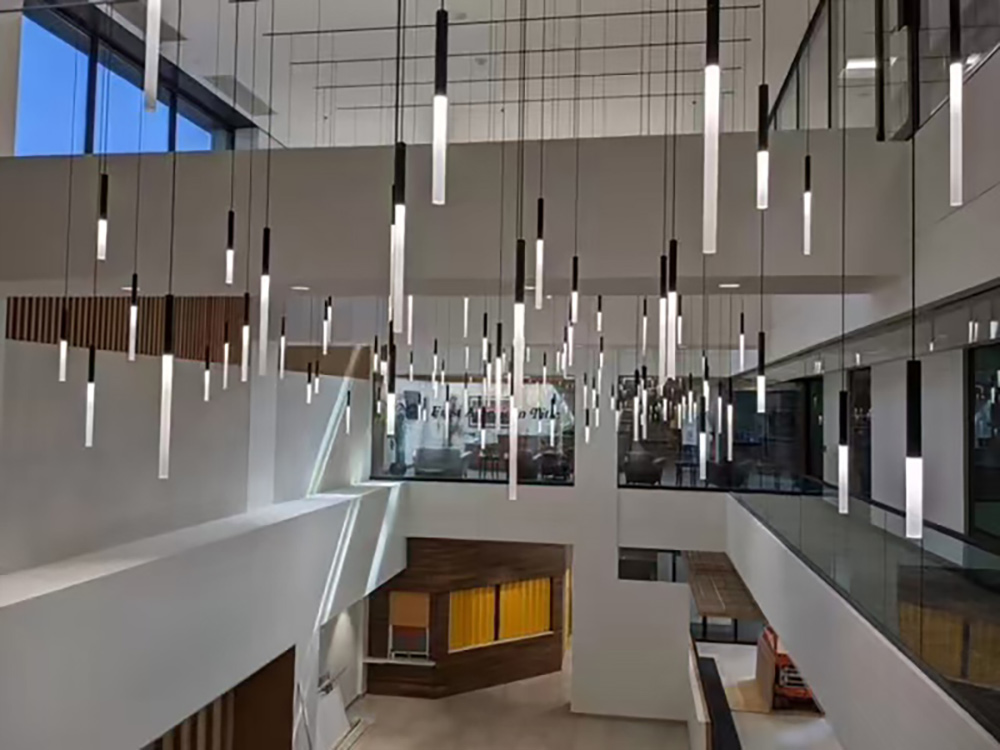
A magnetic track light that highlights a display today may be moved tomorrow for a new collection. In hotel environments, lighting scenes are adjusted for different atmospheres without changing the ceiling structure.

This is where system behavior begins to matter more than initial design.


Long-term behavior inside a magnetic track light system

At installation stage, most magnetic track lighting systems perform similarly.

Over time, differences appear not in brightness, but in consistency.

Modules on the same magnetic track light line may begin to respond slightly differently after repeated repositioning cycles.

Some remain firm and stable after many adjustments. Others show subtle variations in connection feel or light consistency.

These changes are not failures. They are part of how a system reacts to real architectural lighting usage.


Thermal behavior in commercial lighting systems

Inside modern architectural lighting systems, heat does not appear as an immediate problem.

It builds gradually.

In a magnetic track lighting system used in commercial ceilings, multiple magnetic track light modules may operate continuously for long hours.

Over time, thermal distribution becomes uneven:

  • clustered magnetic track light modules run warmer
  • isolated modules age more slowly
  • brightness consistency begins to shift slightly across zones

This behavior is often only noticed after long-term operation in real commercial lighting projects.


Why different commercial spaces create different results

A magnetic track lighting system behaves differently depending on the environment.

Commercial space type Lighting behavior Long-term effect
Retail lighting design frequent adjustment mechanical wear becomes visible
Hotel lighting system long operating hours thermal aging dominates
Gallery lighting system directional changes connection variability appears
Office lighting design stable layout most consistent performance


Magnetic track lighting system connection behavior

The most sensitive part of any magnetic track lighting system is the connection interface between the magnetic track light and the track itself.

Each time a module is repositioned, the system re-engages.

In well-engineered systems, this process remains consistent even after repeated cycles in commercial lighting applications.

In less stable systems, small variations begin to appear over time — not visible immediately, but noticeable in long-term architectural lighting performance.


Maintenance behavior in commercial lighting projects

In real commercial lighting projects, maintenance is not always planned at installation stage.

It happens when issues become visible.

A flexible magnetic track lighting system allows easier module replacement, which leads to more frequent maintenance intervention.

This directly influences long-term performance:

  • faster correction of small issues
  • reduced accumulation of performance deviation
  • more stable lighting consistency over time

Systems that are harder to access tend to accumulate small deviations instead of correcting them early.


Design decisions behind a magnetic track lighting system

Many long-term behaviors of a magnetic track lighting system are determined before installation.

Key factors in architectural lighting design include:

  1. magnetic track layout density
  2. magnetic track light distribution
  3. power segmentation strategy
  4. zoning design in commercial lighting projects

These decisions define how load, heat, and usage are distributed across the system.


What remains visible after long-term operation

After extended use in real commercial lighting environments, a magnetic track lighting system does not just show lighting output.

It shows usage behavior.

Some systems maintain uniform performance even after frequent interaction in architectural lighting applications.

Others gradually show variation across identical magnetic track light modules.

The difference is not immediate — it emerges through real operation inside commercial spaces.

In premium commercial projects, lighting is never just “illumination”.


It is:

  • Spatial language
  • Brand expression
  • Architectural detail
  • Long-term system investment

A high-end magnetic track lighting system must perform beyond aesthetics—it must deliver engineering reliability, optical precision, and life-cycle value.


This guide helps architects, lighting designers, and project developers evaluate a truly professional-grade magnetic track lighting system.


1. What Makes a Magnetic Track Lighting System “High-End”?


A professional system is not defined by appearance—but by system integrity.

✔ Core Evaluation Framework


Dimension What It Means Why It Matters
⚙ Mechanical Precision Tight track extrusion tolerance + stable magnetic lock Prevents loosening & failure over time
⚡ Electrical Safety Stable low-voltage system (commonly 48V) Ensures safe long-term commercial operation
💡 Optical Performance High CRI + controlled beam + low glare Impacts visual comfort & design quality
🔁 System Flexibility Modular, reconfigurable lighting units Supports future layout changes
 

👉 High-end lighting is not a product. It is a system architecture.


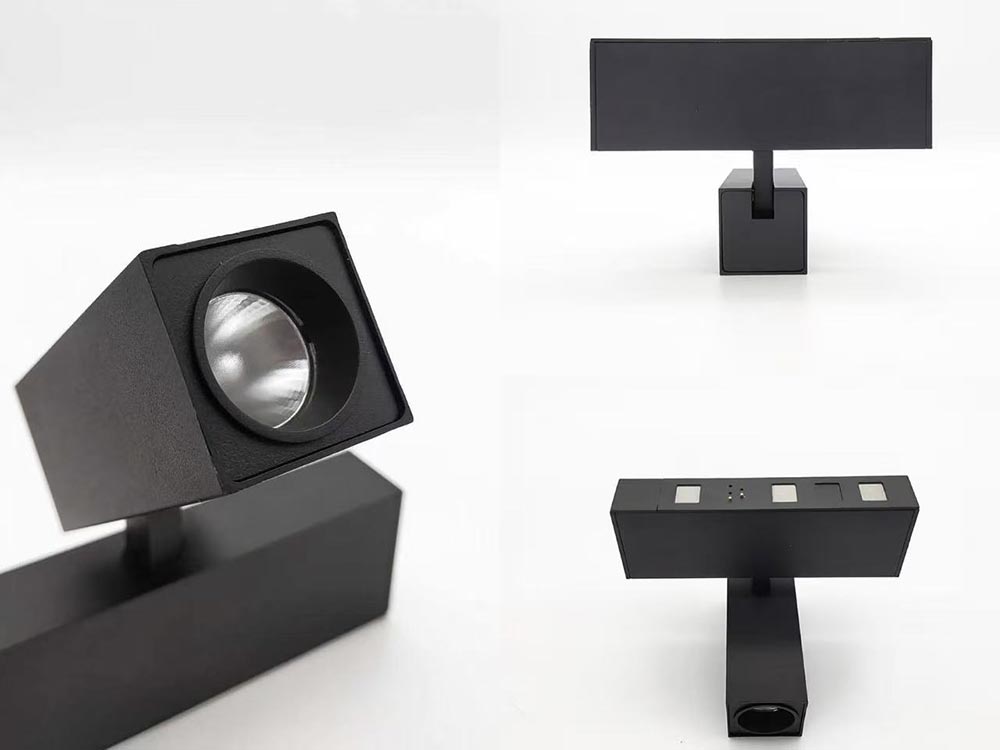
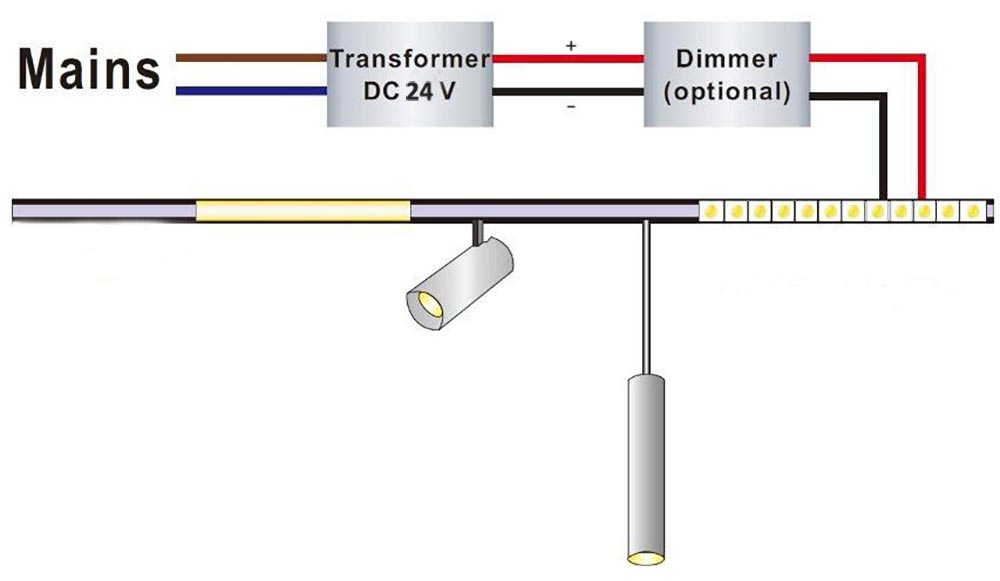
24V Magnetic Track System


2. Key Technical Standards


Before selecting any system, architects & engineers evaluate the following:

⚡ Electrical System

Parameter Recommended Standard  Importance
Voltage     48V low voltage system Safety + stability
Dimming DALI / 0-10V / TRIAC compatible Smart control integration
Driver Type Constant voltage / matched system Prevents flickering & mismatch


💡 Optical Performance

Parameter Premium Standard Application Impact
CRI ≥ 90 (preferred ≥95) Accurate color rendering for retail/hospitality
Beam Angle 15° / 24° / 36° / 60° Smart control integration
UGR (Glare) < 19 recommended Comfort in office & retail environments


🧲 Mechanical System

Feature Requirement
Magnetic Strength Stable holding under vibration & long-term use
Track Material High-grade aluminum extrusion
Contact Design Anti-oxidation, stable conductivity
Installation Tolerance Precision alignment for seamless ceiling integration


3. Where Low-End Systems Fail 


Most lighting failures in commercial projects are NOT caused by design—but by system quality.

❌ Common Problems

  • Flickering after installation
  • Loose magnetic connection over time
  • Inconsistent brightness between batches
  • Driver incompatibility
  • Overheating causing lumen drop

⚠ Typical Result in Projects:

Lighting works in samples… but fails after installation in real space.

This is the biggest hidden risk in budget systems.


4. Why Magnetic Track Lighting Is Preferred in High-End Spaces

Modern commercial architecture demands flexibility + minimalism.


✔ Key Advantages

🔄 1. Reconfigurable Design

Lighting modules can be repositioned without rewiring or ceiling damage.


🏛 2. Architectural Integration

Minimal ceiling disruption, clean linear aesthetics.


💰 3. Lower Lifecycle Cost 

Commercial lighting cost should be judged over its full lifecycle, not just upfront price.

Traditional systems often lead to higher maintenance, frequent replacements, and expensive reconfiguration when layouts change, increasing long-term cost.

Magnetic track systems reduce maintenance needs and allow quick layout changes without construction work, resulting in lower operating cost and better long-term ROI.


🧠 4. Future-Proof Lighting Strategy

Spaces evolve. Lighting should evolve with them.


5. How Architects Should Specify a Magnetic Track System


A professional specification should NEVER be product-only.

It should be system-based:


✔ Specification Checklist

Electrical

  • Voltage system (48V recommended)
  • Driver compatibility (DALI / TRIAC / 0-10V)
  • Load balancing per track meter


Optical

  • CRI ≥ 90 (premium requirement)
  • Beam control based on zoning
  • Anti-glare requirement (UGR < 19)


Mechanical

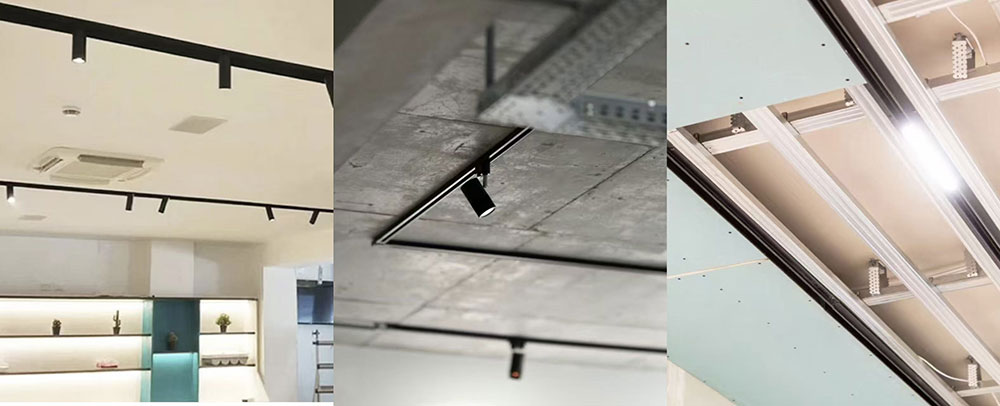
  • Track type (recessed / surface / suspended)
  • Module interchangeability
  • Magnetic retention force standard


6. System-Level Thinking vs Product-Level Thinking


Product-Level Thinking “Which lamp is cheaper?”     “Does it look good?”     “What is the unit price?”    

System-Level Thinking  “Will the system fail in 3 years?”    “Can it support future redesign?”   “What is the lifecycle cost?”


👉 High-end projects always choose systems, not components.


7. Total Cost of Ownership (TCO) Perspective


High-end magnetic track lighting is not about initial cost.

It is about long-term efficiency.


📊 Cost Impact Factors

  • Maintenance frequency
  • Driver replacement rate
  • Lighting redesign cost
  • Downtime in commercial spaces
  • Energy efficiency performance


👉 In premium retail or hospitality environments:

Lighting failure = direct brand experience damage.


8. What Defines a Reliable Manufacturer?


For high-end projects, supplier capability is as important as product quality.

🏭 Stable manufacturing capability

🔬 Strict quality testing system

🧩 OEM/ODM customization ability

📐 Engineering & lighting design support

🏨 Proven commercial project experience


A high-end magnetic track lighting system is not just a lighting choice.


It is:

  • A design tool
  • A technical system
  • A long-term investment
  • A part of architecture itself


For architects and project developers, the right decision is not the cheapest option—but the most reliable system that protects design intent over time.

🔎 1. What exactly is a magnetic track lighting system?

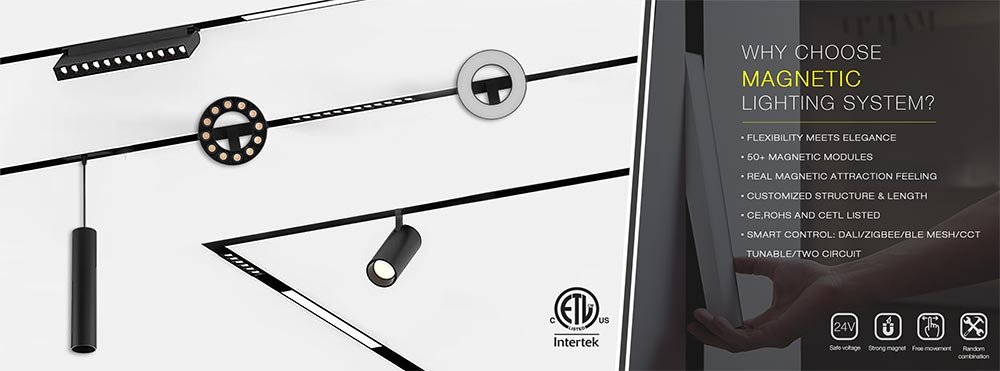
A magnetic track system consists of a powered metal track and light modules that attach via magnets. The magnets hold both mechanical and electrical contacts, so modules can be moved or swapped without tools.


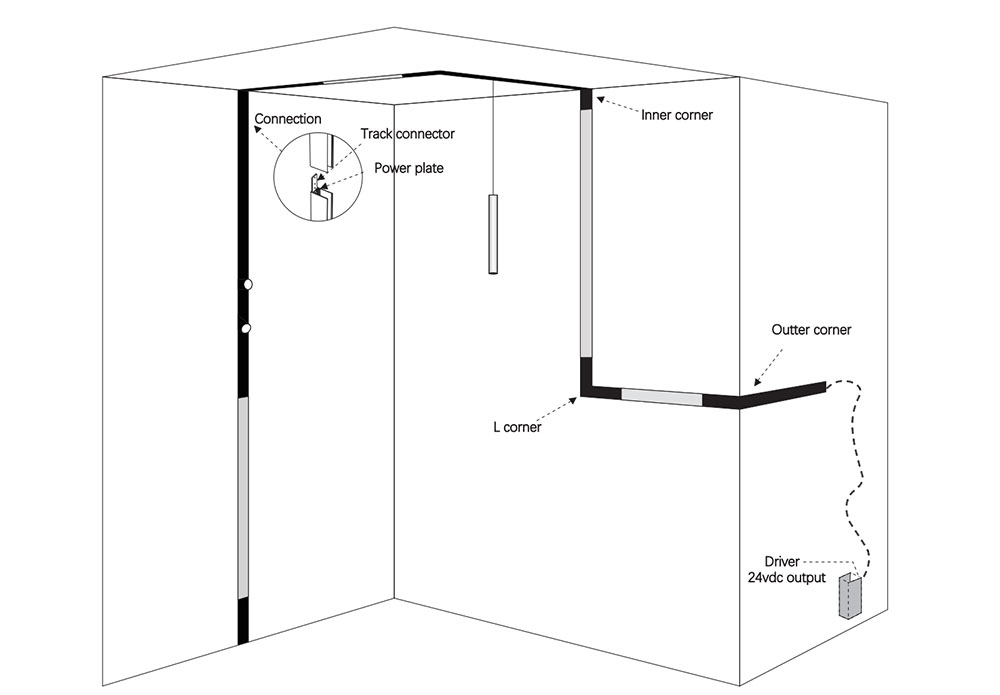
2. Why do most magnetic track systems use low voltage (e.g., 24 V or 48 V)?

Magnetic track systems typically operate at low DC voltages like 24 V or 48 V for safety and electrical stability. Low voltage reduces the risk of shock and allows the track and modules to be manipulated safely.


🛠 3. How do magnetic electrical contacts maintain stable power?

The track has embedded conductors, and each module has spring‑loaded magnetic contacts. When connected, the contacts press against the conductor bar providing power while allowing modules to slide with minimal resistance. The quality of contact materials and plating affects reliability over time.

🧠 4. Can magnetic track lights support dimming and smart controls?

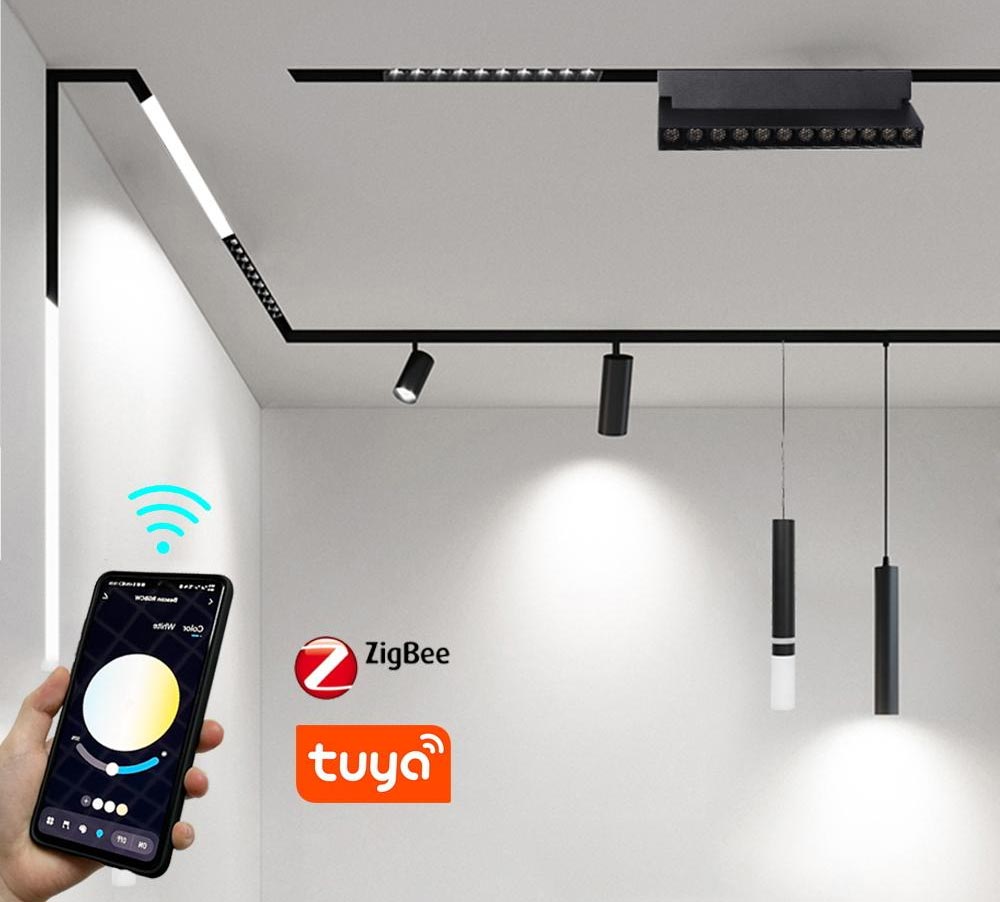
Yes — many systems support dimming through DALI, 0‑10V, or Bluetooth/Wi‑Fi control. Advanced systems can integrate with smart home platforms like Google Home or Alexa, enabling scene control and scheduling.


💡 5. What are key optical parameters to consider?

When specifying lighting you should look at:

Beam angle (e.g., 15°–120° for spot to flood).

Color temperature (2700K warm to 5700K cool).

Color rendering index (CRI) — CRI≥90 is preferred for accurate color perception.


🌫 6. How does UGR (Unified Glare Rating) apply?

In commercial settings, low‑glare track heads are designed so UGR is minimized, improving visual comfort — especially in offices, galleries, and retail spaces. Optical design and reflectors are key to achieving UGR<10 or similar targets.


🧩 7. What are the common track materials and why do they matter?

Tracks are usually made of extruded aluminum because it provides structural strength and excellent heat dissipation. Some deep‑profile tracks reduce light spill and improve thermal performance.


🧯 8. Are magnetic track systems waterproof?

Standard magnetic tracks are IP20 rated, meaning they are indoor only and not moisture‑resistant. For damp areas (bathrooms, kitchens), systems with higher IP ratings (e.g., IP44+) are required.

Note: The standard IP20 rating applies to most low‑voltage magnetic track systems commonly used indoors.


🏗 9. Can magnetic track lighting be surface‑mounted, recessed, or suspended?

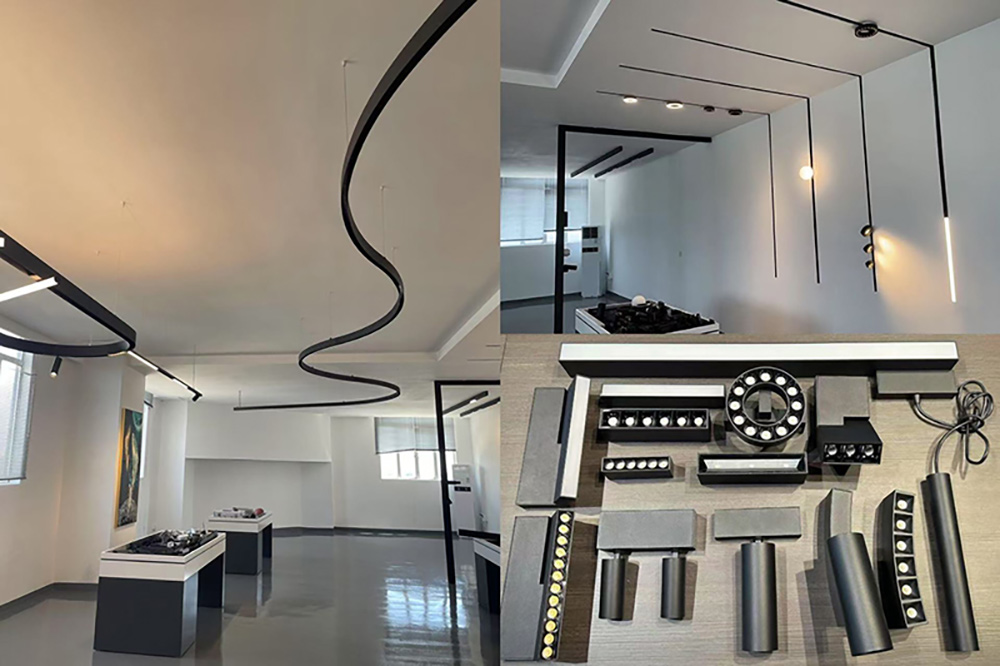
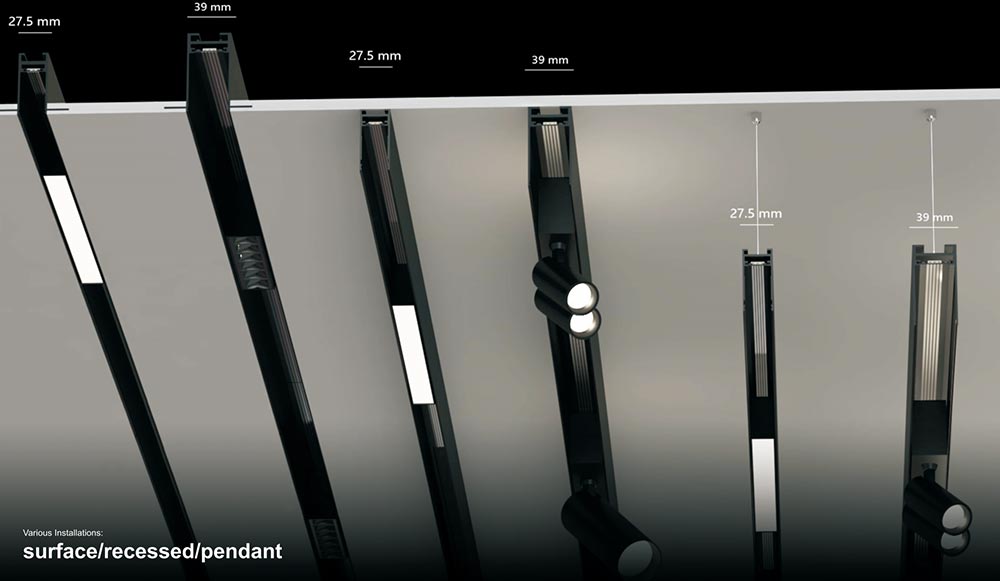
Yes. Most systems offer option kits for surface mounting, recessed installation, or suspended hanging, letting designers adapt lighting to architectural constraints without losing flexibility.


🔌 10. How is heat managed in magnetic LED modules?

LED modules often use heat sinks integrated into the housing. Efficient thermal management extends LED lifespan and maintains output stability. Aluminum housing and micro‑ribbed heatsinks are common methods.


📊 11. What electrical safety standards should I check?

For quality assurance and compliance, look for CE, RoHS, and for North America UL/ETL certifications. These indicate tested safety and performance standards.


🌀 12. How does voltage drop affect long track runs?

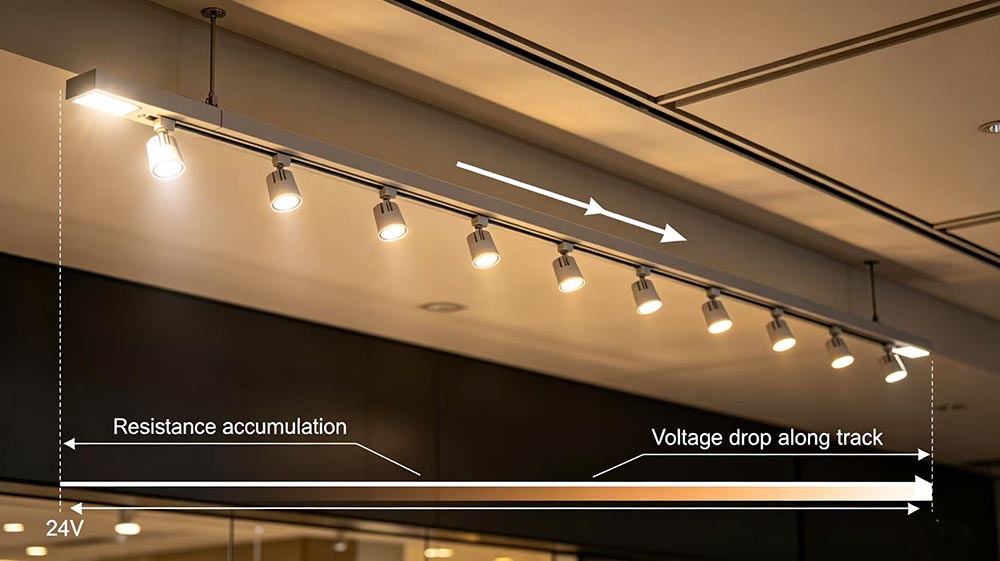
In long track runs, voltage drop can reduce light performance at the far end. Careful planning of power feed points and track segments helps maintain consistent voltage. Designers often limit run length or add mid‑feed points.


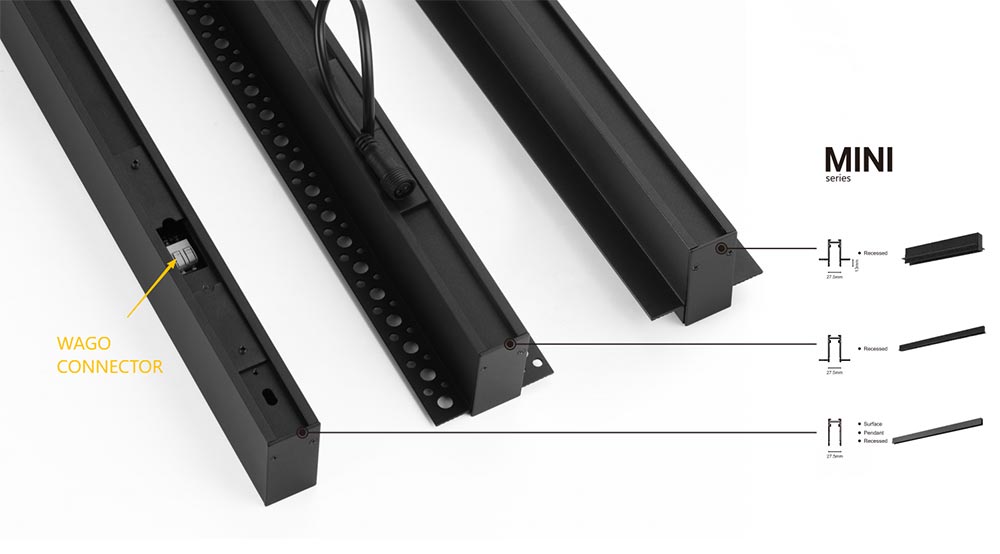
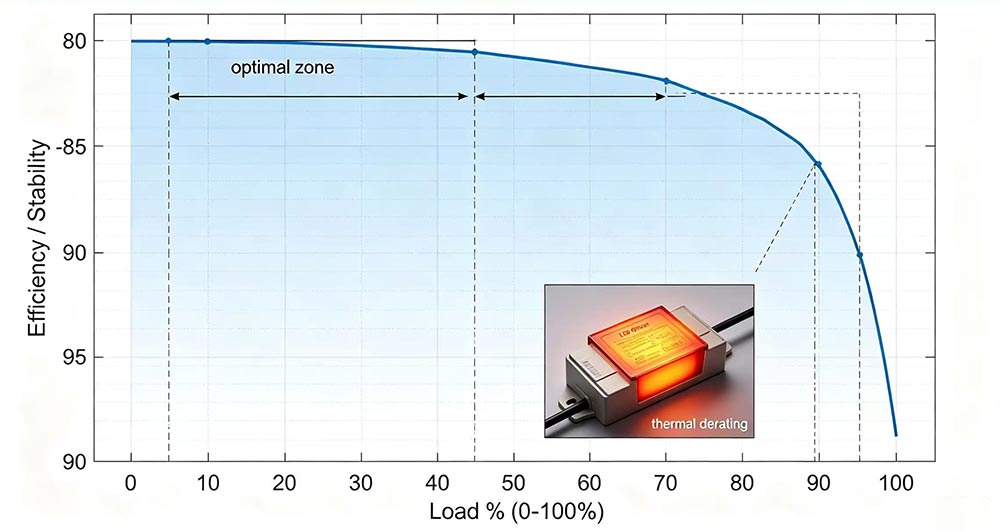
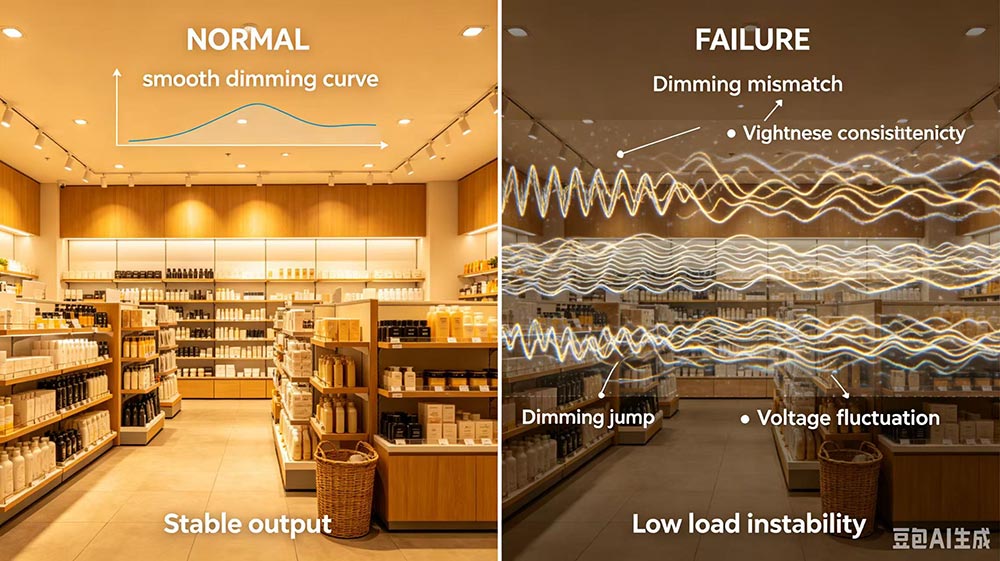
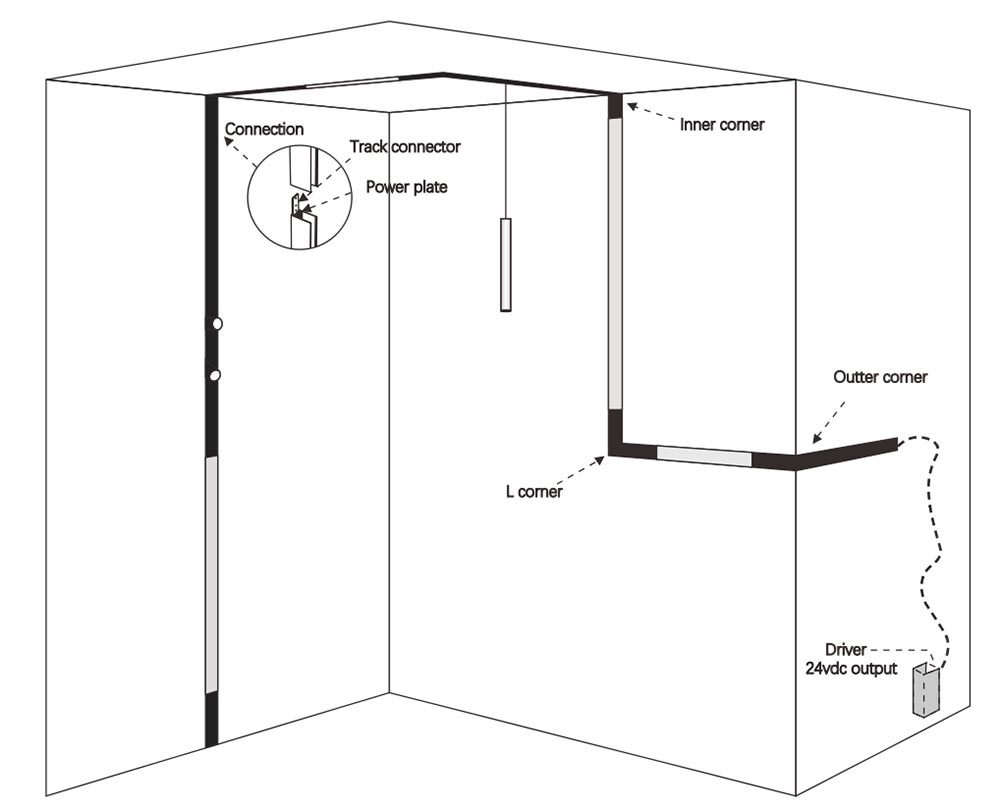
Our company conducted voltage drop testing on the 24V magnetic track lighting system to verify stable power supply and avoid uneven brightness in long track runs.


🔗 13. Can magnetic tracks integrate with other lighting systems?

Yes — advanced systems can be designed to coexist with other lighting types. However, correct wiring, dimming protocols (e.g., DALI vs. 0‑10V), and power supplies need to be carefully coordinated.


📐 14. What influences the lifetime and reliability of magnetic track lighting?

Factors include LED quality, driver design, heat dissipation efficiency, contact reliability, and installation environment. High‑quality components and proper heat management significantly extend useful life.


🧩 15. How do I choose the right system for a space?

Start with these:

Room function (accent, task, ambient lighting).

Required beam angles and color temperature.

Control needs (dimming, smart control).

Safety and compliance ratings.

Whether moisture‑resistance or environmental ratings are required.

Modern interiors are no longer just about furniture and finishes—lighting layout defines how a space feels.

Magnetic track lighting, with its modular and flexible nature, allows designers to shape spaces with precision rather than relying on fixed lighting points.


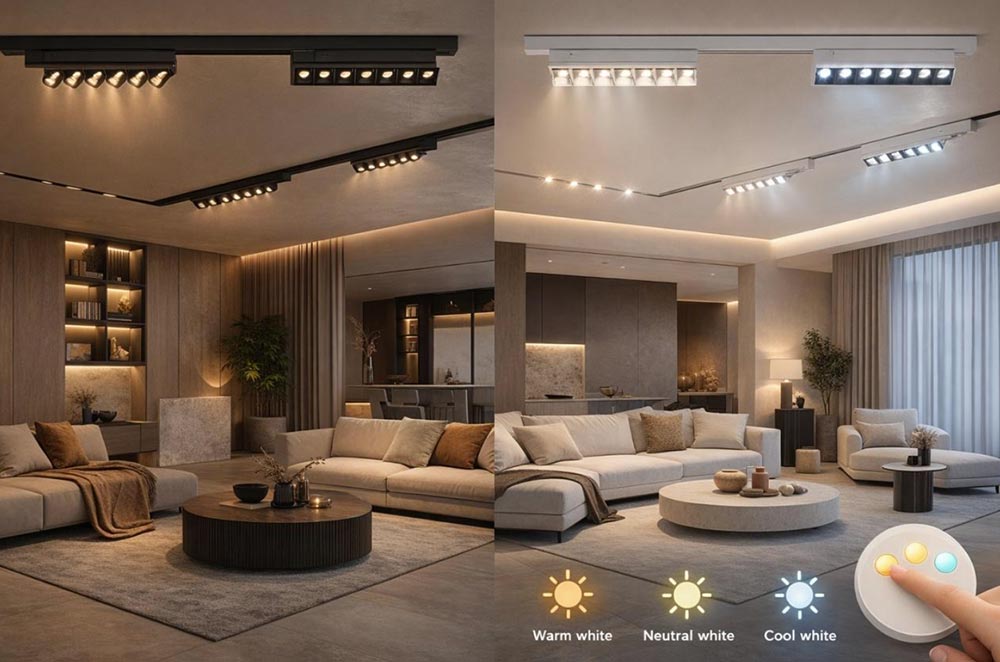
Living Room Layout: Expanding the Space Visually

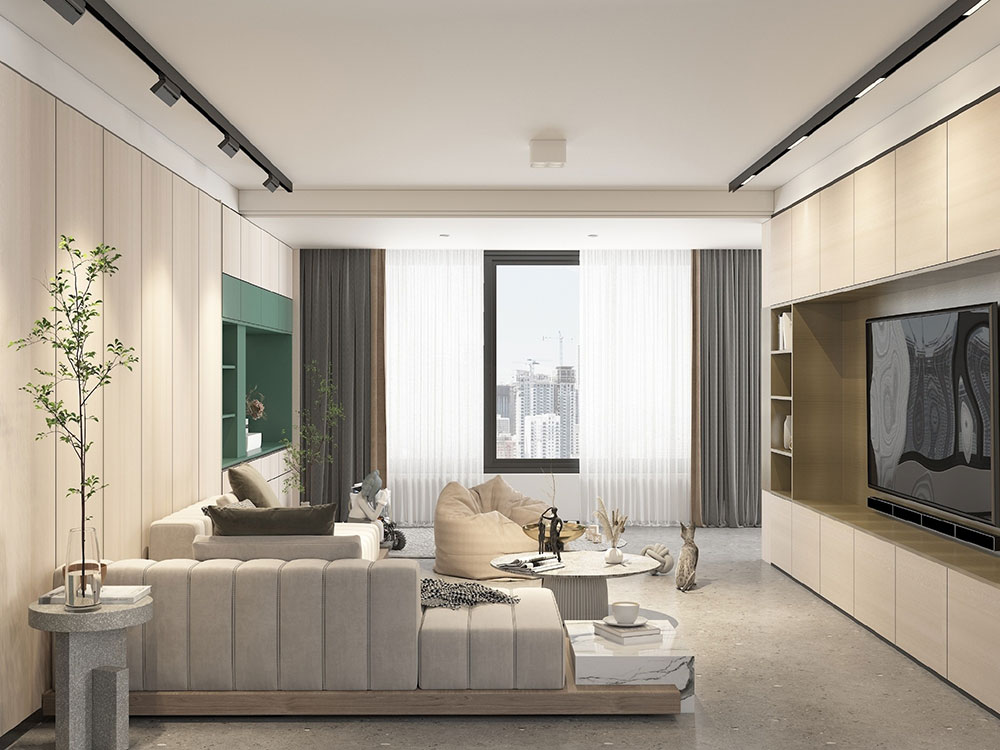
Instead of placing a single ceiling light in the center, modern layouts distribute light along the edges of the space.

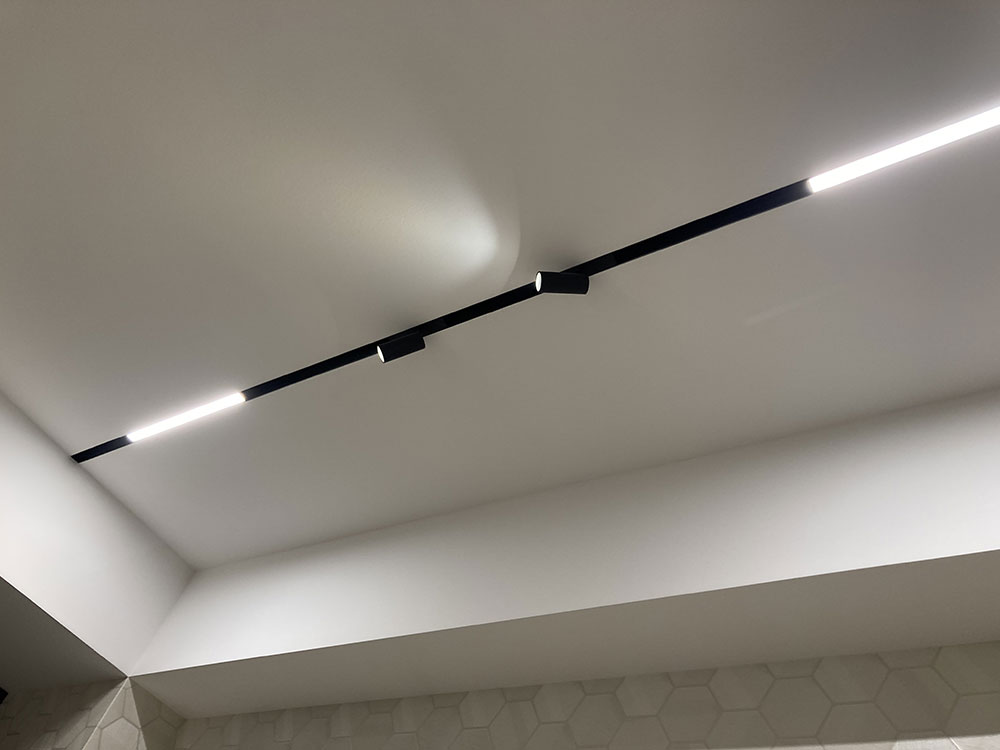
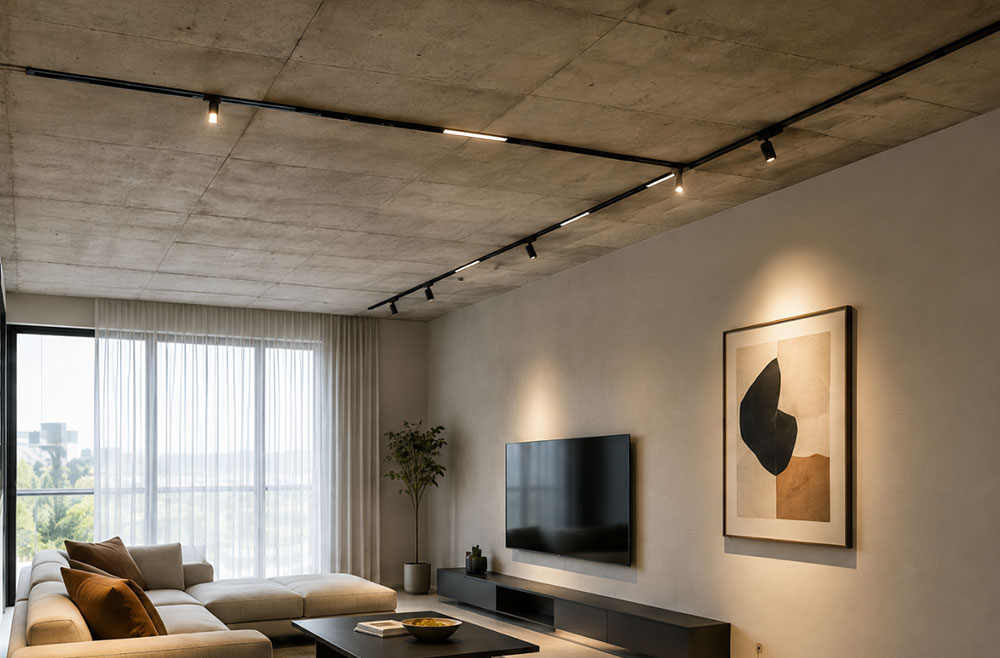
A common approach is to install a recessed magnetic track along the ceiling perimeter, then use adjustable spotlights to wash the walls and highlight key areas like sofas or artwork.

This technique makes the room feel wider and more balanced, especially in minimalist interiors where visual clutter is reduced.


💡 What works well here:

  • Linear modules for soft ambient lighting
  • Adjustable spotlights for focal areas
  • Warm color temperature (2700K–3000K) for comfort


Kitchen Layout: Clean and Functional Lighting

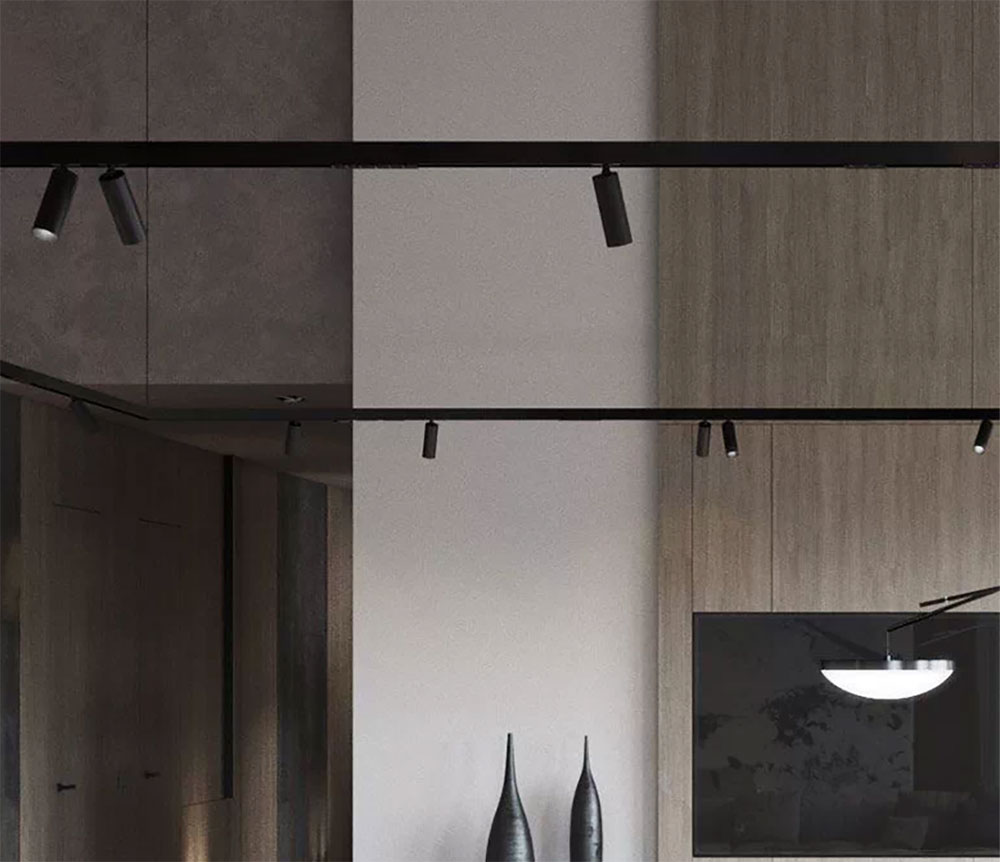
Kitchens benefit from direct and controlled lighting. A straight magnetic track above the island or countertop provides precise illumination without adding bulky fixtures.

Unlike traditional downlights, magnetic track systems allow you to reposition light exactly where shadows occur—especially useful for food preparation areas.


Open Space Layout: Creating Invisible Zones

Open-plan spaces often lack structure. Lighting layout becomes the tool to define different areas.

A single continuous track can be used to guide the eye across the space while subtly separating:

  • Living area
  • Dining space
  • Workspace

Instead of adding walls, light direction and intensity create boundaries.

Magnetic systems make this easier because fixtures can be repositioned instantly as layouts change


Retail & Display Layout: Directing Attention

In retail environments, lighting is not just illumination—it’s a tool to guide attention.

Magnetic track lighting allows precise control over:

  • Beam angle
  • Light direction
  • Highlight intensity

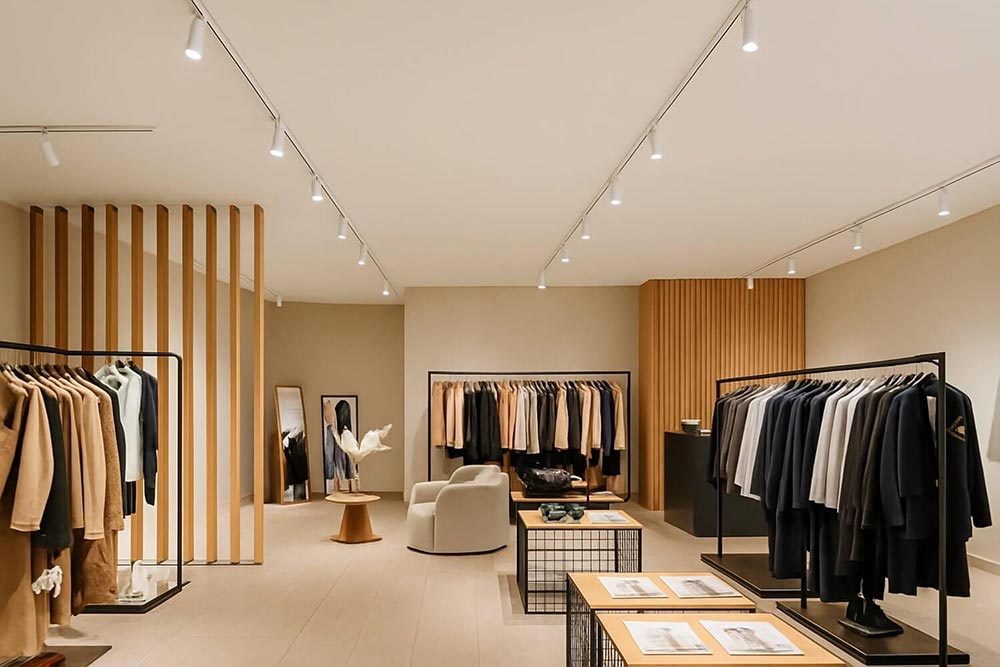
This makes it ideal for showcasing products, artwork, or display walls. Designers often combine narrow beam spotlights with softer ambient lighting to create contrast and focus.


📊 Quick Layout Reference

Space Layout Strategy Effect
Living Room Perimeter track Directional spotlighting
Kitchen Linear over island Improves task visibility
Open Plan Continuous track Creates invisible zones
Retail Directional spotlighting Highlights products


Minimalist Ceiling Layout: The “Invisible Lighting” Trend

One of the biggest trends in 2026 is clean and invisible ceilings.

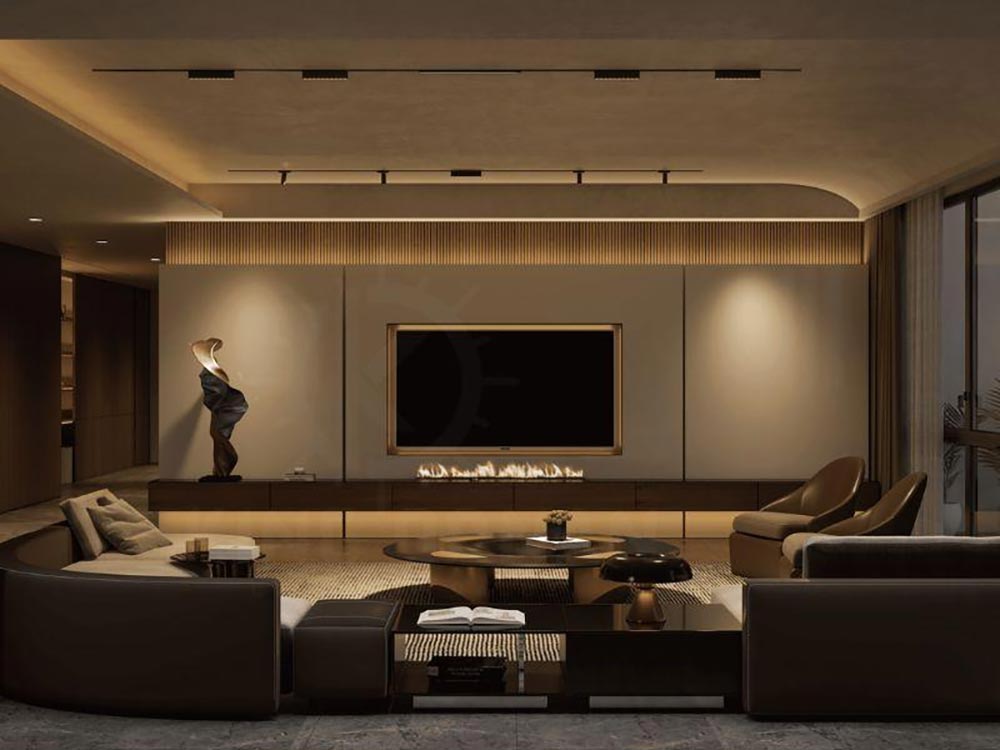
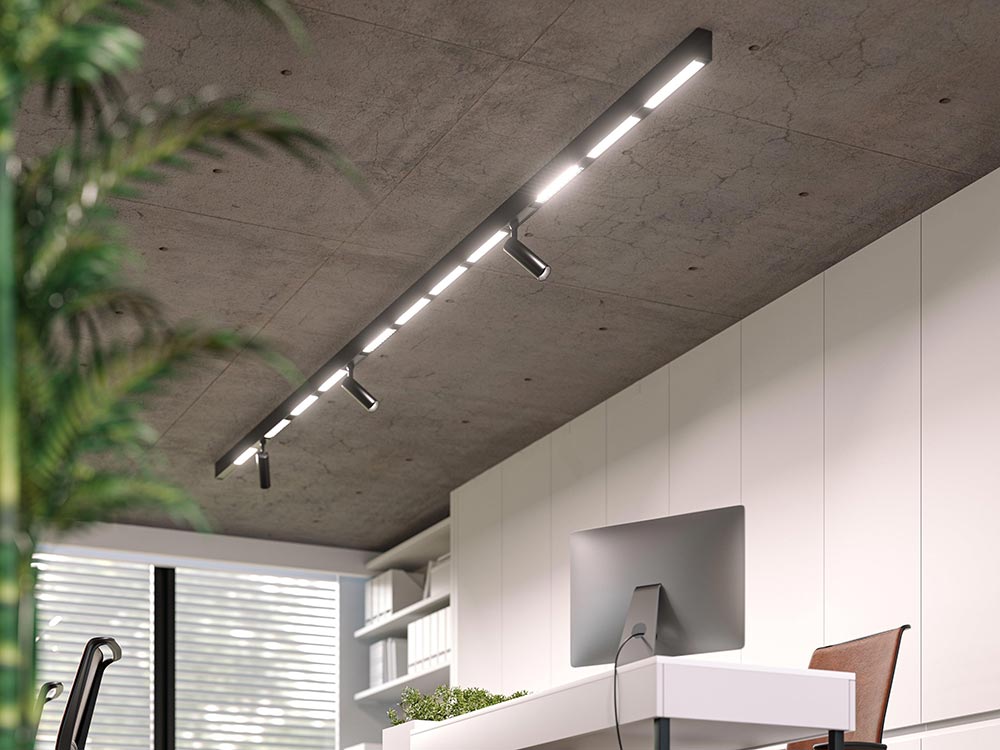
Recessed magnetic track systems sit flush with the ceiling, creating a seamless look. There are no bulky fixtures—just lines of light integrated into the architecture.

This aligns with the shift toward minimalist and modular lighting design, where lighting becomes part of the space rather than an added element.


Flexible Layouts for Changing Spaces

Modern interiors are no longer static. Furniture moves, functions change, and lighting needs to adapt.

Magnetic track lighting makes this possible by allowing fixtures to be:

✔ Moved along the track

✔ Re-aimed at different areas

✔ Added or removed without rewiring

This flexibility is one of the main reasons magnetic systems are widely used in both residential and commercial interiors


A Detail Designers Pay Attention To

Good lighting layouts rarely focus on brightness alone. Instead, they consider where the light lands.

Surfaces like walls, shelves, and textures reflect light back into the space, making it feel more open and comfortable. With adjustable track lights, it becomes easier to control this interaction and fine-tune the atmosphere without changing the overall setup.


In 2026, lighting is no longer treated as a static building component. It has become a flexible architectural layer that must adapt to changing spatial needs, design updates, and commercial usage patterns.


Across hotels, retail stores, offices, and high-end residential projects, architects are increasingly replacing fixed lighting systems such as recessed downlights and static ceiling fixtures with magnetic modular lighting systems.

This shift reflects a broader transformation in how spaces are designed, used, and maintained — where ceilings are no longer “fixed surfaces”, but adaptive design platforms.


✦ The Limitations of Fixed Lighting Systems

Fixed lighting has been the standard solution in architecture for decades, but its limitations are becoming more obvious in modern design practice.

Once installed, lighting positions are locked. Any change in layout usually requires cutting the ceiling, rewiring circuits, and interrupting the space.


This creates a problem in today’s environments where spaces are constantly evolving:

• Retail stores refresh displays frequently

• Hotels redesign interiors seasonally

• Offices shift layouts based on teams and workflows


Fixed lighting simply cannot keep up.


Maintenance is another hidden issue. When a single fixture fails, access is often difficult, and repairs may affect surrounding ceiling structures.

In short: Fixed lighting = permanent decisions in a non-permanent world


✦ 2026 Architectural Drivers Behind the Shift

Several strong design and commercial forces are accelerating the transition toward modular lighting systems:

✨ Flexibility-first spatial design

✨ Minimal “clean ceiling” aesthetics

✨ Lower lifecycle renovation cost

✨ Multi-use commercial environments

✨ Faster interior transformation cycles

Lighting is no longer evaluated only as illumination — but as part of space productivity and adaptability.


✦ Fixed vs Magnetic Systems (Real-World Difference)


Category Fixed Lighting Magnetic Modular Lighting
Design flexibility ❌ Static ✔ Fully adjustable
Maintenance Requires tools & downtime Quick module replacement
Renovation impact Ceiling opening required No structural damage
Lighting scenes One fixed setup Multiple interchangeable scenes
Commercial adaptability Low Very high
Long-term efficiency Limited Strong


👉 The difference is no longer technical — it is operational.


✦ Why Magnetic Modular Lighting Works Better

Magnetic modular lighting systems replace the idea of “fixed points” with a continuous intelligent track.


Instead of planning lighting as permanent positions, architects design a living lighting system.

Key advantages:

◆ Modules can be added, removed, or repositioned instantly

◆ No rewiring needed for layout changes

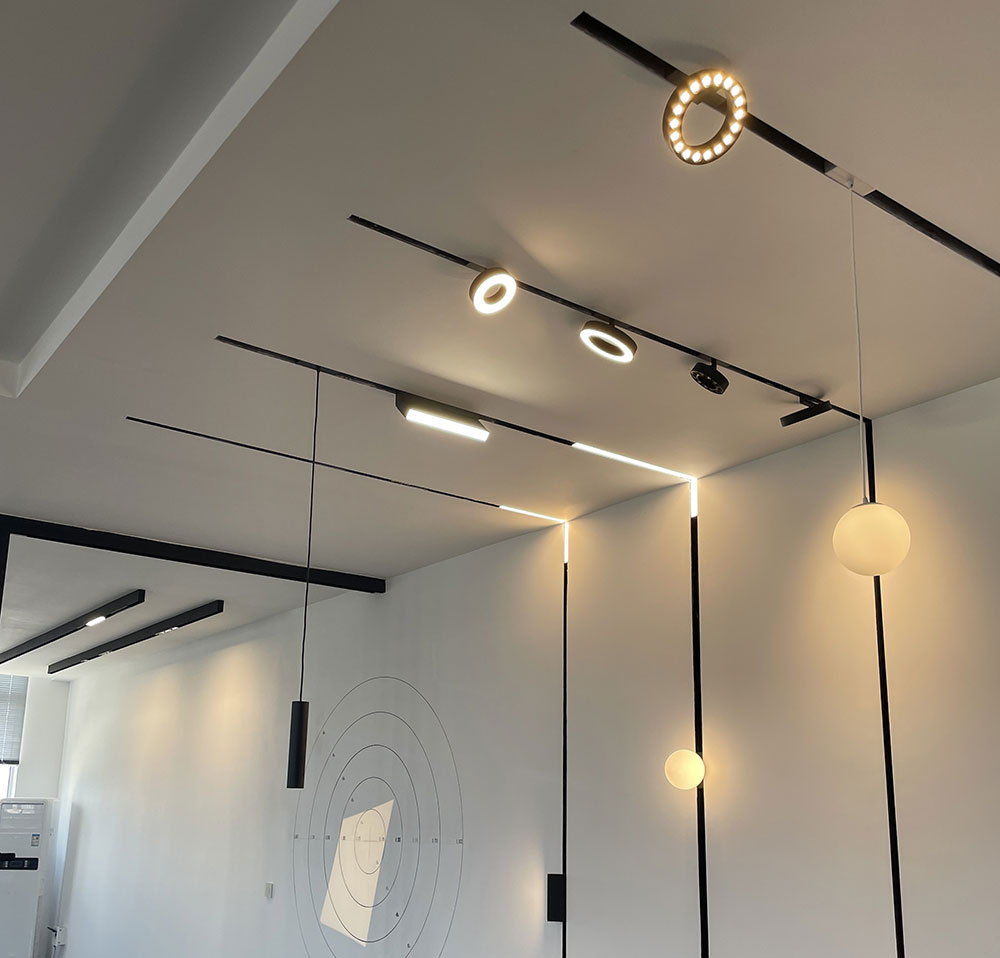
◆ Spotlights, linear lights, wall washers coexist in one system

◆ Lighting evolves with space requirements


This transforms lighting from a constraint into a design resource.


✦ From Fixture Thinking → System Thinking

One of the biggest changes in architecture today is conceptual:


❌ Old thinking: “Where should the light be installed?”

✔ New thinking: “How should the lighting system behave over time?”


Magnetic track systems support this shift by treating lighting as an architectural infrastructure layer — not a collection of individual fixtures.


✦ Ceiling Aesthetics: The “Invisible Architecture” Trend

A major global design direction in 2026 is the pursuit of visual silence in ceilings.


Architects are moving toward:

Clean surfaces

Hidden lighting sources

Minimal visual interruption

Seamless integration


Magnetic track systems support this aesthetic through:

✔ Recessed installation

✔ Trimless detailing

✔ Linear continuity

✔ Reduced ceiling clutter


The result is a ceiling that feels designed — not installed.


✦ Commercial Value in Real Projects

In real commercial environments, the advantage becomes even more obvious:


🏨 Hotels

Lighting scenes can shift for lobby, lounge, or event use without reconstruction.


🛍 Retail spaces

Product displays change frequently — lighting adapts instantly.


🏢 Offices

Work zones evolve — lighting follows layout changes.


🎨 Galleries / showrooms

Exhibition lighting is reconfigurable per event.


This flexibility directly reduces downtime and renovation cost while increasing space usability.


✦ Lighting Becomes a Design Tool

With magnetic modular systems, lighting is no longer fixed infrastructure.

It becomes:


✨ A spatial editing tool

✨ A mood control system

✨ A layout support structure

✨ A long-term design platform


Architects are no longer designing “light points” — they are designing lighting behavior.


✦ Final Direction of Architectural Lighting

The shift away from fixed lighting is not an isolated trend. It reflects a broader transformation in architecture:


From permanence → adaptability

From static systems → modular infrastructure

From installation → evolution


Magnetic modular lighting systems sit directly inside this transition, reshaping how ceilings are designed and how spaces function over time.


compact pcb mount screw terminal block

IoT is blowing up. Smart home stuff too. Portable medical devices, same thing. All electronics are getting smaller. Tiny, even.

Hardware engineers? They're stuck. Big problem: how to connect multiple power and signal lines. Safely, reliably. But the PCB space? It's so small. Barely any room.

If you're stressing over mini design, listen up. Picking the right pin pitch and terminal structure? That's what makes it work. The key, basically.


1. Get around space limits: small pitch, low height

When you're designing a compact PCB, every single mm counts. No joke. Those old 5.08mm pitch terminals? They take up way too much room.

So engineers are switching. To smaller ones. Miniature plug-in terminal blocks. 3.50mm pitch, 2.54mm, even smaller than that.

And it's not just the space on the board. Height is a big deal too.

Low-profile pluggable PCB terminal blocks? They bring down the total thickness of the PCBA. So it fits easy into those super thin device cases. No struggling to cram it in.

pluggable pcb terminal blocks wholesale

2. Screw or screwless? Which works better in tight spots?

Trying to use a screwdriver in a tiny space? It's a nightmare. So hard. And it slows down assembly a ton. Waste of time.

Compact PCB mount screw terminal blocks? Yeah, they're cheaper. But if you're wiring a lot of stuff close together? Most designs are switching to space-saving screwless terminal blocks.

Why? Because they have top entry, front press spring. Wiring in those narrow gaps? So simple. No tools needed. Zero. Just push and done.


Homnecks: we know high-density connections

Here's the thing. You want to make things smaller, but still handle high current. And keep good insulation. That takes really precise molds. And good materials. Not easy.

Homnecks is a professional high-density terminal block manufacturer. We've been doing mini and compact terminals for years. Lots of experience.

We have all kinds of small-pitch solutions. And we do pluggable PCB terminal blocks wholesale all over the world.

No matter how crazy your PCB design is. No matter how tight the space. Homnecks can give you the right connection solution. Perfect, every time.

Contact us now. Get free 3D models. And free test samples. Just ask. Easy.

plug in terminal block connectors

Time is everything in modern industrial automation.When equipment goes down — whether it’s a motor control center, PLC module, or power panel —it costs real money.

That’s why industrial pluggable terminal blocks have become the top choice for engineers.They’ve completely changed how machines get installed and maintained.This article shows why your next automation project should use pluggable design.


1. Real modular design. Plug and play, simple.

With old wiring, replacing a broken module means removing every wire one by one.It takes time.And people often wire things wrong.

But with good plug-in terminal block connectors,you can pull out a whole control board or sensor in seconds and swap it.This works really well in spring terminal block applications.Faster assembly.Easier on-site maintenance.


2. Handle high loads and motor control

Industrial sites use high voltage and high current.Regular terminals can overheat or even fail under constant heavy use.

That’s why a dedicated pluggable terminal block for motor control is so important.They use high-purity conductive materials and strong housings.Perfect for servo motors and inverters.

industrial pluggable terminal block


For industrial boards that need extra strength,heavy duty PCB mount terminal blocks keep good contact even under strong vibration.


Why choose Homnecks as your industrial connection supplier?

In industrial control, there’s almost no room for mistakes.You need a highly reliable custom terminal block factory in your supply chain.

Homnecks has years of experience making industrial connectors.Our pluggable terminals go through strict testing: temperature rise, flame resistance, plug life.Built for the highest standards in automation.

We offer standard wholesale and custom solutions.As a source factory, we give you great quality at a good price.

Get our industrial automation selection guide today.