Magnetic track lighting has become a favorite in modern interiors for one simple reason—it offers unmatched flexibility without sacrificing aesthetics. Spotlights, linear lights, pendants, and wall washers can all share the same track, making it easy to adapt a space as lighting needs change.
But if you're renovating an existing home rather than building a new one, one question usually comes up first: Can magnetic track lights be installed without a false ceiling?
The answer is yes. In fact, many residential and commercial projects today are designed specifically without a false ceiling. The key isn't whether you have a ceiling cavity—it's choosing the right type of magnetic track system for your space.
Magnetic track lighting does not always require a false ceiling. While recessed magnetic tracks are designed to sit flush inside a ceiling, surface-mounted and suspended magnetic track systems can be installed directly onto finished ceilings. These options have become increasingly popular for renovations because they preserve ceiling height, reduce construction work, and still deliver the clean, minimalist appearance magnetic lighting is known for.
Why the "False Ceiling Required" Myth Still Exists
The misconception comes from the earliest magnetic track systems, which were almost exclusively recessed. Since the track was hidden inside the ceiling, many people naturally assumed every magnetic track installation required a gypsum ceiling or ceiling cavity.
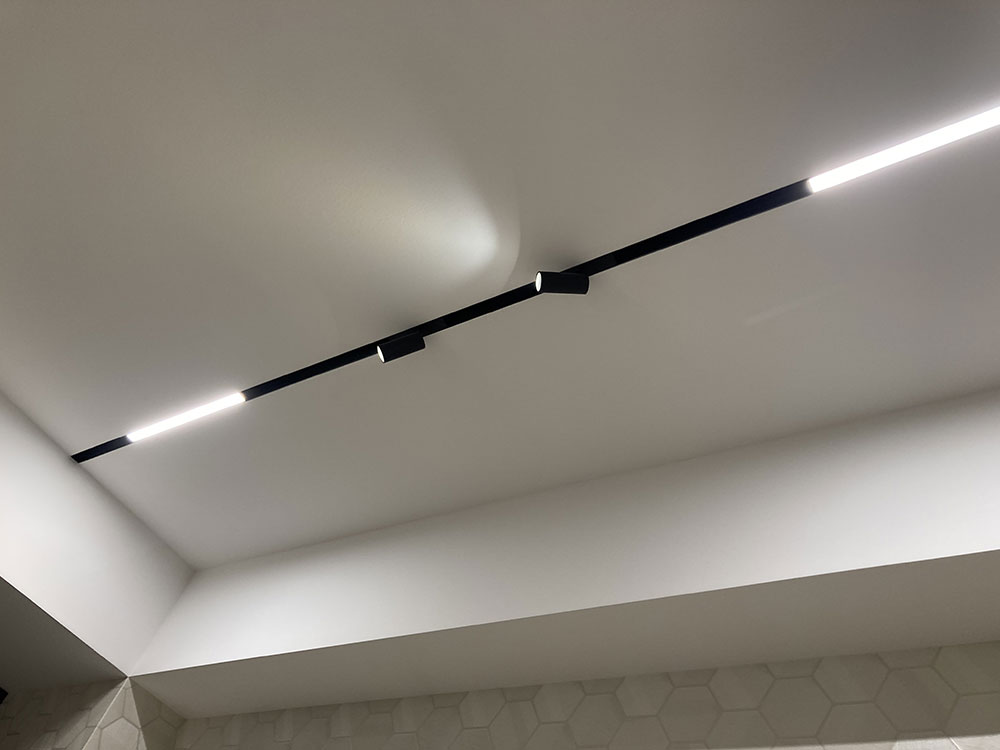
Today's systems are much more versatile.
Manufacturers now offer several installation profiles to suit different architectural conditions. Whether you're working with a concrete ceiling in an apartment, a wooden ceiling in a cabin, or an open ceiling in a commercial space, there's usually a magnetic track solution that fits without major structural changes.
Rather than asking "Can I install magnetic track lighting without a false ceiling?", a better question is:
Which installation method is best for my ceiling?
Three Installation Methods, Three Different Design Approaches
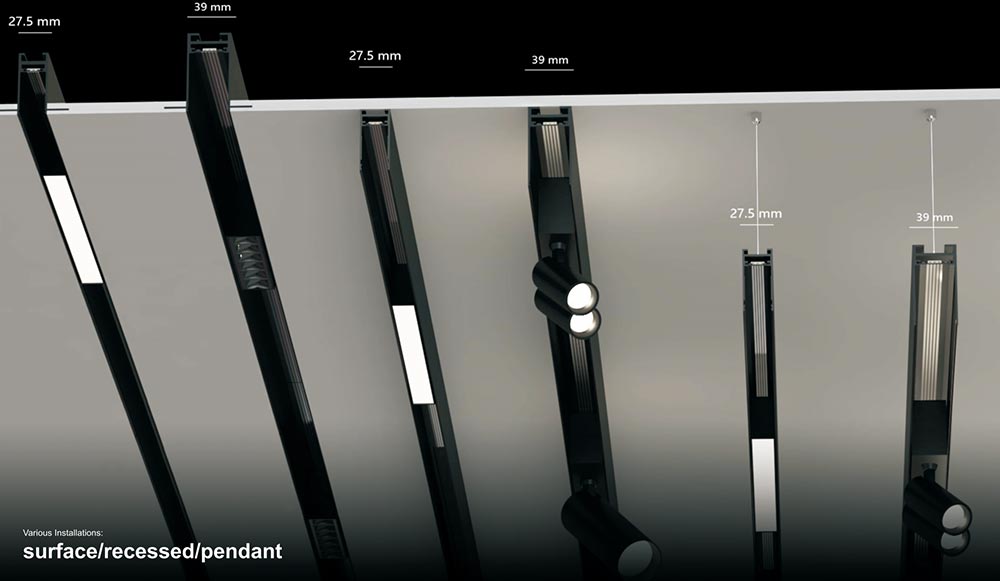
Although all magnetic track systems share the same principle, they create very different visual effects.
A recessed magnetic track is integrated into the ceiling so that only a slim opening remains visible. It offers the cleanest architectural finish and is often chosen for new builds or full-scale renovations where the ceiling is already being reconstructed.
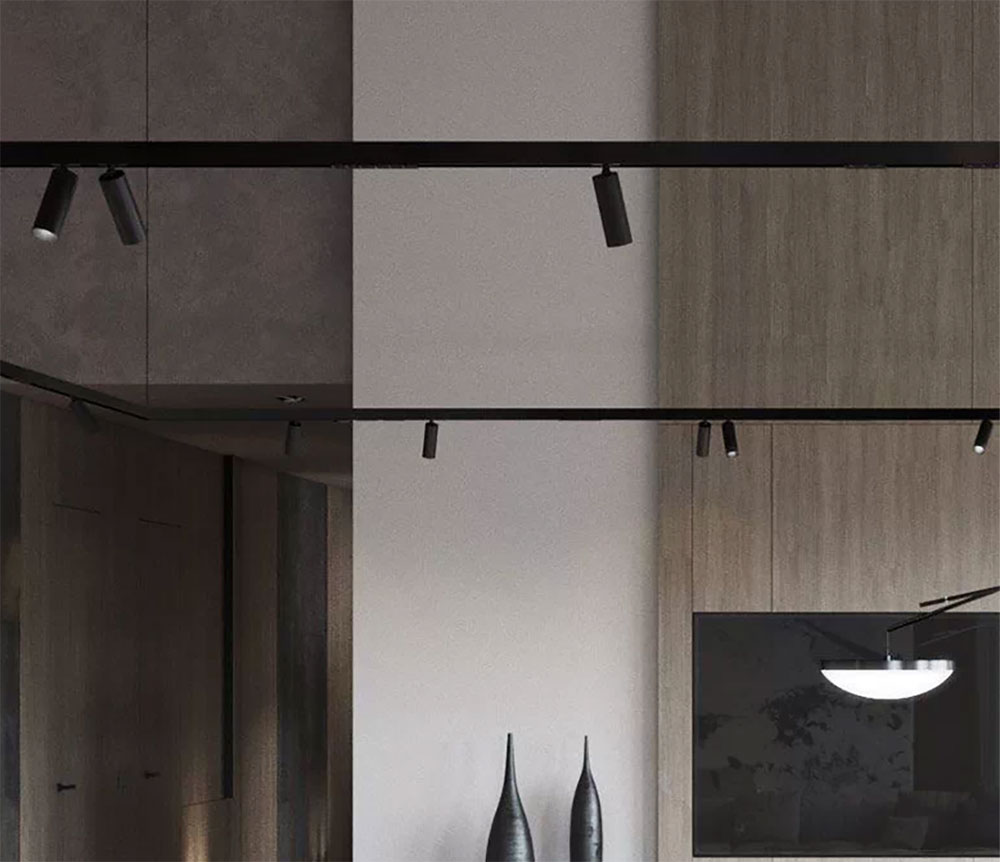
A surface-mounted magnetic track, on the other hand, is fixed directly onto the finished ceiling. Because no ceiling cavity is needed, installation is faster and significantly less expensive. Modern aluminum profiles are slim enough that they still blend naturally into contemporary interiors, making them the preferred option for most renovation projects.
For spaces with generous ceiling heights, a suspended magnetic track introduces another layer of design. Hung from adjustable cables, it becomes both a lighting system and a decorative element, making it especially popular in offices, restaurants, galleries, and retail environments.
| Installation Type | False Ceiling Required | Best For |
| Recessed | Yes | New construction & major renovations |
| Surface Mounted | No | Existing homes, apartments, offices |
| Suspended | No | High ceilings & commercial interiors |
Why Surface-Mounted Systems Have Become the Go-To Choice
In our experience, most renovation projects don't fail because of the lighting design—they become complicated because of the construction work required.
Adding a false ceiling increases labor, material costs, and installation time. It can also reduce ceiling height, which isn't ideal for apartments or rooms with already limited vertical space.
A surface-mounted magnetic track avoids these issues entirely. The track is secured directly to the ceiling, while the driver can usually be hidden inside a nearby cabinet, electrical box, or dedicated surface-mounted enclosure.
The result is a lighting system that looks modern without requiring extensive remodeling.
This is one of the reasons architects increasingly recommend surface-mounted magnetic tracks for residential renovations. Homeowners get the flexibility of magnetic lighting while avoiding unnecessary demolition and reconstruction.

Planning the Installation Before Choosing the Lights
One mistake people often make is focusing on the fixtures before considering the installation itself.
The first thing to plan is the power supply. Every low-voltage magnetic track system requires an LED driver, so deciding where that driver will be located is just as important as choosing the lights. Without a false ceiling, the driver should remain accessible for future maintenance rather than being permanently concealed.
The ceiling material also plays an important role. Concrete, drywall, wood, and steel structures each require different mounting methods, but none of them prevent the use of magnetic track lighting.
Finally, think about how the space will actually be used. A living room may benefit from a combination of adjustable spotlights and linear lights, while a kitchen might require more focused task lighting. One of the biggest advantages of magnetic track systems is that fixtures can be repositioned later without replacing the entire track.
One of our recent projects involved an apartment renovation where the homeowner wanted the minimalist look of magnetic lighting but didn't want to sacrifice ceiling height.

Instead of constructing a gypsum ceiling, we recommended a 24V surface-mounted magnetic track system installed directly onto the original concrete ceiling. Adjustable spotlights were used to highlight artwork and shelving, while linear fixtures provided comfortable ambient lighting for the living area.
The installation was completed without major structural work, reducing both labor time and renovation costs. More importantly, the homeowner retained the flexibility to move or add fixtures as the interior layout evolves in the future.
Projects like this demonstrate that choosing the right installation method is often more important than choosing the most expensive lighting fixtures.
A false ceiling is no longer a requirement for enjoying the benefits of magnetic track lighting.
While recessed systems remain an excellent choice for new construction, they are only one option among several. Surface-mounted and suspended magnetic tracks have made it possible to bring flexible architectural lighting into existing homes, apartments, offices, and commercial spaces without extensive renovation.
If you're planning a project, start by evaluating your ceiling conditions rather than assuming magnetic track lighting isn't an option. In many cases, the right installation method can deliver the same clean, modern aesthetic with far less construction, lower costs, and greater long-term flexibility.
FAQ
Can magnetic track lights be installed on a concrete ceiling?
Yes. Surface-mounted magnetic tracks can be securely installed on concrete ceilings using the appropriate anchors and mounting hardware.
Is surface-mounted magnetic track lighting less attractive than recessed lighting?
Not necessarily. Modern surface-mounted profiles are slim and minimalist, making them a popular choice in contemporary residential and commercial interiors.
Where should the LED driver be installed if there is no false ceiling?
The driver is typically placed inside an accessible cabinet, electrical enclosure, or surface-mounted driver box to allow for future maintenance.
Which installation method is best for renovating an existing home?
For most renovation projects, a surface-mounted magnetic track system offers the best balance of aesthetics, installation efficiency, and cost.
Can magnetic track lighting be expanded in the future?
Yes. One of the key advantages of magnetic track lighting is its modular design, allowing fixtures to be added, removed, or repositioned as your lighting needs change.